Twenty-five records the press buried on arrival, counted down from the merely underrated to the wrongest verdict ever printed.
A bad review ages in public, which is the cruel part. The writer files it on a Tuesday, certain, and then the record goes off and quietly becomes a load-bearing wall of the culture while the review sits there in the bound back issues, fossilised, wrong. There is no retraction loud enough. The album wins by simply continuing to exist, played and replayed and sampled and covered, until the original verdict reads like a weather forecast from the wrong century.
The trouble is that "new" and "bad" sound almost identical on the first listen. A genuinely fresh record arrives with no reference points, no template to grade it against, and the honest first reaction to something the ear has never heard is a flinch. That flinch reads as a bad review. The writers below were not hacks, which is what makes the list sting. One of them, Jon Landau, went on to manage Bruce Springsteen and produce Born to Run. One of them, Berry Gordy, ran the most successful record label in American history. These were people who knew music, listening hard, and getting it spectacularly wrong.
Here they are, counting down from the merely underrated to the most catastrophic misjudgment ever committed to print. The verdict pills track the severity: a MISFIRE is a lukewarm miss, a BAD CALL is confident and flatly wrong, and a HISTORIC BLUNDER is the kind of call that gets taught in journalism schools as a warning. The climb ends at number one with the wrongest sentence anyone has ever written about a record, spoken by the one man who should have known better than anybody alive.
Ten
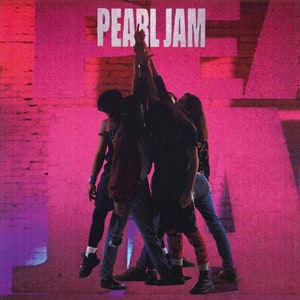
The grunge record the press wrote off as bandwagon-jumping went on to sell thirteen million copies and define stadium alt-rock for two decades.
London Bridge Studio in Seattle held the sessions in early 1991, the band cutting Ten with producer Rick Parashar before the city became a marketing category. Eddie Vedder had flown up from San Diego months earlier, written lyrics to an instrumental demo on a surfboard between waves, and posted the tape back to Stone Gossard and Jeff Ament. The result came out on Epic in August 1991, and the rock press, already protective of its underground, smelled a careerist. NME accused the band of "trying to steal money from young alternative kids," filing Pearl Jam as bandwagon-jumpers riding a wave Nirvana had paddled out first.
Listen to what they actually built. "Alive" opens on a Gossard riff that climbs instead of chugging, a major-key lift that fights against the darkness of the lyric, and Vedder's voice arrives from somewhere down in the chest, a baritone that sounds like it is being dragged up a flight of stairs. The drums on "Even Flow" hit with a wet, room-soaked crack that nobody in hardcore would have allowed. This was not the sound of a band copying anyone. It was big, deliberately big, reaching for the back row of an arena while its peers played to the front three.
There is a craft in Ten that the bandwagon charge could not explain away. McCready's guitar solo on "Alive" is a near note-for-note homage to Ace Frehley, a long, melodic, climbing run that most grunge bands would have sneered at as too flashy, too classic-rock, too sincere. The band cut the record over a few weeks at the tail end of 1990 and start of 1991, then sat on it for months while the label worked out how to sell a group with no scene yet attached. Mike McCready, Stone Gossard and Jeff Ament had all survived the death of Mother Love Bone's singer Andrew Wood, and you can hear the grief and the survivor's defiance pressed into every track, a heaviness that has nothing to do with distortion and everything to do with loss.
The numbers settled the argument. Ten sold roughly thirteen million copies in the United States alone, a figure that dwarfs most of the records the press preferred at the time. Q later ranked it number forty-two on its all-time list. Every earnest, broad-chested alt-rock band that followed, every group that wanted the heaviness of grunge without sacrificing the chorus, took its blueprint from this record. The accusation was that Pearl Jam wanted your money. The truth is they wanted the roof off the building, and they got it.
Lineage: post-grunge, Bush, Creed, every earnest stadium-alt band of the 90s and 2000s that wanted the roof off the building.
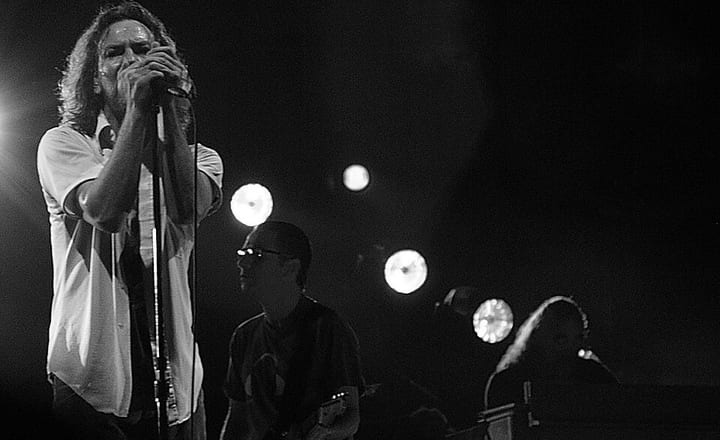
(What's the Story) Morning Glory?
Reviewers called it lazy and empty; it became the soundtrack to a decade and one of the best-selling British albums ever pressed.
Rockfield Studios in Monmouthshire, Wales, hosted the bulk of the sessions in spring 1995, with Owen Morris and Noel Gallagher producing, Noel writing nearly every note while his brother Liam delivered them with that nasal, sneering Mancunian drawl. Creation Records released it in October 1995, at the absolute peak of Britpop's civil war. The critics were unmoved. Melody Maker called it "laboured and lazy," and Q dismissed the lyrics as saying "nothing much about anything," a fair complaint about a man who rhymed "Sally" with "Sally" and called it a chorus.
What they missed was the size of the thing. "Wonderwall" rides an acoustic strum and a cello line that wraps around Liam's voice like wet wool, and "Don't Look Back in Anger" steals its piano intro from "Imagine" and hands the chorus to the entire stadium to sing. The genius of Morning Glory was never lyrical precision. It was the way Noel built melodies that felt like you had known them your whole life, choruses engineered for forty thousand drunk people to bellow in unison. The words did not need to mean anything. They needed somewhere to put your arm around a stranger.
Owen Morris had a trick that drove purists mad and listeners wild. He pushed the master so hard into the red that the whole record distorts at the edges, a wall-of-loudness approach that flattened dynamics and made Morning Glory sound enormous coming out of a tinny car stereo or a pub jukebox. "Champagne Supernova" stretches past seven minutes, Noel piling guitar over guitar until the solo, played by Paul Weller, swims up out of the haze. The album sold a third of a million copies in its first week in Britain and never really slowed down, soundtracking the closing months of John Major's Britain and the dawn of Cool Britannia, the band on every front page, the records on every shelf.
The record went fourteen-times platinum in the UK, a national sales record that stood until Adele's 21 finally beat it. It outsold the entire careers of bands the critics championed that year. "Wonderwall" and "Don't Look Back in Anger" became the two most reliable singalongs in British public life, played at weddings, funerals, vigils and last orders for thirty years and counting. After the Manchester Arena bombing in 2017, a crowd outside the vigil broke spontaneously into "Don't Look Back in Anger," and the song the critics had called empty became the sound of a city refusing to be cowed. Melody Maker heard laziness. The country heard its own anthem and never stopped singing it back.
Lineage: every landfill-indie band, the Britpop revival, and a generation of guitar bands that learned a chorus is worth more than a clever line.
Korn
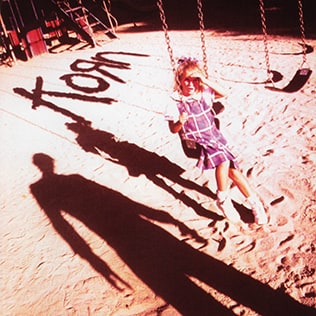
The rock press sneered at it or ignored it; it turned out to be the founding document of an entire genre.
Indigo Ranch in Malibu held the sessions in 1994, producer Ross Robinson pulling sounds out of the band that the studio rulebook said you should never allow. Korn arrived on Immortal and Epic in October 1994, into a rock press that had no category for it. Robert Christgau handed it a dismissive C-plus, and most of the mainstream rock writers either sneered or looked straight past it, unable to file a band that detuned its guitars to a sludgy growl and let its singer sob and scat in the breakdowns.
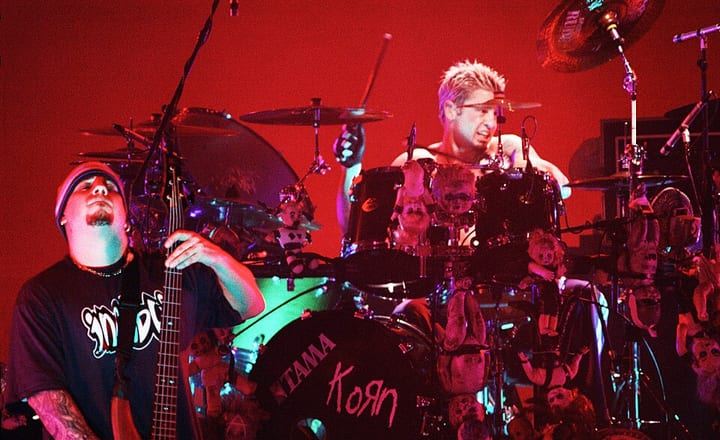
The sound was genuinely unsettling, and that was the point. Munky and Head played seven-string guitars tuned down so far the low notes blur into a felt rumble instead of a pitch, a sound you feel in your sternum before your ears catch up. Jonathan Davis sings the verses, then abandons words entirely on "Daddy," collapsing into a recorded breakdown so raw the band left the tape rolling through what sounds like an actual crying fit. Fieldy's bass is played like a percussion instrument, all clack and slap, no melody, just impact. Nothing on the radio sounded remotely like it.
Ross Robinson earned the nickname the godfather of nu-metal in this room, and his method was confrontation. He pushed Jonathan Davis to relive the worst moments of his life on tape, and "Daddy" closes the album with thirteen minutes that include the sound of Davis breaking down completely, a moment so raw the band has rarely played it live in full. The bagpipes Davis trained on as a teenager open the record on "Blind," a held drone that gives way to that first detuned guitar slam. Brian "Head" Welch and James "Munky" Shaffer ran their seven-strings through layers of effects to thicken the low end into something that sounds less like guitars and more like machinery grinding in a basement. Nobody had heard a metal band that sounded this much like a panic attack.
It went double-platinum, slowly, on the back of touring and word of mouth, not critical love. More than the numbers, it drew the map. Korn invented the template for nu-metal whole: the downtuned riffs, the hip-hop-inflected rhythm section, the lyrics that turned childhood trauma into a stadium chant. Slipknot, Limp Bizkit and the entire downtuned wave of the late 90s are children of this record. Within five years the sound Korn built in Malibu was the dominant strain of mainstream metal, filling arenas and selling millions, a commercial wave nobody in the rock press had seen coming because they had been too busy dismissing the source. Christgau gave it a C-plus. The next decade of heavy music gave it a curriculum.
Lineage: Slipknot, Limp Bizkit, Deftones, the entire downtuned seven-string nu-metal wave that followed.
Bad
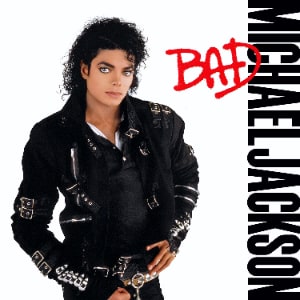
Held against the impossible standard of Thriller, it disappointed the critics and then quietly made pop-album history.
Westlake Recording Studios in Los Angeles hosted the long, expensive sessions across 1986 and 1987, Quincy Jones producing for the third and final time, Jackson writing far more of the material himself than before. Epic released Bad in August 1987, and the reviews carried the weight of an impossible expectation. Richard Cromelin found it creatively "disappointing," and Robert Christgau lamented the absence of the genius that had powered Thriller, both men measuring a great pop record against the best-selling album in human history and finding it merely excellent.
The sound had hardened since 1982. "Bad" rides a synth-bass snarl and a beat that snaps like a switchblade, Jackson's vocal full of hiccups, gasps and that breathy "ow" punctuation he turned into a signature. "Smooth Criminal" is built on a relentless, galloping bassline that never lets up, the kind of groove that makes standing still feel impossible. "Man in the Mirror" climbs from a hush to a full gospel choir, Jackson's voice cracking with real strain at the top. This was a tighter, harder, more anxious record than its predecessor, and the anxiety was the texture.
The making of Bad was an arms race against expectation. Jackson reportedly considered recording over a hundred songs and whittled them down, obsessed with topping a record that had sold more copies than any album in history. Quincy Jones layered synthesisers and the new digital production of the late 80s over Jackson's voice, building tracks like "The Way You Make Me Feel" on a finger-snap shuffle and a bassline that struts. The title track's video, directed by Martin Scorsese, ran eighteen minutes and cost a fortune, turning the single into an event. Jackson wrote nine of the eleven tracks himself, a leap from the writing share he had on Thriller, and the control shows in how tightly each song is engineered for impact.
The achievement was historic in the literal sense. Bad produced five consecutive number-one singles on the Hot 100, the first album ever to do so, and sold north of thirty-five million copies worldwide. It became the template every blockbuster pop album since has tried to follow: the all-killer singles strategy, the global rollout, the short films instead of videos. The Bad world tour ran across sixteen months and over a hundred dates, the first stadium pop tour of its scale, setting the model every touring pop superstar has copied since. The critics heard a step down from a miracle. The chart heard a record that did something no album had ever done.
Lineage: the modern blockbuster-pop-album template, every five-single campaign, the global pop rollout as an art form.
High Voltage
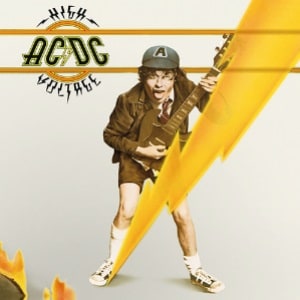
Rolling Stone declared hard rock had hit its all-time low; the album became the foundation stone of stadium rock.
Albert Studios in Sydney produced the tracks, Harry Vanda and George Young at the desk, George being the elder brother of guitarists Angus and Malcolm Young. The international High Voltage that Atlantic released in 1976 was a compilation, stitched together from the Australian High Voltage and T.N.T. albums for the wider world. Rolling Stone's Billy Altman delivered one of the most quotable pans in the magazine's history, calling Bon Scott's vocals "truly annoying," the band "mindless three-chord formations," and concluding that "hard rock has unquestionably hit its all-time low."
Altman heard noise where there was a machine. Listen to "It's a Long Way to the Top (If You Wanna Rock 'n' Roll)" and you get Angus Young's guitar riding a riff so simple a beginner could play it and so perfect nobody has improved on it, with Bon Scott's bagpipes screaming over the top in a stroke of lunatic genius. The rhythm section locks into a groove so tight it sounds mechanical, Phil Rudd's drums refusing every fill that does not serve the beat. "T.N.T." spells out its own title as a chant, the dumbest and most thrilling hook in rock. The simplicity was not a lack of ideas. It was the idea.
The Young brothers built their sound on a refusal to add anything unnecessary. George Young had been in the Easybeats, scored a worldwide hit with "Friday on My Mind," and he and Harry Vanda produced the band with a producer's ear for space, leaving room around every note so the riff could breathe and hit. Angus Young played a Gibson SG, not a flashy guitar, through Marshall amps with almost no effects, the tone all midrange bite and attack. Bon Scott sang like a man telling a dirty joke at the bar, every line landing with a wink, his phrasing loose and conversational where other hard-rock singers reached for opera. The band had come up playing Australian pubs where the crowd would throw bottles at anything boring, and that discipline is audible in how hard every track works.
That riff-and-swagger rulebook became the foundation of stadium hard rock for the next fifty years. "It's a Long Way to the Top" is now an anthem played in arenas worldwide, the bagpipe intro triggering instant recognition. Guns N' Roses, Airbourne and every band that ever built a song on three chords and a sneer is working inside the frame AC/DC drew here. Rolling Stone declared the all-time low. They had it exactly upside down.
Lineage: Guns N' Roses, Airbourne, the whole riff-and-swagger rulebook of stadium hard rock.
My War
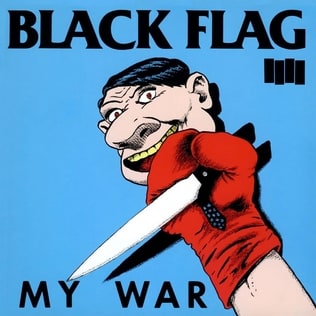
Hardcore purists revolted at the slowed-down second side; it drew the blueprint for sludge and grunge instead.
Total Access Recording in Redondo Beach held the 1983 sessions, Greg Ginn writing and playing guitar through a legal blockade that had kept the band out of the studio for two years. SST released My War in 1984, and the hardcore scene that had crowned Black Flag turned on it instantly. The Boston Phoenix called it "unbearably boring," and Maximumrocknroll dismissed the slow, grinding second side as "an imitation of Iron Maiden." Punks who wanted the fast, short blasts of Damaged felt betrayed by the sludge.
Side B is where the future lives. Three songs, each stretched past six minutes, the tempo dragged down to a funereal crawl, Ginn's guitar bending into atonal, seasick squalls over Henry Rollins screaming as if his throat were tearing. "Nothing Left Inside" moves at the pace of a slowed heartbeat, the riff lurching forward and collapsing back, dread stretched until it becomes unbearable on purpose. It sounds heavy in the physical sense, the way standing too close to a subwoofer is heavy. This was hardcore deliberately refusing to be fast, and the refusal was the innovation.
Greg Ginn made the slowdown a deliberate provocation. The two-year legal blockade with the label Unicorn had kept Black Flag out of the studio while the hardcore scene they had helped build accelerated into ever-faster, ever-shorter songs, and Ginn responded by going the opposite way entirely. Side A keeps the speed, but the back half stretches three tracks across the rest of the record, the riffs dragged down to a crawl that some pressings ran with a bass tone so murky it sounds like the speaker cone is about to tear. Rollins screams over the top with no melody to hold onto, just raw lung. The original drummer had quit, so Bill Stevenson and others filled in, and the rhythm section sits heavy and deliberate, refusing every impulse to speed back up. Kurt Cobain named My War a favourite, and you can hear why. Those slow dirges drew the direct blueprint for sludge metal and for grunge's heavy, dragging underbelly. The Melvins built a career in the crater this side B left, and through the Melvins the lesson reached a teenage Kurt Cobain, who carried that drag and weight into the band that would change everything. What the hardcore purists heard as a betrayal of speed was the discovery that slowness, properly weaponised, hits harder than any blast beat. They wanted the band to go faster. The band went heavier, and history followed the heavy.
Lineage: the Melvins, sludge metal, Nirvana, every band that learned slow can hit harder than fast.
Born to Die
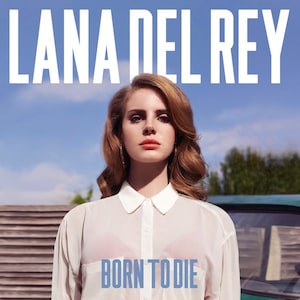
Dismissed as label-built style over substance after one rough TV appearance; reappraised as the defining pop record of its decade.
Studios across London, New York and Santa Monica produced the sessions through 2011, with Emile Haynie handling much of the production, layering hip-hop drums under cinematic strings. Interscope and Polydor released Born to Die in January 2012, weeks after a stiff, nervous Saturday Night Live performance handed the internet a stick to beat her with. The pile-on was brutal. Critics dismissed the record as "cynical record label fodder," called its songs "retreads of Video Games," and wrote the whole project off as a manufactured aesthetic with nothing underneath.
What they wrote off has aged into the dominant sound of its decade. "Video Games" moves at the pace of a slowed-down lullaby, a harp figure and a distant choir under a voice that drops to a near-spoken purr, then swoops up into a wounded soprano. "Born to Die" pairs trap-style hi-hats with sweeping orchestral strings, a combination that sounded jarring in 2012 and became the default setting for moody pop within five years. Her delivery, all sighs and cracks and deliberate vocal-fry, was read as affectation. It was a style, fully formed and instantly imitable.
The backlash had as much to do with image as music. Lana Del Rey, born Elizabeth Grant, had recorded earlier material under her own name, and the press treated her reinvention as a marketing fraud, fixating on a stiff Saturday Night Live slot in January 2012 that comedians and critics piled onto for weeks. The music kept doing what the headlines ignored. Emile Haynie's production paired hip-hop drum programming with strings borrowed from old film scores, and tracks like "Off to the Races" thread spoken-word verses through a sample of Nabokov-flavoured menace into a soaring chorus. Her voice swings between a smoky lower register and a fragile upper one within a single line, a deliberate instability that read as weakness in 2012 and as signature within a few years. The whole record sounds like a faded postcard of an America that never truly existed.
Born to Die spent more than four hundred weeks on the Billboard 200, an endurance figure almost no album reaches. Critics who buried it have since named it the album of the 2010s, and nearly every major woman in pop who followed cites her as an influence. Billie Eilish, Olivia Rodrigo's sad-girl lane, the entire melancholic-cinematic pop wave runs straight through this record. They called it style over substance. The style was the substance, and the whole decade copied it.
Lineage: Billie Eilish, Olivia Rodrigo, Lana-core, the entire melancholic-cinematic pop wave of the 2010s.

Liz Phair
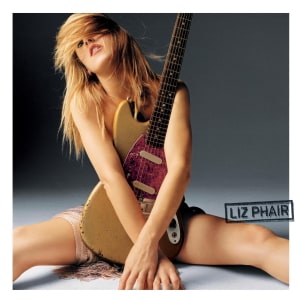
Pitchfork handed it a humiliating zero and called it a sellout; the site apologised sixteen years later and re-scored it.
Los Angeles sessions in 2002 paired the indie songwriter with The Matrix, the production team behind Avril Lavigne's teen-pop breakthrough, a decision Capitol Records pushed to chase radio. The self-titled Liz Phair came out in June 2003 and walked into the buzzsaw of indie-rock orthodoxy. Pitchfork's Matt LeMay gave it a flat 0.0, mourning an artist "reduced to cheap publicity stunts and hyper-commercialized teen-pop," a score designed to humiliate, not to review.
Strip away the genre policing and listen to the record. "Why Can't I?" is built on a bright, chugging guitar and a chorus that lands with the gloss of professional pop songwriting, Phair's flat, conversational voice sitting oddly and brilliantly against the sheen. The production is clean, radio-ready, deliberately commercial, and the lyrics keep the frank sexual candour that made her debut famous. The crime, in 2003, was that an indie heroine had made an unashamed pop record. The crime was caring whether people heard it.
The pairing with The Matrix was the detail the critics could not forgive. The production trio of Lauren Christy, Scott Spock and Graham Edwards had just built Avril Lavigne's "Complicated" and "Sk8er Boi" into global hits, and Capitol brought them in to do the same for a 36-year-old indie songwriter whose 1993 debut Exile in Guyville was a sacred text. The result was glossy on purpose. "Extraordinary" and "Why Can't I?" sit on bright, compressed guitars and choruses built for radio, and Phair kept singing in her flat, deadpan voice, the same frank lyrics about sex and self that always defined her, now set against major-label sheen. The shock was tonal, not moral, and the press treated the tonal shift as a betrayal of a scene that had never paid her rent. The reappraisal came slowly and then officially. LeMay publicly apologised in 2019, and Pitchfork re-scored the album to a 6.0 in 2021, an admission that the zero had been a verdict on a stance, not a sound. The record sits now as an early casualty of the war between indie purism and poptimism, a war poptimism won. Every indie artist who later went unashamedly pop is walking through a door Liz Phair kicked open and got punished for. The crime she was convicted of, wanting to be heard on the radio, stopped being a crime within a decade, as the same outlets that policed authenticity learned to celebrate a great chorus wherever it came from. A 0.0 became a 6.0 and an apology. The album never changed a note.
Lineage: every indie artist who later went openly pop, the poptimist turn, the death of the sellout charge.

808s & Heartbreak
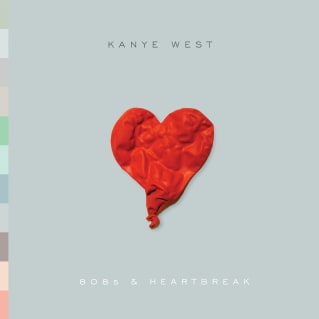
Mocked as an Auto-Tune indulgence and listed among the year's worst; now one of the most influential records hip-hop produced.
Avex Recording Studio in Honolulu hosted the fast, grief-stricken sessions in late 2008, Kanye West building the album in three weeks after his mother's death and a broken engagement. Roc-A-Fella and Def Jam released 808s & Heartbreak in November 2008, and the reaction to a rapper who suddenly refused to rap was open mockery. Time Out New York listed it among the worst albums of 2008, even as its own editor privately called it "the year's most misunderstood triumph," the split verdict capturing how badly the moment confused people.
The sound was a deliberate retreat into cold. West sang every track through Auto-Tune, not to hide pitch but to turn his voice into something synthetic and grieving, a robot crying. The drums come from a Roland TR-808, the kick a long, booming sub-bass tone that decays slowly, the snare a thin handclap, the whole thing spacious and frozen. "Heartless" rides a simple, repeating synth line and a beat that feels like walking through an empty house. "Street Lights" lets the Auto-Tune blur into something close to weeping. There was almost no rapping, and the absence was the statement.
The speed of the making is part of the legend. West built the album in about three weeks at Avex in Honolulu, working through the grief of losing his mother Donda to surgery complications and the collapse of his engagement to Alexis Phifer, and the rush is audible in how spare and unfinished the tracks feel. "Love Lockdown" is almost nothing, a tribal drum pattern, a bare piano figure and his Auto-Tuned voice cracking against the silence around it. "Coldest Winter" runs cold synth pads under a drum-machine pulse that never warms up. The 808 kick booms and decays at the centre of every track, so much low end that the songs feel hollowed out, which suited a record about hollowing out. He toured it before anyone understood it, singing into a vocoder in front of crowds who had come to hear him rap. The mockery curdled into reverence inside a few years. 808s & Heartbreak is now named one of the most influential albums in hip-hop history, the record that licensed a generation of rappers to sing, to be sad, to use Auto-Tune as an emotional instrument instead of a crutch. Drake, the Weeknd, Travis Scott and the entire emo-rap and melodic-rap era descend from it directly. They put it on a worst-of list. It rewrote what the next fifteen years of the genre would sound like.
Lineage: Drake, the Weeknd, Travis Scott, Kid Cudi, the entire emo-rap and melodic-rap era.
Wish You Were Here
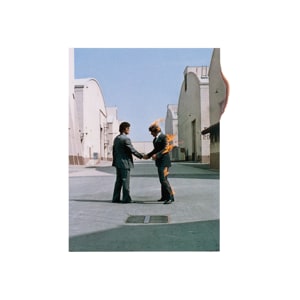
Critics heard a tired follow-up coasting on Dark Side; the band and its fans heard their finest hour.
Abbey Road Studios in London held the 1975 sessions, the band working under the impossible shadow of The Dark Side of the Moon and grieving a former friend. Harvest and Columbia released Wish You Were Here in September 1975. The reviews were cool. Melody Maker cited "a critical lack of imagination," and Rolling Stone noted a "lackadaisical demeanour," both detecting a band exhausted by its own success and coasting on fumes.
What they read as fatigue was grief, made audible. The album is a tribute to Syd Barrett, the founder who left the band broken by drugs and mental illness, and "Shine On You Crazy Diamond" stretches across two halves of the record like a wake. David Gilmour's four-note guitar phrase that opens it is one of the most mournful sounds in rock, each note bent and held until it almost cries, the silence between them as loud as the notes. The title track rides a simple acoustic strum that sounds like it is coming through a cheap radio before the full band arrives. This was a band slowing down on purpose, sitting inside the sadness.
The studio sessions themselves were haunted, and the band did not hide it. While they recorded "Shine On You Crazy Diamond," a song written for the absent Syd Barrett, Barrett himself walked into Abbey Road unannounced, overweight, his head and eyebrows shaved, so changed that the band did not recognise the man whose loss they were mourning in song. Roger Waters reportedly wept. That ghost sits over the whole record. "Welcome to the Machine" runs on a churning, mechanical synth pulse and a hiss of tape that sounds like a factory breathing, a cold attack on the music industry that had chewed up their friend. Dick Parry's saxophone wanders through the title suite like a man lost in a fog. The album moves slow on purpose, every gap left open so the absence can be heard. It went to number one on the Billboard chart, and it remains the album the band members themselves named as their favourite. Fans canonised it as the masterpiece, the record where Pink Floyd's love of mood over hooks paid off most completely. Every ambitious concept-rock album that prizes atmosphere over the three-minute single owes it a debt. The critics heard a band coasting. They were listening to four men mourn their friend in the only language they had left.
Lineage: every ambitious concept-rock record that prizes mood over hooks, from Radiohead to post-rock.
Exile on Main St.
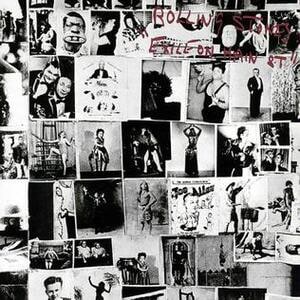
Reviewers found it muddy and unfinished and waited for a better record; the murk turned out to be the masterpiece.
The basement of Villa Nellcote, a mansion the band rented on the French Riviera, produced most of the music in 1971, the Rolling Stones recording on their mobile unit in a humid, ramshackle cellar as tax exiles from Britain. Jimmy Miller produced, and Atlantic and Rolling Stones Records released the double album in May 1972. The reviews hedged. Lenny Kaye, writing in Rolling Stone, felt it "slightly miss[ed] the mark" and decided "the great Stones album of their mature period is yet to come," while plenty of others called it muddy and inconsistent and too long.
The murk was the point, and it took years to hear that. The album sounds like it was recorded in a basement because it was, the vocals buried in the mix, the guitars overlapping in a hot, blurred tangle, Keith Richards' riffs bleeding into Mick Taylor's slide work. "Tumbling Dice" rolls on a loose, swampy groove that sounds like the band is falling down a staircase and somehow staying upright. "Rocks Off" opens the record in a haze of horns and distortion. Nothing is clean. Everything is alive. The sound of a band playing in a hot room at four in the morning, slightly out of it, completely locked in.
The conditions that produced it explain the sound. The Stones had fled to France in 1971 to escape British tax bills, and Keith Richards rented Villa Nellcote, a sprawling mansion on the Cote d'Azur where the band set up the Rolling Stones Mobile Studio in a hot, damp basement riddled with electrical faults that kept knocking out the power. Richards was deep into heroin, Jagger newly married and often absent, and the sessions ran on chaos, with guests and dealers and children drifting through. Out of that mess came a record that bleeds American roots music, gospel on "Shine a Light," country on "Sweet Virginia," gutbucket blues on "Ventilator Blues." The murk is the sound of a basement with no acoustic treatment and a band too far gone to care about polish, and the looseness gives it a human pulse no clean studio could fake. Rolling Stone later ranked it number seven on its 500 Greatest Albums list, a full re-hearing of a record it once shrugged at. It is now treated as the Stones' masterpiece, the murk reheard as atmosphere instead of failure, the sprawl reheard as abundance. Every loose, ragged, gloriously overstuffed double album since has chased this feeling. Kaye waited for the great mature Stones record. He had been holding it in his hands.
Lineage: every loose, ragged, double-album-sprawl rock record after, from the Replacements to Primal Scream.
Jazz
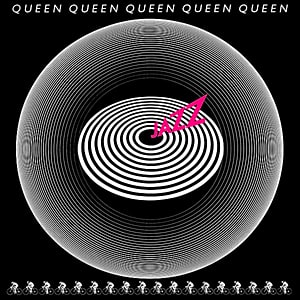
One critic branded them fascists and the album earned a sneering C-plus; it housed one of the most beloved songs they ever made.
Mountain Studios in Montreux and Super Bear Studios in the French Alps held the 1978 sessions, Queen producing alongside Roy Thomas Baker, the band at the height of its appetite for excess. Elektra and EMI released Jazz in November 1978. The reviews were openly hostile. Dave Marsh, writing in Rolling Stone, called Queen "the first truly fascist rock band," a line meant to wound, and the Village Voice ran a sneering C-plus, the critical establishment recoiling from a band it found vulgar and overblown.
The vulgarity was a feature, delivered with total commitment. "Don't Stop Me Now" is the album's beating heart, a piano-driven sprint that builds and builds, Freddie Mercury's voice multiplying into a wall of overdubbed harmonies, Brian May's guitar solo arriving like a victory lap. "Fat Bottomed Girls" rides a thick, stomping riff and a chorus designed for a crowd to shout. "Bicycle Race" stacks operatic vocal layers over a chord change so absurd it loops back to brilliant. This was Queen refusing every notion of good taste, and finding euphoria on the far side of it.
Roy Thomas Baker had produced "Bohemian Rhapsody," and he matched Queen's appetite for stacking sound. The band recorded across Mountain Studios in Montreux, which they would later buy, and Super Bear in the French mountains, layering vocal harmonies dozens of tracks deep until a single line becomes a choir. "Mustapha" opens the album with Mercury singing in mock-Arabic over a galloping rhythm, a deliberate two fingers to anyone expecting a tidy rock record. May built his guitar sound from a homemade instrument, the Red Special, run through a treble booster into Vox amps, producing a tone thick enough to imitate an orchestra. The record came bundled with a poster of a nude women's bicycle race staged at Wimbledon Stadium to promote "Bicycle Race," a stunt that got the album banned in places and sold even more copies. The album went platinum, and "Don't Stop Me Now" has become one of the most-played feel-good songs in the world, a perennial soundtrack to celebration decades after the critics dismissed the record carrying it. Every euphoric festival singalong, every band that ever decided joy was worth more than cool, descends from this kind of unembarrassed maximalism. The song found a second life decades later, soundtracking films, adverts and a scene in Shaun of the Dead, until a new generation knew "Don't Stop Me Now" before they knew the album that critics had buried it inside. Marsh reached for the worst word he could find. The song he panned now plays at half the parties on earth.
Lineage: every euphoric festival-singalong pop-rock anthem since, the whole maximalist arena tradition.
Never Mind the Bollocks
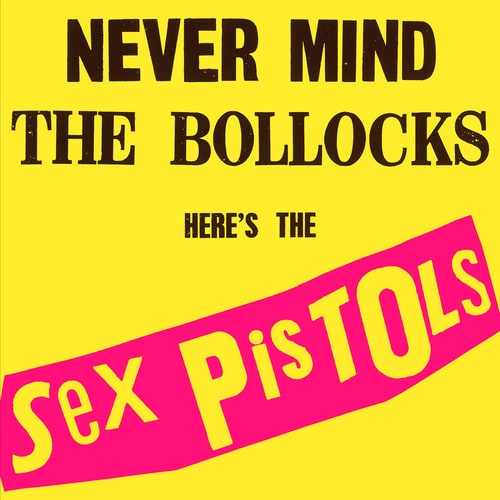
Banned, boycotted and treated as a threat to public decency; now routinely named one of the most important albums ever made.
Wessex Sound Studios in London produced the band's only studio album, Chris Thomas and Bill Price at the controls, layering Steve Jones' guitars into a dense wall while Johnny Rotten sneered over the top. Virgin released Never Mind the Bollocks in October 1977 into a country that treated it as a crime scene. Chain stores refused to stock it, the BBC banned "God Save the Queen" for what it called "gross bad taste," and the establishment responded to the record as a threat to the country itself, not a piece of music.
The fury was earned, and the sound backed it up. The guitars do not sound like punk's amateur thrash. Jones overdubbed layer on layer until the riff on "Holidays in the Sun" hits like a sheet of corrugated iron, dense and metallic and huge. Rotten's voice is a nasal, contemptuous snarl, every vowel stretched into a sneer, the delivery on "God Save the Queen" dripping with a venom that no amount of remastering can dilute. Paul Cook's drums drive it forward with no fills and no mercy. This was rage produced to sound enormous.
The production is the secret the punk myth tends to hide. Chris Thomas had worked with the Beatles and Pink Floyd, and he did not record the Pistols as a scrappy garage band, he recorded them as a juggernaut. Steve Jones played almost all the guitars and the bass, overdubbing layer on layer until the sound is a dense, gleaming wall, closer to heavy rock than to the amateur thrash punk pretended to be. Glen Matlock had written much of the melodic material before Sid Vicious replaced him on bass, which is why the songs have hooks under the snarl. "Bodies" lurches through tempo changes and a scream of obscenity, "Anarchy in the UK" rolls in on a slow, menacing riff and Rotten's rolled, sarcastic "right now." The fury was real, but the record that carried it was built with total studio precision. The single hit number one in the UK, and the album debuted at the top of the chart despite the boycotts, the public voting against the very institutions trying to bury it. It is now named, without controversy, one of the most important records ever made, the spark that lit punk and post-punk across two continents. Every band that ever formed in a bedroom and decided rage was enough is descended from it. The establishment treated it as a danger to decency. It was, and that was the entire point.
Lineage: every punk and post-punk band that followed, full stop, on both sides of the Atlantic.
On the Corner
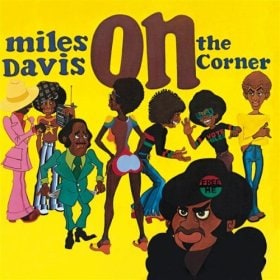
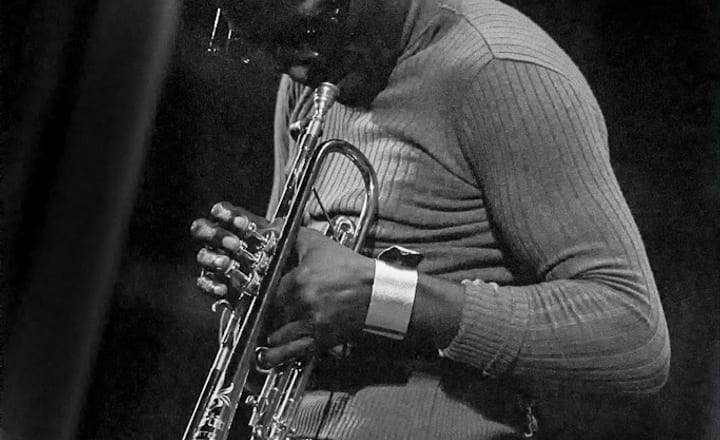
Jazz critics called it repetitious crap and an insult to the intellect; it was the future of recorded music arriving early.
Columbia's New York studios hosted the dense 1972 sessions, producer Teo Macero building the record the way a film editor cuts a movie, splicing and looping tape from long electric jams into something no band could have played straight through. Columbia released On the Corner in October 1972, and the jazz establishment came at it with knives. Critics called it "repetitious crap" and "an insult to the intellect," and accused Davis of selling out, of abandoning jazz, of chasing a young Black audience he no longer understood.
They were hearing the future and calling it noise. The record is built on a relentless funk groove, the bass and drums locked into a repeating figure that never resolves, sitar and tablas and electric keyboards layered into a thick, churning stew. There is no melody to hum, no solo to applaud in the usual way. Instead there is texture and pulse, the groove treated as architecture instead of backing, the whole thing designed to be felt as motion. It sounds less like a jazz album than like something beamed back from twenty years later.
The method behind it was closer to studio collage than to a band playing. Teo Macero recorded long, open electric jams with shifting personnel, then cut and spliced the tape into the finished tracks, building loops and edits by hand years before samplers made the technique routine. The musicians on the sessions included keyboardists, sitarist Khalil Balakrishna, and a young Michael Henderson on electric bass holding down a single hypnotic figure for minutes at a time. Davis himself played wah-wah trumpet that snarls and stutters, treated through effects until it sounds like another rhythm instrument. There are no track titles you can hum, no traditional solos, just the groove repeating and mutating, the same loop logic that hip-hop producers would build an entire art form on two decades later. Davis deliberately left his own name small on the cover, daring the jazz audience to hear it fresh. The reappraisal took exactly that long. Critics now hear On the Corner as a forerunner of hip-hop, electronica, post-punk and drum and bass, the moment a jazz musician started thinking in loops and tape edits before the technology to do it easily even existed. Hip-hop's entire logic of the loop, the producers who treat groove as the song, Aphex Twin and the architects of electronic music all trace back here. The critics protected jazz from it. The rest of music spent decades catching up.
Lineage: hip-hop's loop logic, Aphex Twin, drum and bass, the entire idea of groove-as-architecture.
Ramones
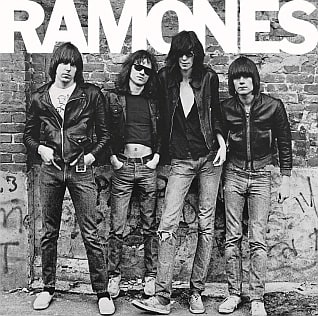
One critic compared it to ten thousand toilets flushing and the industry ignored it; it became the number-one punk album ever made.
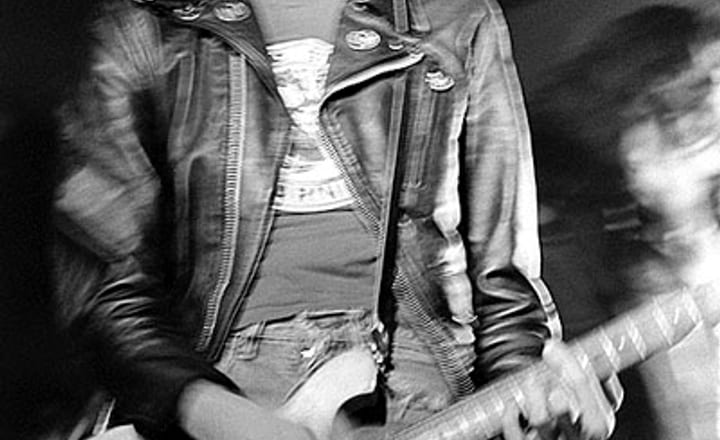
Plaza Sound Studios above Radio City Music Hall in New York produced the debut in early 1976, the band cutting fourteen songs in a matter of days for roughly six thousand four hundred dollars. Sire released Ramones in April 1976 to near-total commercial indifference. One critic dismissed it as "the sound of 10,000 toilets flushing," and the industry simply looked away. The album crawled to number one hundred and eleven, both singles failed to chart, and it sold around six thousand copies in its first year.
The genius was the reduction, the stripping away of everything rock had piled on for a decade. Every song runs two minutes or less, every riff is downstroked at a punishing speed, Johnny Ramone's guitar a single sheet of buzzing distortion with no solos, ever. "Blitzkrieg Bop" opens with the "Hey ho, let's go" chant and then never stops sprinting. Dee Dee counts in every song with a shouted "1-2-3-4." The bass and drums lock into a flat-out gallop. There is nothing here but speed, hooks and attitude, which turned out to be everything.
The economy of the thing was the manifesto. Tommy Ramone, the drummer, produced alongside Craig Leon, and they recorded it almost live in a matter of days, refusing overdubs and studio gloss because the band could not afford them and did not want them. Johnny Ramone tuned his Mosrite guitar to a bright, trebly buzz and played only downstrokes, a brutal right-hand technique that kept the rhythm locked and the energy relentless. Joey Ramone sang in a strange transatlantic croon that floated bubblegum melodies over the noise, so songs about sniffing glue and beating on brats with a baseball bat came out sounding like the Ronettes on amphetamines. Every track is a perfect little machine with no wasted parts. The album is over before most records have finished their second song. Rolling Stone later named it the number-one punk album of all time, the spark that lit the fuse on both sides of the Atlantic. The Clash, Green Day and every three-chord band that ever counted itself in are working from this fourteen-song manual. The toilet-flushing line is now a punchline at the critic's expense, quoted only to mark how wrong he was. The four men in matching leather jackets and torn jeans, who looked like a gang and played like a machine, handed rock a reset button when it had grown bloated on prog suites and twelve-minute solos. Six thousand copies sold the first year. A whole genre bought it eventually.
Lineage: the Clash, Green Day, the Buzzcocks, every three-chord band that ever counted in 1-2-3-4.
Blood on the Tracks
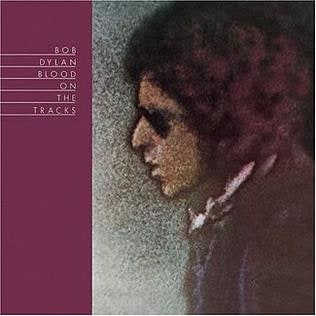
Critics called it shoddy and unfinished, like practice takes; it became the album every break-up record is measured against.
A&R Studios in New York held the first sessions in 1974, then Dylan scrapped half of them and re-cut the songs in Minneapolis over Christmas with a hastily assembled pickup band his brother David rounded up. Columbia released Blood on the Tracks in January 1975, a divorce record in everything but name. The reviews were oddly grudging. Jon Landau judged it "made with typical shoddiness," and Nick Kent said the songs "sound like mere practice takes," both men hearing roughness where there was raw nerve.
The roughness is the whole achievement. "Tangled Up in Blue" shifts tense and perspective mid-verse, the narrator scrambling through memory, Dylan's voice cracking and reaching on the high lines as if the words are costing him something. "Idiot Wind" is a torrent of contempt and self-pity that turns, in its final verse, into something close to forgiveness. "If You See Her, Say Hello" is sung so quietly it sounds like a man talking to himself. The performances feel unguarded because they are, the sound of someone too wounded to bother polishing.
The story of the two sets of sessions explains the album's strange double life. Dylan first recorded the songs in New York in September 1974 in spare, intimate takes built around his own acoustic guitar and a quiet bass, then grew unhappy and re-cut five of them in Minneapolis over the Christmas holidays with a local pickup band his brother David Zimmerman assembled at short notice. The two versions sit side by side on the finished record, the New York takes hushed and raw, the Minneapolis ones fuller and more driven, the seams left showing. Dylan always denied the album was about his crumbling marriage to Sara, but "You're a Big Girl Now" and "If You See Her, Say Hello" leave little room for doubt. He sings flat against the chords on purpose, the phrasing conversational and bruised, a man working something out in real time with a tape running. It now sits at number sixteen on the Rolling Stone 500, entered the Grammy Hall of Fame in 2015, and stands as the record every confessional songwriter gets measured against. From Jeff Buckley to Phoebe Bridgers, the entire tradition of turning private heartbreak into public art runs through it. Songwriters still study how Dylan keeps the listener guessing whether a line is memory or invention, the album's refusal to name names somehow making the hurt feel more universal, not less. Landau called it shoddy. He was hearing a man bleed in real time and mistaking it for a lack of polish.
Lineage: every break-up record from Jeff Buckley to Phoebe Bridgers, the whole confessional-songwriter tradition.
Low
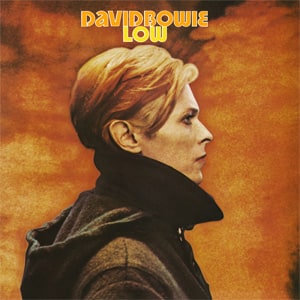
The press called it spacy art-rock and his label hated it; it became the source code for post-punk, synth-pop and ambient.
Chateau d'Herouville near Paris and Hansa Studios in West Berlin produced the album across 1976 and 1977, Bowie working with Tony Visconti and Brian Eno to make something his own record company did not want. RCA released Low in January 1977 and reportedly hated it on delivery. The critics were not much warmer. Rolling Stone judged that Bowie "lacks the self-assured humour to pull off his avant-garde aspirations," and the LA Times wrote it off as "spacy art rock," both treating a left turn as a loss of nerve.
The sound was a genuine reinvention, built around a drum tone nobody had heard before. Visconti ran the snare through an Eventide Harmonizer, dropping its pitch on the way to tape, producing a heavy, gated, almost gunshot crack that defined the album and a decade after it. Side one holds fractured, anxious art-pop like "Sound and Vision," all clipped funk guitar and Bowie's voice arriving late and detached. Side two is almost wordless, Eno's synthesisers building cold, drifting instrumentals like "Warszawa," vast and grey and weightless. Half a pop record, half an ambient one, and the seam between them was the statement.
The album came out of a personal collapse and a geographic escape. Bowie had spent the mid-70s in Los Angeles, deep in cocaine addiction and paranoia, and he fled to Europe to dry out, settling in West Berlin with Iggy Pop, recording near the Wall in a divided city. Brian Eno brought his oblique strategies and his synthesisers, and Tony Visconti brought the studio craft, the three of them treating the recording as an experiment with no obligation to please RCA. The first side keeps song shapes but fractures them, the lyrics clipped to single repeated lines, Bowie's voice often arriving as a wordless wail. "A New Career in a New Town" sits exactly on the seam, a harmonica-led pop fragment dissolving into electronics. The second side abandons words almost entirely, Eno's keyboards building slow, grey, weightless instrumentals that invented a template for ambient music in real time. The influence is almost comic in scale. Low is the source code for post-punk, synth-pop and ambient music all at once, and a young Manchester band named themselves Warsaw after "Warszawa" before they became Joy Division. Gary Numan, the entire synth-pop wave, and Radiohead's Kid A are children of this record. RCA hated it. They were sitting on the blueprint for the next twenty years of music.
Lineage: Joy Division, Gary Numan, the synth-pop wave, Radiohead's Kid A, the whole ambient tradition.
Berlin
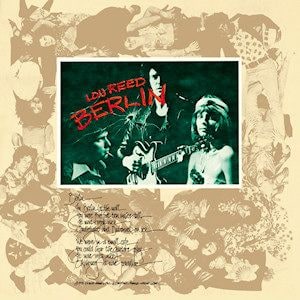
Rolling Stone called it a disaster and it tanked; the magazine recanted years later and a masterpiece got performed in full.
Morgan and Air Studios in London produced the dense, theatrical 1973 sessions, Bob Ezrin producing a song-cycle about a doomed couple sinking through addiction, abuse and suicide. RCA released Berlin in July 1973, fresh off the commercial high of Transformer, and the contrast killed it on arrival. Stephen Davis, writing in Rolling Stone in December 1973, called it "a disaster," cataloguing a world of "paranoia, schizophrenia, degradation, pill-induced violence and suicide" as if the subject matter alone disqualified it. The record sold poorly and dragged Reed down with it.
The bleakness is total and deliberate, scored like a Broadway tragedy gone rotten. "The Kids" builds to the recorded sound of children crying for their mother, a moment so harrowing that Ezrin's own children were used to create it, and it remains one of the most disturbing things ever pressed to vinyl. "The Bed" is sung almost without affect, Reed narrating a suicide in a flat, exhausted voice over a gentle acoustic figure, the calm somehow worse than any scream. The arrangements are lush, full of strings and horns, the beauty making the horror land harder. Reed later called the way the album was overlooked "probably the biggest disappointment I ever faced."
Bob Ezrin built the record like a theatre director staging a tragedy, and the production is enormous, the opposite of the stripped Transformer that preceded it. He brought in a heavyweight cast of session players, including members of what would become Alice Cooper's band and a young Steve Winwood, and arranged the songs with full orchestration, choirs and dramatic dynamic swings. The story follows Caroline and Jim, a couple destroyed by drugs, jealousy and abuse, and Reed narrates their downfall in a deadened voice that refuses to perform the emotion, leaving the horror to the arrangements. "Caroline Says II" describes a beating in language so plain it is unbearable, set against a gentle, almost lullaby melody. The contrast between the lush sound and the bleak content is the whole design, beauty wrapped around a scream. Rolling Stone eventually recanted, placing Berlin at number three hundred and forty-four on its 500 list, an open reversal of the original verdict. The album was rehabilitated as a masterpiece, performed in full live decades later to audiences who finally understood what it was. The concept album as emotional ordeal, from The Wall to ANOHNI, runs through it. They called it a disaster. The disaster was missing it the first time.
Lineage: the concept-album-as-emotional-ordeal, from Pink Floyd's The Wall to ANOHNI.
Pinkerton
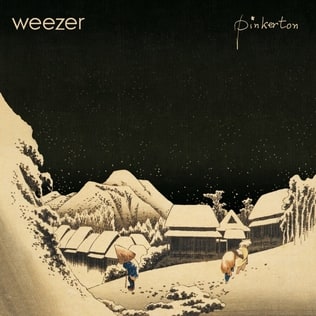
Voted one of the worst albums of its year by critics and readers alike; it became the cornerstone of emo.
Sound City and other Los Angeles rooms produced the self-produced 1996 sessions, Rivers Cuomo writing much of the record while studying at Harvard, drawing the concept from Puccini's opera Madama Butterfly. Geffen released Pinkerton in September 1996, and the verdict was savage from every direction. Rolling Stone's critics poll voted it one of the worst albums of the year, its readers ranked it the third-worst, and Entertainment Weekly called it "a sustained aria of disengagement." Even Cuomo later called the cult around it "a sick album," embarrassed by how raw he had been.
The rawness is exactly what makes it endure. After the clean power-pop of the blue album, Pinkerton sounds deliberately ugly, the guitars overdriven into a blown-out roar, Cuomo's voice straining and cracking with no studio gloss to hide behind. "Tired of Sex" opens with a drum fill that sounds like it is falling apart and lyrics so nakedly self-loathing they are uncomfortable to hear. "Across the Sea" turns a letter from a teenage fan into a confession of loneliness and shame. The whole record sounds like a private diary read aloud too loudly, which is precisely why a generation clutched it.
The backstory makes the rawness make sense. Rivers Cuomo had enrolled at Harvard while recovering from a painful leg-lengthening operation, and he wrote much of Pinkerton in a state of isolation and physical pain, structuring the album loosely around Puccini's opera Madama Butterfly, casting himself as the cad who breaks a devoted woman's heart. The band self-produced it, deliberately stripping away the polish that DJ producer Ric Ocasek had given the blue album, recording the guitars hot and distorted so the whole thing sounds blown out and live. "El Scorcho" stumbles in on a guitar that sounds out of tune, Cuomo half-shouting lines about a crush so specific they read like diary entries. "Butterfly" closes the record almost a cappella, just acoustic guitar and a voice on the edge of breaking. Listeners in 1996 found the nakedness embarrassing. Listeners a few years later found it the only thing that mattered. Rolling Stone reversed itself completely, awarding the album five stars and a Hall of Fame slot in 2004, one of the most public about-faces in the magazine's history. Pinkerton became the cornerstone of emo, the permission slip for confessional male vulnerability set to loud guitars. Jimmy Eat World, Dashboard Confessional and the entire second wave of emo are built on it. The critics voted it one of the worst of 1996. The fans made it the most influential.
Lineage: Jimmy Eat World, Dashboard Confessional, the whole second wave of emo and confessional alt-rock.
Nevermind
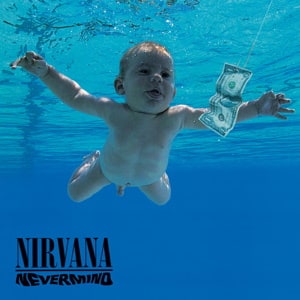
Rolling Stone filed them as scrappy garageland warriors at a crossroads; weeks later they ended an entire era of music.
Sound City Studios in Van Nuys produced the album in 1991, Butch Vig producing, polishing the band's noise into something radio could carry without sanding off the menace. DGC released Nevermind in September 1991. Rolling Stone's original review handed it three stars and filed the band as "scrappy garageland warriors" standing at a crossroads, a cautious shrug that read the present perfectly and the future not at all. Few writers anywhere saw what was about to happen.
The sound was the trick, the quiet-loud-quiet dynamic weaponised for the radio. "Smells Like Teen Spirit" opens on a clean, almost gentle guitar figure, then the distortion slams down on the chorus like a door blown off its hinges, Kurt Cobain's voice shredding into a roar. Dave Grohl's drums hit with a huge, gated boom that Vig built for maximum impact. Underneath the polish the songs keep their unease, the lyrics mumbled and bitter, the melodies clearly there whether the band wanted them or not. It was heavy music engineered, almost by accident, to be inescapable.
Butch Vig and the band fought over the polish, and the polish won, which is why it worked. Vig double-tracked Cobain's vocals and guitars to fatten them, layered the choruses, and shaped a record that could sit on commercial radio next to Mariah Carey without sounding broken. Andy Wallace then mixed it bright and loud, a sheen Cobain later claimed to resent for being too clean. The contrast is the engine of the whole album. "In Bloom" buries a vicious lyric about clueless fans inside a chorus built to be sung by exactly those fans. "Come as You Are" rides a watery, chorus-pedalled guitar line that hooks instantly. Krist Novoselic's bass and Grohl's drums hit with a weight that the songs underneath could have lacked in lesser hands. It was underground music dressed, almost by accident, for the stadium. Nevermind knocked Michael Jackson off the top of the chart, detonated the mainstream, and ended the reign of hair metal more or less overnight. Rolling Stone later gave it five stars, a quiet correction to the original three. The entire 1990s alternative explosion, every band that got signed in the gold rush that followed, traces to this record. Labels that had spent the 80s chasing spandex and hairspray spent the next five years signing flannel-shirted bands from small towns, hunting for the next Nirvana, and the whole industry tilted on its axis around an album a reviewer had filed under cautious optimism. Three stars and a crossroads. The crossroads turned out to be the end of one decade of music and the start of another.
Lineage: the entire 90s alternative explosion, the death of hair metal, every band signed in the grunge gold rush.

Black Sabbath
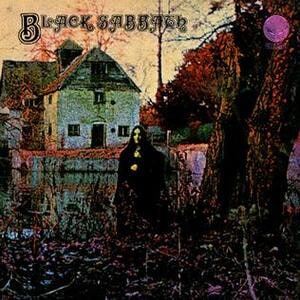
Regent Sound Studios in London produced the debut in a single day in 1970, producer Rodger Bain capturing four men from Birmingham more or less live, with almost no money and almost no time. Vertigo and Warner Bros released Black Sabbath on Friday the thirteenth of February 1970. Lester Bangs, in Rolling Stone, dismissed it as "a shuck" with "inane lyrics," grinding "on and on with dogged persistence," and Robert Christgau called it the "worst of the counterculture." Two of the most respected critics alive heard the birth of a genre and reached for the word boring.
Rolling Stone called it a shuck with inane lyrics; it invented heavy metal outright in under forty minutes.
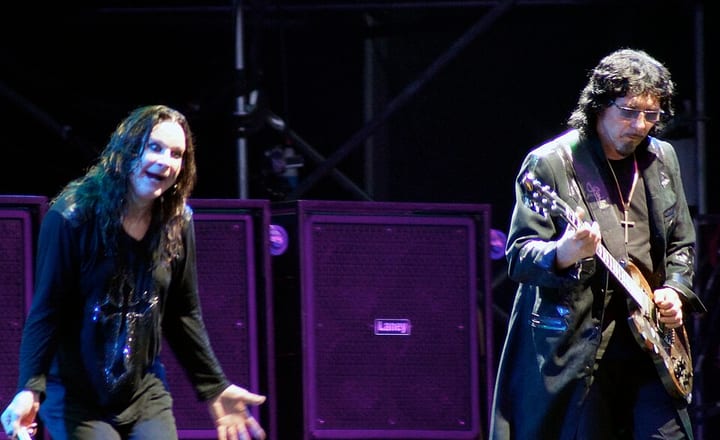
The title track alone should have warned them. It opens on the sound of rain and a tolling bell, then Tony Iommi plays the riff that started everything, three notes built on the flattened fifth, the tritone the medieval church called the devil's interval, slowed to a funeral crawl. The notes do not so much play as loom, each one held until dread sets in, Ozzy Osbourne's voice arriving thin and frightened over the top. Geezer Butler's bass tracks the riff an octave down so it sits in your stomach. This was rock slowed, detuned and turned toward fear on purpose, and nothing had sounded like it.
The accident of Tony Iommi's hands shaped the entire sound. Iommi had lost the tips of two fingers in a sheet-metal factory accident as a teenager, and to keep playing he detuned his guitar to slacken the strings and fashioned plastic thimbles for his fingertips, a workaround that produced a heavier, darker, lower tone than standard tuning allowed. The band had started as a blues outfit called Earth, then renamed themselves after a horror film when they noticed audiences loved being scared. Geezer Butler wrote lyrics steeped in dread and the occult, and Bill Ward's jazz-trained drumming swung underneath the doom in a way that kept it from sounding stiff. The album cost almost nothing and was cut in a day, the budget and the speed forcing a directness that became part of the menace. There was no template for this. They were inventing the grammar as they played it. It invented heavy metal whole, full stop, and it tops greatest-metal lists to this day. Rolling Stone itself later admitted that the opening riff "would define the sound of a thousand bands," a sentence that quietly buries Bangs' original verdict. Metallica, Sleep, doom, stoner rock and every band that ever tuned down to summon dread is working from the template cut here in one day. Bangs called it dogged persistence. The persistence outlived the magazine's first opinion of it by half a century.
Lineage: Metallica, Sleep, doom, stoner, every band that ever tuned down for dread.
Are You Experienced
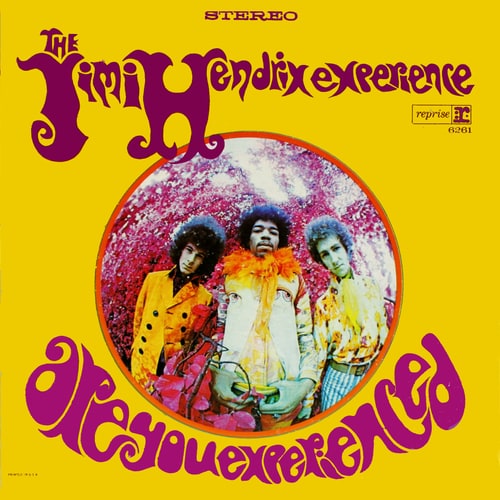
A critic granted his brilliance, then complained the poor songs got in the way; he had just reinvented the electric guitar.
De Lane Lea and Olympic Studios in London produced the debut across 1966 and 1967, Chas Chandler producing, Mitch Mitchell on drums and Noel Redding on bass behind a guitarist who had crossed the Atlantic as an unknown sideman months earlier. Track and Reprise released Are You Experienced in 1967. Jon Landau, reviewing it, granted Hendrix his "musical brilliance" and then complained that "the poor quality of the songs and the inanity of the lyrics too often get in the way," a verdict from a man who later became Bruce Springsteen's manager and should be allowed to live it down by now.
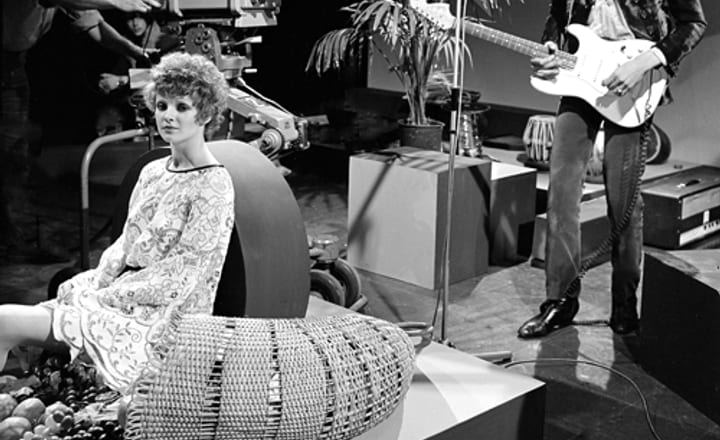
The guitar playing made every reservation irrelevant. "Purple Haze" opens on the tritone interval and then explodes into a solo that bends and screams, Hendrix using feedback and the whammy bar as melodic instruments instead of noise. "Foxy Lady" starts on a single sustained note that swells out of silence like something approaching. "Third Stone from the Sun" dissolves into pure sound, the guitar treated as a synthesiser years before synthesisers were common. The tone is thick and liquid and alive, a Stratocaster through a cranked Marshall pushed past every limit anyone had respected.
Chas Chandler, formerly the bassist in the Animals, had spotted Hendrix playing in a New York club, brought him to London, and assembled the Experience around him, recruiting Mitch Mitchell's jazz-fired drumming and Noel Redding's steady bass. The sessions were cheap and fast, squeezed between gigs, Chandler sometimes selling his own bass guitars to fund studio time. Hendrix played a right-handed Stratocaster flipped upside down and restrung, which gave him an unusual angle on the controls and part of his singular tone. He used the studio as an instrument, layering backwards guitar on "Are You Experienced?" and panning sounds across the stereo field in ways pop records had never tried. The British version and the American version had different track lists, but either way the record announced a guitarist operating on a level the instrument had not seen. He reinvented what an electric guitar could do inside forty minutes, and the record stands as one of the greatest debuts ever pressed. Stevie Ray Vaughan, Prince and every player who treated the guitar as a sound instead of just an instrument is downstream of it. Landau worried the songs got in the way of the brilliance. The brilliance was so total it makes the worry read like a man complaining about the weather during an eclipse.
Lineage: Stevie Ray Vaughan, Prince, every player who treated the guitar as a sound, not just an instrument.
Led Zeppelin
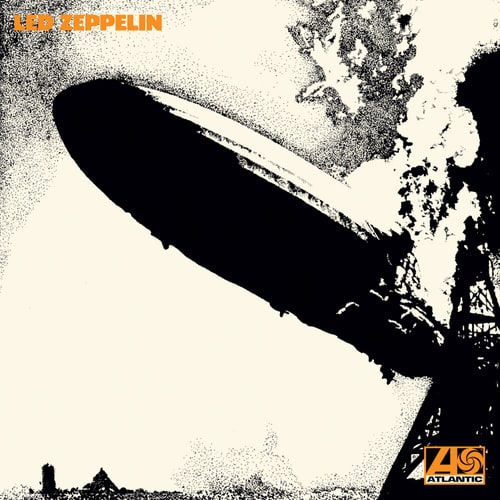
Rolling Stone called them a weak, derivative copy and dismissed every member; they wrote the blueprint for fifty years of hard rock.
Olympic Studios in London produced the debut in roughly thirty-six hours in 1968, Jimmy Page financing it himself and producing it himself, Glyn Johns engineering a band that had barely existed for a month. Atlantic released Led Zeppelin in January 1969. Rolling Stone's John Mendelsohn savaged it, branding the band "a lesser version of the Jeff Beck Group," calling Page "a very limited producer and a writer of weak, unimaginative songs," and deciding Robert Plant was "nowhere near so exciting" as Rod Stewart. He missed on every single count, which takes a kind of accidental skill.
The sound was the future arriving fully built. "Good Times Bad Times" opens with John Bonham's bass-drum triplets, a foot-speed nobody could believe came from one pedal, the kick hitting like a heart attack. "Dazed and Confused" drags a bowed-guitar section into a slow, sinister churn before exploding. "Communication Breakdown" sprints on a downstroked riff that punk would borrow a decade later. Page layered the guitars into a heavy, detailed wall, and Plant's voice rode over the top in a banshee wail that turned the blues into something violent and new. It reached the Billboard top ten on word of mouth, with no hit single and no critical help.
Jimmy Page had been a top London session guitarist and the last man standing in the Yardbirds, and he built the band with a producer's vision already complete in his head. He financed the recording himself to keep total control, cut it in about thirty-six hours of studio time at Olympic with Glyn Johns engineering, then signed to Atlantic on terms that handed the band ownership of their own masters, almost unheard of for a new act. John Paul Jones arranged and played bass and keyboards with session-musician precision, and the four of them locked together instantly. Page used a technique he called distance miking, placing microphones far from Bonham's drums to capture the room, which is why the kit sounds so huge and live. The blues covers and the originals blur together into something heavier and more dynamic than the British blues boom had produced. The record became the blueprint for hard rock for the next fifty years, and Page went on to produce some of the most ambitious music the genre ever attempted. Aerosmith, Guns N' Roses, the White Stripes and the entire architecture of the riff descend from it. Mendelsohn called Page a writer of weak, unimaginative songs. The weak, unimaginative songwriter built the cathedral everyone else has been living in since.
Lineage: Aerosmith, Guns N' Roses, the White Stripes, the entire architecture of the riff.
The Velvet Underground & Nico
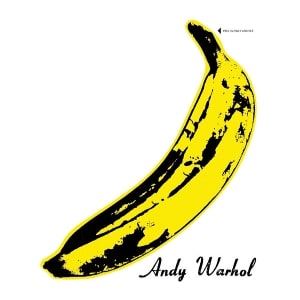
Ignored, recoiled from, frozen by a lawsuit and stalled near the bottom of the chart; it became one of the most influential records ever made.
Scepter Studios in New York produced the album in 1966, Andy Warhol credited as producer and Tom Wilson handling much of the actual work, the band fronted by Lou Reed with John Cale's electric viola scraping underneath. Verve released The Velvet Underground & Nico in March 1967, and the world declined to listen. Radio would not touch songs about heroin and sadomasochism, a lawsuit over a photograph on the back cover froze the release for weeks, and the album stalled near the bottom of the chart at around number one hundred and seventy-one. It was not so much panned as refused.
The sound was a deliberate assault on everything 1967 found beautiful. "Heroin" speeds up and slows down to mimic a rush, Cale's viola sawing a single drone while Maureen Tucker, standing up to play instead of sitting, beats a primitive tom pattern with no cymbals. "Venus in Furs" rides that same viola drone into something medieval and menacing. "European Son" collapses into squalling noise. Against the Summer of Love's flowers and harmonies, this was a record about addiction, control and the cold underside of the city, played with the amateur ferocity of people who did not care if you liked it.
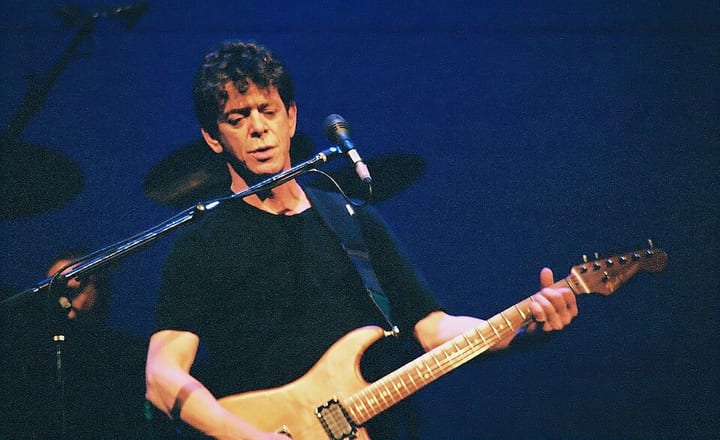
Andy Warhol's involvement was as much curation as production. He put the band in his Factory orbit, designed the peelable banana sticker that adorned the cover, and insisted the German model and singer Nico front three songs over the band's objections, her flat, accented contralto adding a cold European distance to "Femme Fatale" and "All Tomorrow's Parties." Tom Wilson did much of the technical work behind the Warhol credit. Lou Reed wrote lyrics that treated heroin, prostitution and sadomasochism as ordinary subjects for song, delivered deadpan, while John Cale dragged classical training and avant-garde noise into the mix, his viola and Cale's piano on "All Tomorrow's Parties" hammered until it sounds like a chime breaking. Sterling Morrison's guitar and Tucker's primitive standing drum pattern kept it tethered to rock even as it tried to leave rock behind. Brian Eno said the famous thing best, that only about thirty thousand people bought the album but every one of them started a band. It is now counted among the most influential records in history. Bowie, Patti Smith, Joy Division, R.E.M., Sonic Youth and the Strokes, the entire alternative family tree, grows from this single root. Nobody bought it and nobody played it. Everybody who heard it changed music forever.
Lineage: Bowie, Patti Smith, Joy Division, R.E.M., Sonic Youth, the Strokes, the whole alternative family tree.
What's Going On
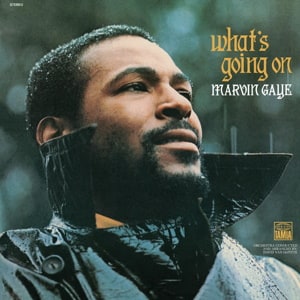
The head of his own label called it the worst record he had ever heard and refused to release it; it is now ranked the greatest album of all time.
Hitsville USA, the Motown studio in Detroit, produced the sessions across 1970 and 1971, Marvin Gaye self-producing for the first time, building a single unified suite out of jazz-inflected soul, overlapping vocals and the loose, conversational playing of the Funk Brothers. The man who stood in its way was Berry Gordy, the founder and head of Motown, Gaye's own boss. Gordy refused to release it and called it "the worst record I've heard in my life," certain the protest themes would alienate Motown's pop audience. Gaye had to threaten never to record another note for the label to force it into the world.
The sound is warm where the message is grave, which is the miracle of it. "What's Going On" opens on a party murmur and a saxophone line, then Gaye's voice floats in multitracked against itself, singing lead and answering himself in harmony, a conversation between one man and his own conscience. "Mercy Mercy Me (The Ecology)" mourns the poisoned planet over strings so lush they ache. "Inner City Blues (Make Me Wanna Holler)" rides a bassline by James Jamerson so fluid it sounds improvised, the despair in the lyric carried on the most gorgeous groove Motown ever cut. The whole record flows as one piece, song bleeding into song, the first Motown album an artist shaped as a unified statement.
The making of it was a quiet revolution inside Motown's hit factory. Gaye had been grieving his singing partner Tammi Terrell, who died in 1970, and watching his brother Frankie return from Vietnam, and he poured both into a record that began with a song the Four Tops' Obie Benson had started and Gaye finished. He recorded with Motown's house band, the Funk Brothers, but loosened them from the assembly-line formula, letting James Jamerson's bass roam and the players breathe, capturing studio chatter and overlapping conversation that bleeds from track to track. He double-tracked his own lead vocals against a softer harmony version of himself, a happy accident from a mixing session that became the album's signature sound, two Marvins in dialogue. Detroit saxophonist Eli Fountain played the mournful alto line that opens "What's Going On" almost as a throwaway, and Gaye kept it. The result flowed as one continuous suite, the first time a Motown artist had been allowed to shape an album as a single statement instead of a singles vehicle. It went to number one on the R&B chart and number two on the pop chart, sold in the millions, and in 2020 Rolling Stone named it the greatest album of all time. Sit with the full shape of the wrong call. The man who ran the most successful record label in America heard the album that the world would one day crown the greatest ever made, and called it the worst record of his life. The concept soul album, socially conscious R&B, Stevie Wonder's golden run, D'Angelo and Kendrick Lamar's To Pimp a Butterfly all begin here. No verdict in the history of recorded music has aged worse, and none ever will.
Lineage: the concept soul album, socially-conscious R&B, Stevie Wonder, D'Angelo, Kendrick Lamar's To Pimp a Butterfly.
The pattern is almost a law of physics by now. The record that sounds wrong on a Tuesday is the one nobody can stop copying by the end of the decade, and the louder the first flinch, the bigger the eventual reversal. Most bad reviews are correct, which is the trap. Most flops stay flops, most panned albums deserve it, and a critic who bet against every difficult record would win the bet far more often than not. The handful of times they lose, though, they lose to the records that change everything, and those are the only ones anybody remembers.
So give the record that leaves you cold a tenth spin before you write it off. Berry Gordy heard What's Going On once and pronounced it the worst thing he had ever heard, and he was the smartest man in the building. The flinch is honest, and the flinch is human, and sometimes the flinch is the sound of your ears meeting something they have no map for yet. History keeps siding with the records, not the verdicts, and it has never once changed its mind back.

Loading comments…