From a clapping song that might lose the war to the single the charts were rigged to keep off the top, here are the 25 records the BBC tried to silence - and how nearly every one of them won.
Walk into a branch of WH Smith in the last week of June 1977 and look up at the chart wall. Number one is there, number three is there, but at number two you find a blank line. No artist, no title, just white space where a record should be. Everyone in the shop knew what belonged there. The Sex Pistols had outsold the field that week, and the British music industry had decided the country would rather stare at a gap than read the words "God Save the Queen" during the Queen's own jubilee.
That blank line is the whole story of this list in one image. For most of the twentieth century the BBC held a near-monopoly on what came out of British radios, and it used that power to decide which songs the public was fit to hear. The corporation banned for sex, for drugs, for politics, and for reasons so strange they read like comedy now. A clapping song was restricted in 1942 because factory workers might down tools to join in. A Billie Holiday vocal stayed off the air for sixty-six years over a suicide myth that a 2008 study took apart in a single paper.
Here is the pattern you will see again and again. The BBC bans a record, the ban becomes the story, and the record sells. Ricky Valance went to number one for three weeks while banned. Serge Gainsbourg and Jane Birkin topped the chart while the corporation refused to touch them. The ban was a marketing department the labels never had to pay for.
One quick note before we start, because the myths are half the fun. "Lucy in the Sky with Diamonds" was never banned. The acronym story is too neat to die, but the BBC played the track on Kenny Everett's show on 20 May 1967, before the album was even out. The only Sgt. Pepper song the corporation actually blacklisted was "A Day in the Life," and you will find it near the top of this list. When someone tells you a song was banned, ask them by whom, and for what. The truth is stranger and funnier than the legend almost every time. Counting down from 25.
Deep in the Heart of Texas
The only record on this list the BBC feared because it made people clap.
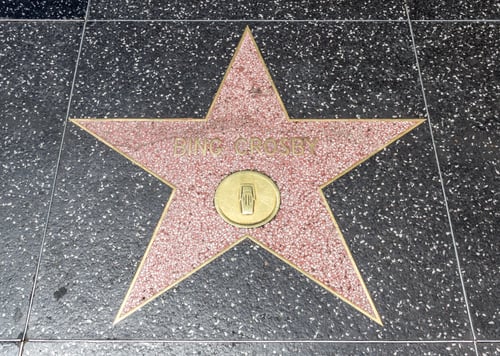
In 1942, with the country at war and every shell counting, BBC programmers looked at a novelty song from across the Atlantic and decided it was a threat to British productivity. "Deep in the Heart of Texas" had a chorus built around a call-and-response clap, four sharp handclaps dropped into the gap after each line. Bing Crosby cut a version. So did Alvino Rey, Ted Weems and Horace Heidt. The tune was everywhere, and that was the problem.
The corporation restricted the song during working hours, on the stated grounds that its "infectious melody might cause British wartime factory-hands to neglect their tools while they clapped in time with the song." Read that twice. The fear was not sex or sedition or drugs. The fear was that a woman riveting a Spitfire fuselage might lift her hands off the line to clap along, and that those four beats, multiplied across a thousand factory floors, might cost the war effort a measurable number of aeroplanes.
This was a daytime restriction rather than a total prohibition, which is the kind of distinction the BBC loved. You could hear the song after the shift ended. You could not hear it while the lathe was running. The restriction lifted before the war did, and the episode survives now as the most charming line in the corporation's censorship history. No British factory was ever documented downing tools for a clap. The threat lived entirely in a programmer's imagination, which is where a surprising number of these bans began.
Lineage: The first BBC ban rooted in what music does to bodies rather than minds, a worry that returned with rock and roll twenty years later.

Lola
The most misremembered ban on this list - it was never about who Lola was.
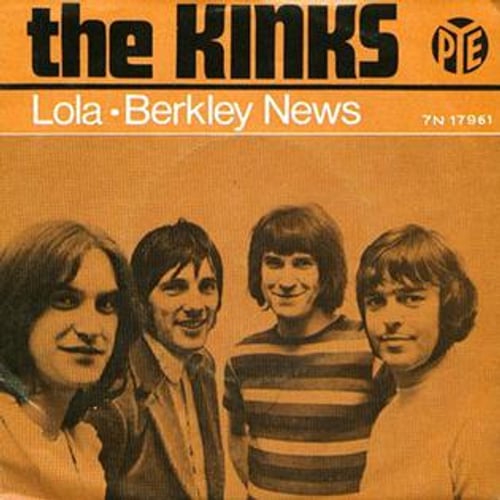
People file "Lola" under banned-for-being-shocking, and they have the wrong shock in mind. The BBC had no issue with the song's subject, a young man's giddy night with someone he meets in a Soho club who "walked like a woman but talked like a man." The corporation's objection was a brand name. Ray Davies sang "it tastes just like Coca-Cola," and BBC policy forbade product placement in broadcast music. That was the whole offence.
What happened next is the bit that beggars belief. Davies was on tour in the United States when the BBC made clear the record was ineligible for airplay until the brand was gone. So he flew home. He flew across the Atlantic, into a London studio around 23 May 1970, was unhappy with the take, and flew back to America. On 3 June he returned to London a second time and finally cut the line as "it tastes just like cherry cola." Two round trips, roughly 26,000 kilometres of air travel, for one word.
The cherry cola version went out and reached number two on the UK chart. Australian radio did ban the song that November, citing "controversial subject matter," but that was a separate country reacting to the thing the BBC never minded. The Kinks case is the cleanest proof that a BBC ban did not always mean the corporation was scandalised. Sometimes it meant a lawyer in Broadcasting House had spotted a trademark.
Lineage: The textbook example for explaining the BBC's advertising rule, the censorship nobody remembers correctly.
When I'm Cleaning Windows
Reith called it a disgusting little ditty. The Royal Family overruled him.
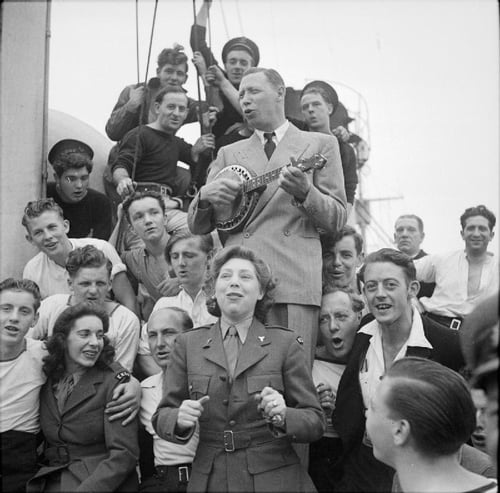
George Formby, ukulele in hand and grin fixed, sang about a window cleaner who sees a little more than glass. The narrator of "When I'm Cleaning Windows" catches neighbours undressing, honeymooners in bed, a nudist colony going about its business. The song appeared in the 1936 film Keep Your Seats, Please and went straight into the cinema, where the laughs were loud and the BBC had no jurisdiction. On the radio it was another matter.
Director General John Reith, a Presbyterian Scot who ran the corporation like a pulpit, endorsed a ban that held for roughly five years. His verdict survives and it is magnificent in its disdain. "If the public wants to listen to Formby singing his disgusting little ditty," Reith said, "they'll have to be content to hear it in the cinemas, not over the nation's airwaves." The same instinct caught Formby's "With My Little Stick of Blackpool Rock," which a 1946 BBC memo handled with the line, "We do however know, and so does Formby, that certain lines in the lyric must not be broadcast."
The ban broke on royalty. Formby's wife and manager Beryl Ingham told the BBC that the song was a favourite of Queen Mary, and that Formby had performed it for the King and Queen at a Royal Variety show. The corporation that had called the song disgusting could not keep banning a number the monarch enjoyed. The restriction lifted in 1941. Reith's morality met the Royal Family's sense of humour, and the morality lost.
Lineage: Established the double entendre as a BBC target, the precedent British light entertainment tiptoed around for thirty years.
Tell Laura I Love Her
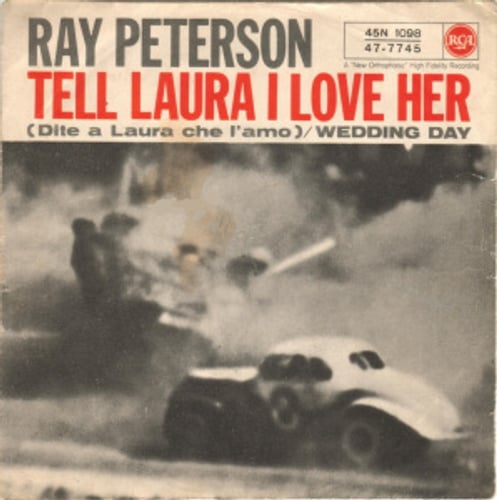
Banned as morbid, sold a million, and went to number one for three weeks anyway.
A teenage boy enters a stock car race to win prize money for an engagement ring. The car flips, the boy is dying, and his last words are a message for his girlfriend. "Tell Laura I Love Her" was a death disc, the early-sixties genre that turned teenage tragedy into chart pop, and the BBC wanted no part of it. The corporation banned Ricky Valance's recording as bad taste, fretting openly that morbid songs might inspire copycat behaviour in impressionable young listeners.
The squeamishness ran deep across the industry. Decca in the UK refused to release the American original by Ray Peterson at all, pressing roughly 25,000 copies and then destroying them, calling the song "too tasteless and vulgar." Valance's cover got a release but no BBC airplay and no television slot, which should have killed it. It did the opposite.
"Tell Laura I Love Her" went to number one and held the top for three weeks, selling over a million copies and becoming the biggest-selling banned UK number one of its era. Valance, a Welshman, became the first Welsh artist to top the UK chart as a soloist, and stayed the only one for decades. The death disc panic rolled on through "Johnny Remember Me" and others, a moral worry about teenagers and mortality that the BBC kept losing. Johnnie Ray's "Such a Night" had already shown the way in 1954, banned for being too racy and number one regardless. Britain wanted these records precisely because it was told it shouldn't.
Lineage: Kicked off a death-disc wave on both sides of the Atlantic and a running BBC panic about teenagers and mortality.
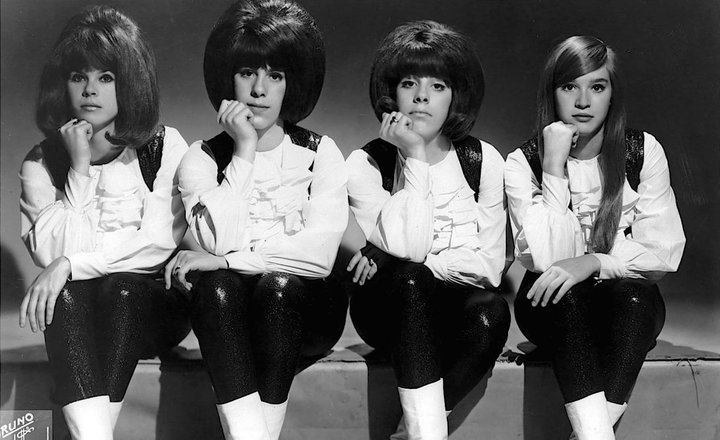
Leader of the Pack
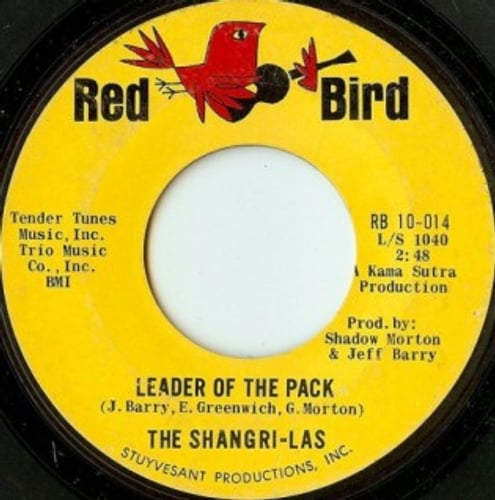
Banned for eight years and it charted three separate times, climbing higher each return.
Motorcycle revving, a girl in love with the wrong boy, and a crash you hear coming the moment the strings turn cold. "Leader of the Pack" had everything the BBC distrusted about teenage pop in the mid-sixties. The corporation refused to broadcast it from around its late-1964 UK release, parking it in the death-disc category next to "Tell Laura I Love Her." There were murmurs too that the song might stir trouble between mods and rockers, the gangs whose seaside brawls had filled the papers in 1964.
The ban lasted eight years, and the song refused to stay buried for any of them. On pirate radio and word of mouth it reached number 11 in 1965 while the BBC pretended it did not exist. That should have been the end of a banned record's commercial life. It was the beginning.
When the ban finally lifted in 1972, the song re-charted at number three, higher than it had managed when new. In 1976 it returned a third time and hit number seven. Three chart runs across three different pop eras, each one a fresh audience discovering what the corporation had hidden, and the highest peak coming after the ban was gone rather than during it. Record labels were watching closely. They learned that lifting a BBC ban could be a marketing event in itself, a lesson they spent the rest of the seventies cashing in. The Shangri-Las made the case that a ban was not a wall. It was a delay, and a profitable one.
Lineage: Taught the industry that a lifted ban was a relaunch, fuelling the heritage-reissue tactics of the 1970s.
Killing in the Name
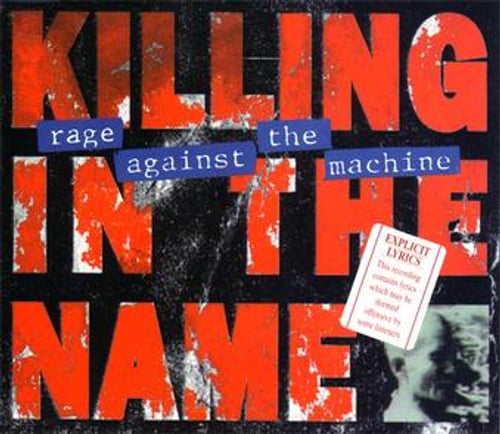
A band whose whole song is about defying orders was asked to behave, live, on the BBC.
For five years the UK Christmas number one had belonged to whoever won The X Factor. In 2009 a couple ran a Facebook campaign to break the run with a seventeen-year-old American rap-metal track, and it worked. "Killing in the Name" by Rage Against the Machine took the Christmas top spot, selling 502,672 copies in its chart week, at the time the highest-selling digital single in UK history. The trouble was the ending. The song climaxes with Zack de la Rocha screaming "Fuck you, I won't do what you tell me" sixteen times.
Radio 1 reached for an edited version and got on with it. The real comedy came on 5 Live, which booked the band for a live performance and asked them, sweetly, not to swear. The band agreed. Then de la Rocha got to the outro, managed four rounds of the line before a producer panicked, and the broadcast cut to a fade with an apology stammered over the top.
The BBC's own account is almost too good. "When the band accepted our request for an interview," the corporation said, "and then agreed to perform the song live from Los Angeles, we were aware of the need to address this issue... When it became clear on air they were including the f-words, we faded the song out and apologised." A national broadcaster asked a song explicitly about refusing instructions to follow instructions, on air, and was astonished when it didn't. The clip outlived almost everything the BBC approved that Christmas.
Lineage: The post-modern BBC ban, where the act of containment proved the song's argument in real time.
(We Don't Need This) Fascist Groove Thang
An anti-fascist song, banned because the BBC's lawyers worried it had libelled a president.
Most bans on this list came from a moral committee. This one came from a legal department, which makes it rare. Heaven 17 released "(We Don't Need This) Fascist Groove Thang" on 13 March 1981, a sleek synth-funk record with a line describing Ronald Reagan as a "fascist god in motion." Radio 1's lawyers read that, and instead of fretting about decency they fretted about defamation. They ruled the song libelled the President of the United States.
That is a genuinely strange thing for a music station to decide. The BBC told the band that any Top of the Pops performance would need the Reagan references gone, and the band complied, swapping "Reagan, fascist guard" for the nonsense-safe "Stateside cowboy guard." The Independent Broadcasting Authority then refused to air Virgin's radio adverts for the single, ruling they breached political neutrality. The record got squeezed from every direction.
The cost showed in the chart. "Fascist Groove Thang" stalled at number 45, well below what a Heaven 17 single of that quality should have managed, the ban having strangled its exposure. The irony was lost on nobody then and is lost on nobody now. A song attacking fascism was suppressed for the offence of calling a right-wing politician a fascist, and the corporation that did it dressed the decision up as protecting Reagan's good name. The BBC reached for libel law exactly twice in its history of bans. This was the time it looked most absurd doing it.
Lineage: One of only two BBC bans grounded in defamation rather than decency, and the one that aged into pure irony.
I Want Your Sex
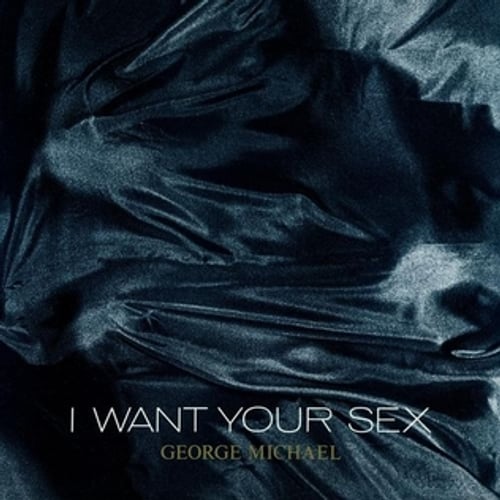
A daytime ban in the middle of the AIDS crisis, aimed at a man it could not begin to read.
George Michael put the word "sex" in a single title in June 1987 and Radio 1 flinched. The station did not ban "I Want Your Sex" outright. It restricted the record to post-watershed hours, keeping it off daytime radio, and tied the decision directly to the AIDS crisis then dominating British public health. Radio 1 was running its own AIDS awareness content, and feared a song with that title would read as a nudge towards promiscuity.
The corporation said the song "might promote promiscuity and could be counterproductive to contemporary campaigns about AIDS awareness." Michael, who had actually written the song about monogamy and a single partner, was furious at being caught in a public health panic. "I wasn't expecting the blanket ban," he said. "I think it's unfair... if I were not George Michael then I would have no problem being played on those stations. And it's incredibly irritating having a record out for a couple of weeks and knowing that people haven't heard it."
People heard it anyway. The single reached number three in the UK and number two in America, and launched the Faith album era that made George Michael one of the biggest stars on earth. The deeper irony only sharpened with time. Michael was gay and closeted in 1987, restricted by a ban ostensibly about discouraging casual sex, written by a man the BBC had no idea how to see. The decision belongs entirely to its moment, a snapshot of a country frightened and fumbling.
Lineage: The most era-specific ban on this list, welded to the AIDS panic of 1987 in a way no other can claim.
Smack My Bitch Up
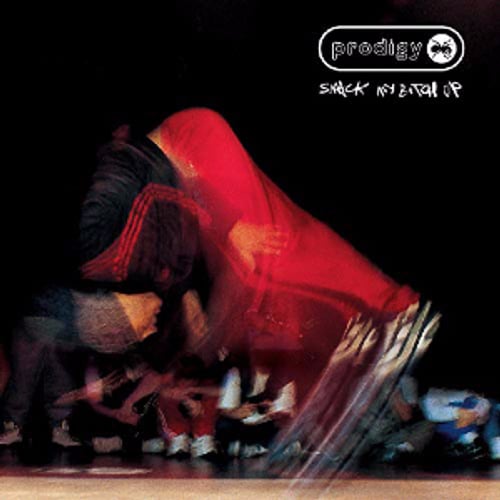
A title so unsayable the World Service called it, simply, "Smack."
Three words got The Prodigy into trouble in 1997, and the BBC could not bring itself to say them. "Smack My Bitch Up" reached number eight in the UK, which created a problem the corporation had rarely faced: a hit single whose title it refused to speak aloud. Radio 1 banned vocal airplay and would not read the name on chart rundowns, playing other tracks from the release instead. The World Service went further into the surreal, referring to the record only as "Smack."
Enforcement was a mess at first. On the song's debut Top of the Pops countdown a DJ Hype remix went out during the top 20 "including the offending lyric," before the BBC tightened up. The Jonas Akerlund video, a first-person blur of drugs, violence and sex with a closing twist, got pushed past midnight on MTV and then pulled, while Channel 4 ran it uncut late at night. The corporation that would not say the title found itself surrounded by people who would show the film.
The Prodigy argued the phrase meant "doing anything intensely," a defence that convinced few feminist critics and fewer headline writers. The record reached number eight regardless, and in a 2010 BBC poll the public voted it the most controversial track of all time. The closing irony arrived in 2023, when the band, after Keith Flint's death, rewrote the line for live shows themselves, retiring the phrase the BBC had spent twenty-six years too squeamish to pronounce. The artists did what the ban never managed.
Lineage: Showed the limits of a ban that dared not speak the record's name, while the public voted it the most controversial track ever.
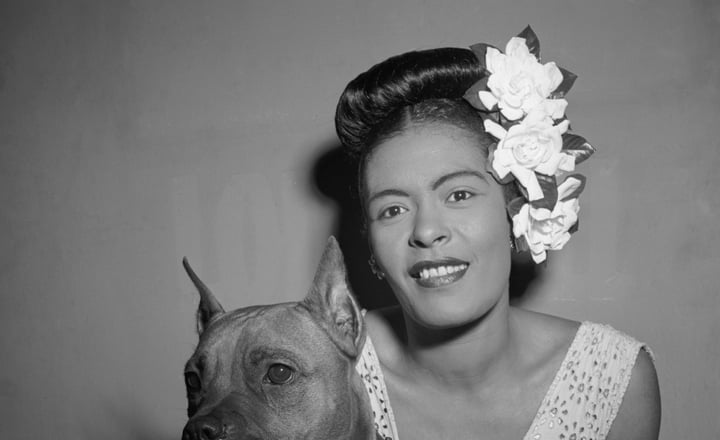
Gloomy Sunday
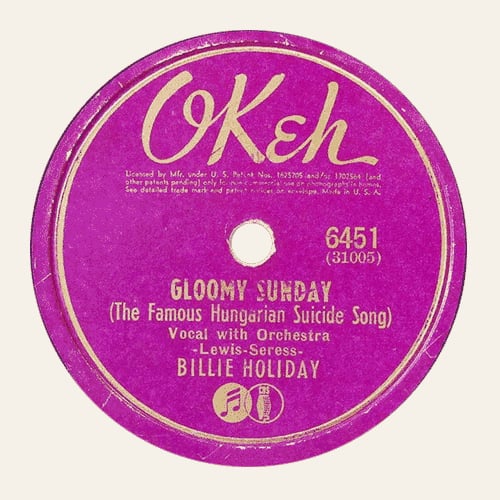
Sixty-six years off the air for a suicide myth a single 2008 study took apart.
No ban on this list lasted longer. The BBC restricted vocal recordings of "Gloomy Sunday" from around 1936, allowing instrumental versions while keeping the sung word off the air, and the restriction held until 2002. Sixty-six years. Billie Holiday cut the definitive English version in 1941, her voice heavy as wet wool over the verses about grief and a funeral, and British listeners could not hear it on the BBC for the better part of seven decades.
The stated worry was wartime morale at first, then something darker. The Hungarian original by Rezso Seress had picked up a reputation as a suicide song, with press reports tying it to at least 19 deaths in Hungary and the United States. The legend grew in the telling, as legends do, until the BBC was treating a piece of music as a public danger. The first confirmed BBC broadcast of the vocal came on 23 October 2003, longer after the recording than most people live.
The legend was rubbish. A 2008 study published in a peer-reviewed journal, asking whether the "Hungarian suicide song" really created a suicide epidemic, found no reliable epidemiological evidence of any such thing. Sixty-six years of silence rested on a story nobody had checked. It stands as the first great "music kills" moral panic, half a century before the same fear was aimed at heavy metal and emo, and the longest unbroken proof that a BBC ban could outlive its own reasoning by decades.
Lineage: The original music-causes-suicide panic, predating the metal and emo scares by fifty years and lasting longer than all of them.
Jackie
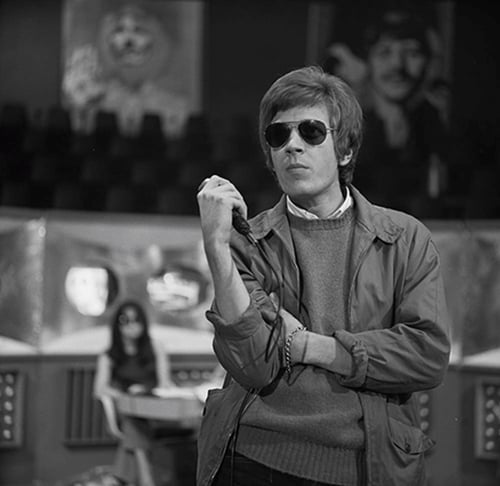
Radio 1's first ban, landing weeks after Parliament part-decriminalised what the lyric mentioned.
When BBC Radio 1 launched on 30 September 1967, it needed a sound, a roster, and apparently a first record to ban. That distinction went to Scott Walker's "Jackie," a translation of a Jacques Brel song, freshly minted as the new national pop station's founding act of censorship. The objection was a single phrase, "authentic queers and phony virgins," plus a passing mention of opium. Sex and drugs in one breath, and the new station said no.
The timing turns the ban from a footnote into something sharper. The Sexual Offences Act 1967 had part-decriminalised male homosexual acts in private only months earlier. Parliament had just moved, cautiously, towards tolerance, and the BBC marked the dawn of Radio 1 by banning a song for naming the very thing the law had begun to permit. The state's left hand decriminalised what its broadcasting arm would not air.
"Jackie" reached number 22, a modest showing for Walker at his commercial peak, the ban clipping his reach when he could least afford it. The symbolic weight outran the chart. Britain's brand-new pop station had announced its values in its opening days, and they were not the values of the Parliament next door. Walker took the controversy and ran the other way with it, turning over the following years from teen idol into the avant-garde recluse who made some of the strangest records Britain ever produced. The ban that was meant to contain him helped set him free.
Lineage: Radio 1's debut act of censorship, arriving weeks after Parliament part-decriminalised exactly what the lyric named.
Wet Dream
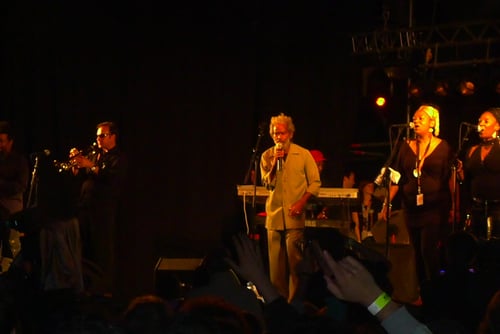
DJs were ordered to call it "a record by Max Romeo." It charted for 26 weeks anyway.
Two plays. That is all "Wet Dream" got on Radio 1 before the BBC banned it in 1969, and the ban came with one of the strangest instructions in the corporation's history. When the song stubbornly entered the chart regardless, DJs including Tony Blackburn and Alan Freeman were told they must refer to it only as "a record by Max Romeo," never by its title. The BBC would rather its own presenters sound evasive than let the word "dream" go out attached to the wrong adjective.
The lyric the corporation could not abide ran "lie down gal, mek mi push it up," which Romeo insisted, with a straight face, described a leaky bedroom ceiling rather than anything else. Nobody believed him and that was the joke. "The devil made me do it," he said later, when the pretence had outlived its usefulness, and elsewhere, "I started the sexual revolution."
The chart told the real story. "Wet Dream" peaked at number 10 and stayed on the chart for 26 weeks, an extraordinary run for a record no DJ could name, and the first reggae song to hold the UK chart for so long. That last fact matters more than the innuendo. Reggae was nearly invisible in BBC programming in 1969, and the ban, by making "Wet Dream" notorious, dragged the genre in front of a mainstream British audience for the first time. The corporation tried to make a record disappear and instead introduced a whole sound to the country.
Lineage: Reggae's first sustained UK chart run, and the ban that smuggled the genre into mainstream British ears.
Ebeneezer Goode
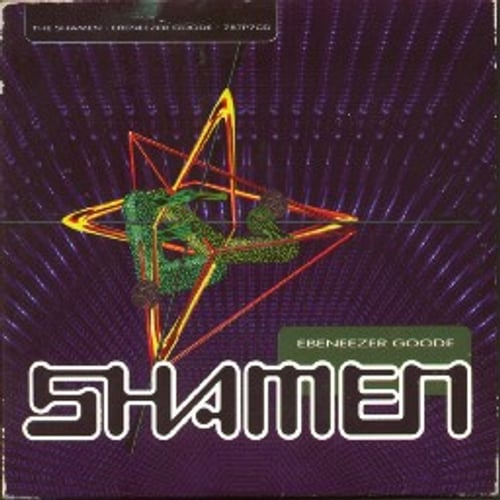
Number one for four weeks during the BBC's own drug awareness week. "It was a rug reference."
The chorus does the crime. Chanted fast and loud, "Eezer Goode, Eezer Goode" turns into "E's are good, E's are good," and in 1992, with ecstasy flooding British dancefloors, the BBC heard exactly what The Shamen intended. The corporation banned the record for encouraging drug use. It then promptly let the band perform it live on Top of the Pops twice during its chart run, on 3 and 17 September, which is not how a ban is supposed to work.
For the television slots, rapper Mr C swapped the line "Has anyone got any Veras?" for "Has anyone got any Underlay?" The next day on Radio 1, DJ Mark Goodier asked him what that was about. "Oh," Mr C said, "it was a rug reference." Underlay, you see. For carpets. The cheek of it became rave folklore on the spot, and Mr C later admitted he was "on ecstasy and acid" during the performances, which rather settled the question of intent.
The chart made the ban look ridiculous. "Ebeneezer Goode" entered at number six and climbed to number one, where it sat for four weeks, including the week the BBC was running its own drug awareness programming. A song the corporation had banned for promoting ecstasy was the country's biggest record during the corporation's anti-drugs push, performed on the corporation's flagship show. The Broadcasting Standards Council later ruled it should never have aired. By then the point was made: at number one, no broadcast policy could touch you.
Lineage: The case study in enforcement by embarrassment, and proof that the top of the chart beat any BBC policy.
Glad to Be Gay
Radio 1 swapped it out of the chart rundown. John Peel played it anyway.
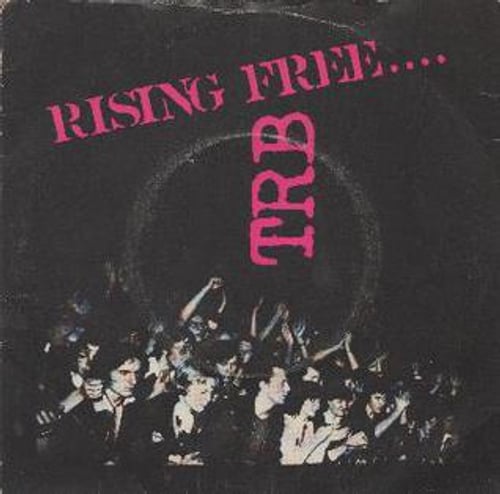
The Tom Robinson Band put "Glad to Be Gay" on the "Rising Free" EP in February 1978, and Radio 1 handled it with a quiet trick. The EP charted, which meant the station had to feature it in the Top 40 rundown, so it played a different track from the record instead, the safer "Don't Take No for an Answer," and kept the title song off the playlist. The ban was never announced. It was done by substitution, the corporation hoping nobody would notice the gap.
The song was no gentle plea for tolerance. It celebrated gay identity outright and named names, attacking police harassment of gay men, the tabloid press, and the institutional homophobia of 1978 Britain, a year when BBC broadcasting standards had no framework for affirming queer life at all. The corporation could not bring itself to play it and could not bring itself to explain why.
John Peel could. Peel broadcast the track on his Radio 1 show in open defiance of management, his late-night slot carrying an editorial freedom the daytime schedule did not, and his audience kept the song alive. On Capital Radio's listener-voted Hitline it reached number one for six straight weeks while Radio 1 pretended. The "Rising Free" EP made number 18. The song became the de facto British gay anthem of the late seventies, repeatedly rewritten by Robinson across the decades, and the BBC's silent substitution looks, from here, like a corporation hiding from its own listeners.
Lineage: The first gay-pride pop song to chart under BBC restriction, and a marker of how far Peel's autonomy outran daytime caution.
My Generation
Banned for the stutter, beaten by the pirates broadcasting from international waters.
Roger Daltrey stammers his way through "My Generation," and that stammer got it banned. When the record arrived in November 1965, the BBC restricted it for being offensive to people with speech impediments, fixing on Daltrey's deliberate stutter through the line "Why don't you all f-f-f-fade away." The corporation read a slur where the band had built a hook, and pulled the record from playlists.
Pete Townshend's later explanation reframes the whole thing. The stutter, he said, "was meant to mimic teenage boys who'd popped so many amphetamines that they stuttered when they spoke." Had the BBC grasped that at the time, it would have had a drugs ban on its hands rather than a disability one. It grasped neither, and the ban went out for the wrong reason entirely.
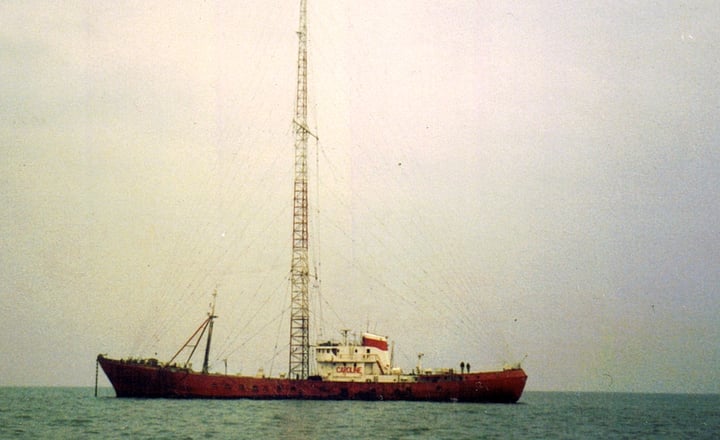
What broke it was the pirates. Radio Caroline and Radio London, broadcasting from ships in international waters beyond the corporation's reach, gave "My Generation" saturation airplay, and the BBC's ban turned to vapour. You cannot suppress a record that half the country is hearing from the North Sea. The song climbed to number two and sold around 300,000 copies while the corporation's restriction did nothing, and the episode became a landmark in how offshore radio shattered the BBC's grip on British pop. From 1965 on, every artist knew the pirates could overrule Broadcasting House. The ban had stopped being a wall. It had become a suggestion.
Lineage: Made the pirate-radio bypass the standard answer to a BBC ban, and proof the corporation's monopoly was already cracking.
Big Six
A Guinness world record - eleven banned hits, 300,000 sales, zero airplay.
Alex Hughes, a white Kent bouncer who recorded rude reggae as Judge Dread, holds a Guinness World Record no artist has matched: the highest number of banned songs of all time, eleven. It started with "Big Six" in 1972, a track that took nursery-rhyme structures and stuffed them with sexual innuendo, and the BBC banned it on arrival. Then it banned the next one, and the next, in the most sustained campaign the corporation ever waged against a single act.
"Big Seven" reached number eight, banned. "Big Eight" number 14, banned. His cover of "Je t'aime" number nine, banned, plus six further charting singles, all banned. The BBC even blocked his attempt to slip out cleaner material under the alias Jason Sinclair. No specific lyric ever appeared as the cited cause. The corporation objected to the whole character of the man's output and acted on it again and again, with a persistence that started to look like a grudge.
It achieved nothing commercially. "Big Six" reached number 11 with zero radio airplay, spent 27 weeks on the chart, and sold over 300,000 copies, and the entire banned catalogue charted alongside it. The ban became Judge Dread's business model. Buyers sought out the very records the BBC refused to play, because the refusal told them exactly where the fun was. Eleven bans, eleven hits, and a world record that stands as the single most extreme demonstration that the corporation could ban forever and sell a man's records for him every time.
Lineage: The Guinness record for banned songs, and the clearest evidence that persistent BBC censorship was a free advertising contract.
Fairytale of New York
The BBC reversed one edit in days, held the next, and could never agree with itself.
The best Christmas song Britain owns has been censored by the BBC twice, thirteen years apart, with opposite results. "Fairytale of New York" contains a Christmas-Eve argument between two people at the end of their luck, and that argument contains the word "faggot." In 2007, Radio 1 controller Andy Parfitt announced the station would edit the word out, along with "slut," declaring that "Radio 1 does not play homophobic lyrics or condone bullying of any kind."
The reversal took days. Listeners revolted, Shane MacGowan's mother Therese protested publicly, and Parfitt folded, calling his own decision "wrong" and restoring the original for that Christmas. In 2020 the station tried again and this time held firm, airing an alternate vocal Kirsty MacColl had recorded for a 1992 Top of the Pops slot, where she sings "you're cheap and you're haggard" instead. Radio 1 cited its young audience, "particularly sensitive to derogatory terms for gender and sexuality."
The telling detail is that the BBC never agreed with itself. Radio 2 and 6 Music kept playing the original throughout, individual DJs choosing between versions by their own judgement, which exposed the 2020 edit as a Radio 1 demographic brief rather than a corporation policy. Nick Cave called the edit "pious meddling" and warned that "if you start airbrushing history, the next generation won't learn from it, they will just live in a safe bubble." MacGowan had already defended the word as a character's insult, not the author's. The song reached number one in 2023, censored on one BBC station and unedited on two others.
Lineage: The recurring modern censorship fight, and the clearest proof that "the BBC" is several stations that rarely agree.
Ding-Dong! The Witch Is Dead
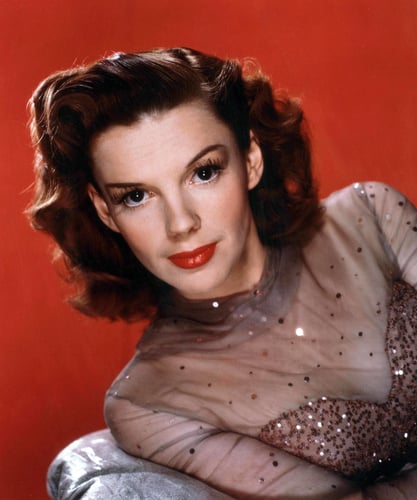
A five-second clip of a number one, because the Director General would not play the rest.
When Margaret Thatcher died on 8 April 2013, a social media campaign sent a 51-second song from a 1939 film to the top of the UK chart. "Ding-Dong! The Witch Is Dead," Judy Garland's number from The Wizard of Oz, reached number one by 12 April, carried there by everyone who wanted to dance on Thatcher's grave through the medium of the Official Chart. The BBC faced a problem with no clean answer. Play the number one as normal and it endorses the celebration. Refuse it and it censors a genuine chart result.
The decision went all the way to Director General Tony Hall, who called the campaign "tasteless" while insisting editorial independence was "sacrosanct," and signed off the compromise personally. The chart show would play a five-second clip of the song inside a Newsbeat report about the controversy, framed as journalism rather than a chart play. Radio 1 controller Ben Cooper, caught in the middle, said he was "stuck between a rock and a hard place... This is a difficult compromise."
It satisfied nobody. Anti-Thatcher campaigners saw a number one being censored. Thatcher's supporters saw even five seconds as an insult. A rival pro-Thatcher song, the Notsensibles' "I'm in Love with Margaret Thatcher," got played in full on the same programme in the name of balance, which pleased fewer people still. The "clip in a journalistic context" formula was born here, the modern corporation's preferred tool for a chart entry it cannot stomach. It was the most politically loaded chart decision since 1977, and it ducked rather than chose.
Lineage: Invented the "clip in a journalistic context" dodge, the modern BBC's standard escape from a politically loaded number one.
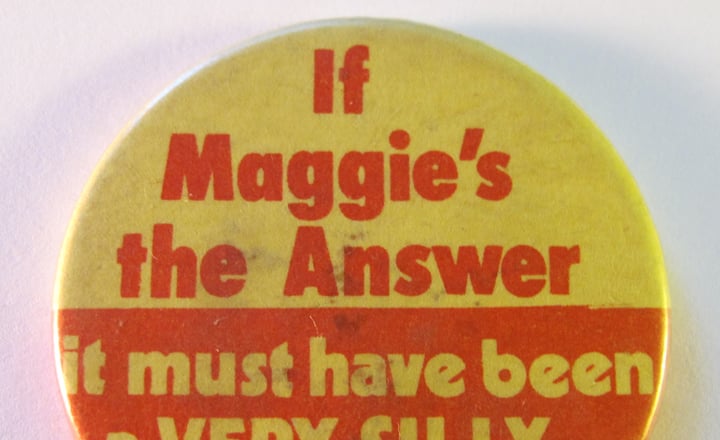
Give Ireland Back to the Irish
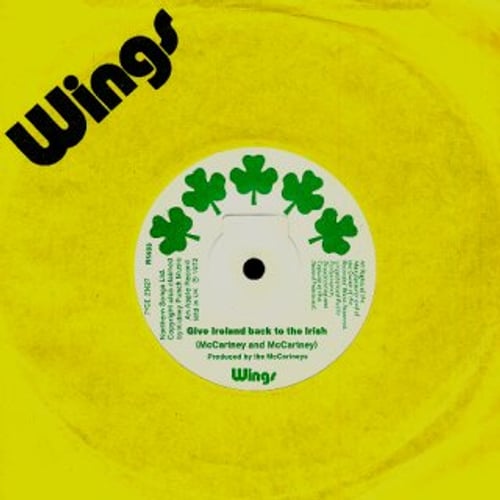
Banned three weeks after Bloody Sunday. McCartney thanked the BBC for the favour.
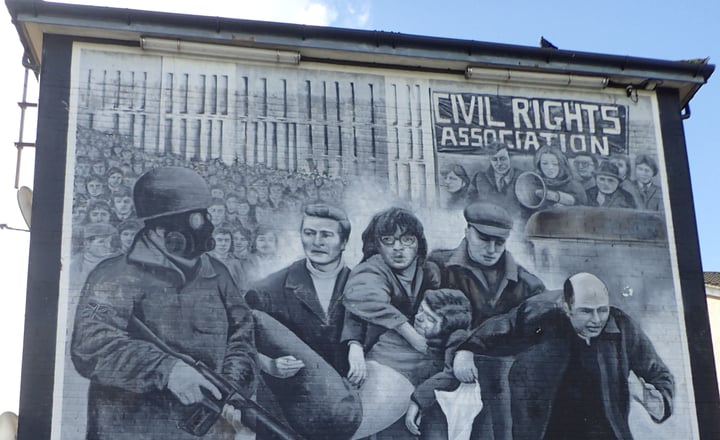
Paul McCartney, the most bankable songwriter alive, released a protest single on 25 February 1972, three weeks after British paratroopers shot 28 unarmed civil rights marchers in Derry on Bloody Sunday, killing 14. "Give Ireland Back to the Irish" took a side, and the BBC banned it at once. Radio Luxembourg followed. The Independent Television Authority refused it too, citing the Television Act's bar on political controversy. There was no framework at the corporation for a pop star commenting on a live military conflict, so the answer was silence.
The BBC said the song "adopted a definite standpoint" on Northern Ireland and was therefore "politically controversial," which was true and entirely the point. John Peel was reportedly the only BBC broadcaster to protest the ban publicly. McCartney met the whole thing with magnificent sarcasm. "Up them," he said. "I think the BBC should be highly praised for preventing the youth from hearing my opinions."
Banned across every UK outlet, the single still reached number 16 on reputation and outrage alone, and went to number one in Ireland. McCartney, savouring the absurdity, released an instrumental version titled simply "Version" to mock the gag. He was not done with the BBC that year, either. In December the corporation banned "Hi, Hi, Hi" too, for a drug reference and a misheard lyric, giving McCartney two bans in one calendar year for entirely different reasons, a feat no artist of his stature has matched. When the BBC tried the same Northern Ireland caution on The Police's "Invisible Sun" video in 1981, the lesson was already set.
Lineage: Established that the BBC would suppress music on the Troubles, a precedent that caught The Police's "Invisible Sun" video nine years later.
The Gulf War List

67 songs, including a Eurovision winner about kissing and an anthem about peace.
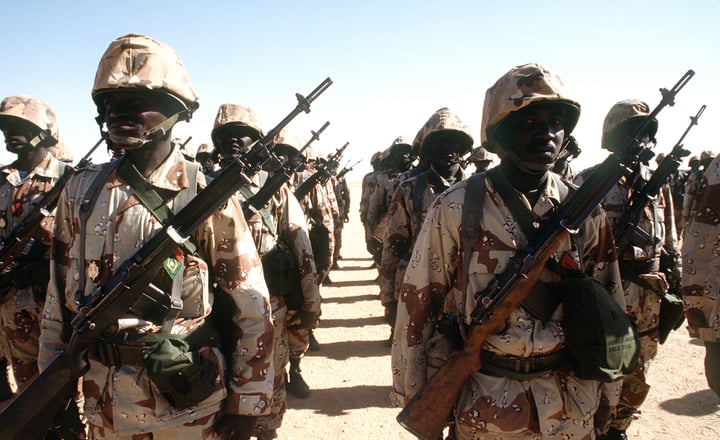
The strangest entry on this list is not a song. It is a list, the one the BBC drew up in January 1991 as Operation Desert Storm began, naming roughly 67 records deemed "potentially sensitive" for airplay. The corporation never admitted to it at the time, saying only that "a few" songs had been pulled. Then New Statesman and Society printed the whole thing that April, under the title "The Filtered War," and the document became a monument to institutional panic.
The logic, if you can call it that, was word association. If a title contained anything tangentially linked to conflict, however romantic or daft the actual song, it went on the list. ABBA's "Waterloo," a woman comparing falling in love to Napoleon's defeat, was restricted for the battle. Lulu's "Boom Bang-a-Bang," the 1969 Eurovision winner about the thrill of kissing, was caught by "boom" and "bang." Roberta Flack's "Killing Me Softly with His Song" fell foul of "killing." The anti-war songs went too, which is the part that breaks the brain: John Lennon's "Give Peace a Chance," Edwin Starr's "War," and Nicole's "A Little Peace," the Eurovision winner that is a literal plea for peace, all restricted in case peace inflamed the public.
The BBC's defence was that a love song after a bulletin announcing a tragedy "would be offensive." The British Forces Broadcasting Service, serving the actual troops, reportedly ignored the list and played the records anyway. One footnote captures the climate perfectly. Massive Attack's label changed the band's name to plain "Massive" for the February 1991 release of "Unfinished Sympathy," fearing the word "Attack" would land them on a guidance list, at a cost of around £10,000 in reprinted artwork. Robert Del Naja called it "the only compromise we've ever made." The full name returned the day the ceasefire was signed.
Lineage: The leaked document that turned BBC censorship into a national joke, and the high-water mark of broadcasting by panic.
Spasticus Autisticus
A disabled man's protest, restricted by non-disabled gatekeepers, then sung at the Paralympics on the BBC.
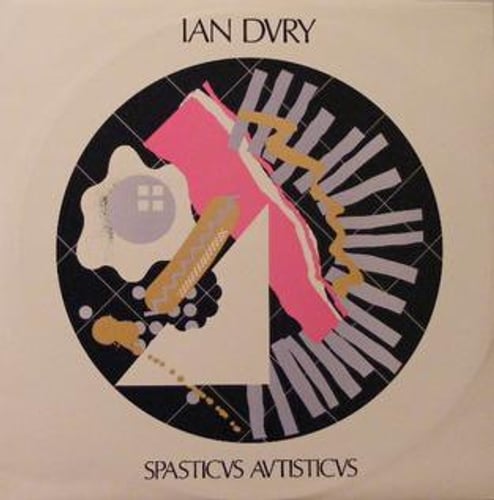
Ian Dury caught polio as a child and spent his life disabled, and in 1981 he wrote a furious song about it. "Spasticus Autisticus" was his answer to the International Year of Disabled Persons, which he found patronising, and he aimed it like a brick. The title alone, plus lines such as "I dribble when I piddle 'cos my middle is a riddle," guaranteed trouble, and Dury knew it. He wrote the song, in his own words, "knowing it would cause trouble, and hoping it would be banned."
The BBC obliged, sort of. It restricted the track to post-6pm broadcast, which kept it off daytime radio and away from the chart exposure it needed. The corporation reportedly did not even know Dury was disabled. The word "spastic" was shifting in 1981 from medical term to slur, and the BBC applied the slur reading to a song a disabled man had written to reclaim it. Dury's label put it best: "Just as nobody bans handicapped people - just makes it difficult for them to function as normal people - so 'Spasticus Autisticus' was not banned, it was just made impossible to function."
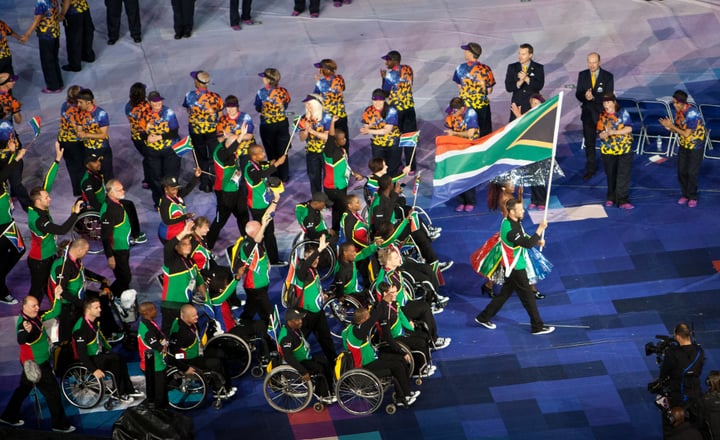
The rehabilitation came 31 years later and it is the most poetic reversal in this whole history. At the opening ceremony of the 2012 London Paralympic Games, Orbital performed "Spasticus Autisticus" alongside the Graeae Theatre Company, in front of the world, broadcast live on the BBC. The corporation that had once made the song impossible to function now beamed it across the planet as a celebration of disabled people. No ban on this list was undone so completely, or by the very institution that imposed it.
Lineage: A landmark of disability-rights culture, and the most complete reversal the BBC ever performed on its own censorship.
Je t'aime... moi non plus
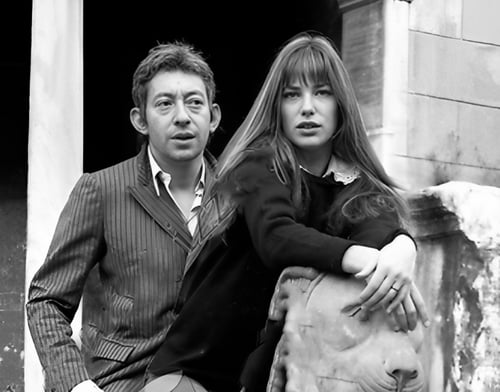
The first banned UK number one, and the first time Top of the Pops refused to play the chart-topper.
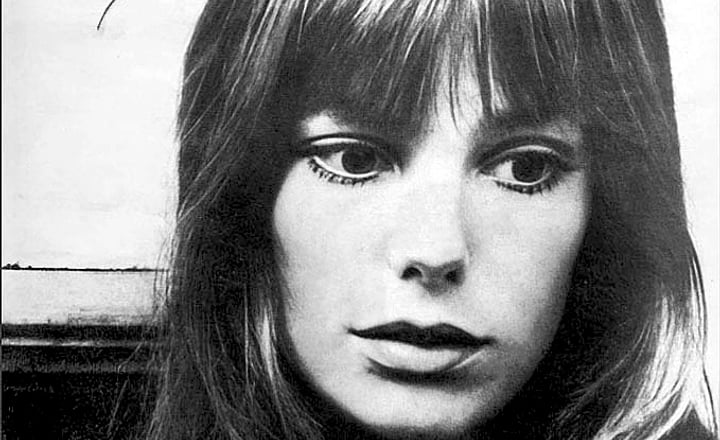
Heavy breathing, a Hammond organ, and Jane Birkin sighing in French over Serge Gainsbourg's murmured replies. "Je t'aime... moi non plus" was too much for the BBC in 1969, and the corporation banned it from Radio 1 and refused to show it on Top of the Pops, the first time the programme ever turned away a number one single. The audio was the offence: the simulated climax, the explicit French, the unmistakable subject. The corporation wanted none of it on any platform.
None of that stopped it. The song topped the UK chart in October 1969 and made two pieces of history at once, the first foreign-language single to reach UK number one and the first banned record to do so. Gainsbourg had originally cut it in 1967 with Brigitte Bardot, who had it suppressed; the 1969 Birkin version was the one that conquered Britain over the corporation's objection. Spain, Italy, Sweden and Brazil banned it too. The Vatican condemned it, and Gainsbourg, delighted, called the Pope "our greatest PR man." Birkin remembered the line fondly: "It was banned immediately in Italy by the Pope. But Serge just called him 'our greatest PR man.'"
This is the entry that exposed the limit of the BBC's power. A record the corporation refused to play on any frequency, refused to show on its biggest programme, and could not keep from the very top of the national chart. The contradiction was too public to ignore, and producers learned from it. Refuse a number one and you announce that the chart and the BBC no longer agreed on what Britain wanted to hear. After "Je t'aime," every ban carried that risk.
Lineage: The first banned UK number one, the record that taught Top of the Pops what refusing a chart-topper would cost it.
A Day in the Life
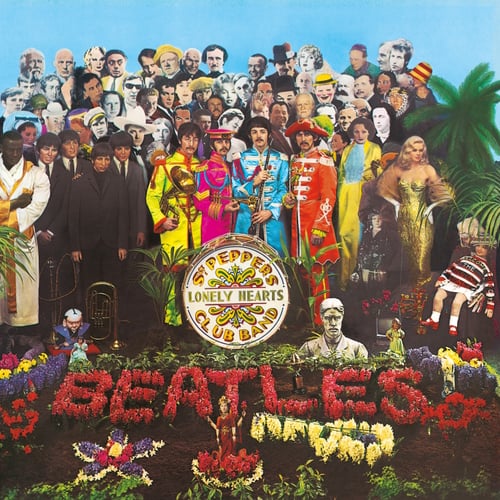
The best-documented ban in BBC history, signed and dated, a week before Sgt. Pepper.
On 23 May 1967, one week before Sgt. Pepper's Lonely Hearts Club Band reached the shops, a letter landed on the desk of Sir Joseph Lockwood, head of EMI. It came from Frank Gillard, the BBC's Director of Sound Broadcasting, and it banned "A Day in the Life" from every BBC frequency. Most bans on this list survive as rumour and secondhand quotes. This one survives as a document, dated and signed, which makes it the single best-evidenced act of censorship the corporation ever committed.
Gillard's objection was a line: "I'd love to turn you on." The letter laid out the reasoning with bureaucratic care. "The recording may have been made in innocence and good faith," it ran, "but we must take account of the interpretation that many young people would inevitably put upon it." And the heart of it: "'Turned on' is a phrase which can be used in many different circumstances, but it is currently much in vogue in the jargon of the drug addicts." A national broadcaster reading a Beatles lyric for narcotics slang and writing it all down.
The Beatles waved it away. McCartney: "It has nothing to do with drug taking. It's only about a dream." Lennon: "We wrote this from a headline in a newspaper." The track was never a single, so there is no chart placing to cite, but Sgt. Pepper became the album of 1967 regardless, and the ban only sharpened its legend. The Gillard letter is the most quoted document in BBC censorship history, and it set the template the corporation used for years, reading drug references into pop one line at a time. Note what it did not ban. "Lucy in the Sky with Diamonds," the LSD song everyone insists was forbidden, went out on Radio 1 before the album even arrived.
Lineage: The most-quoted document in BBC censorship history, the template for line-by-line drug interpretation through the rest of the decade.
Relax
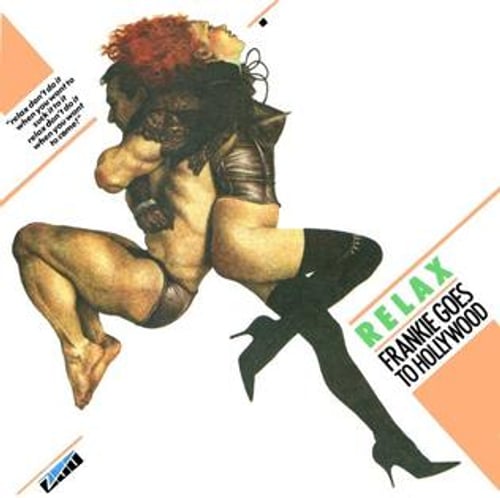
The most famous ban in British pop history, and the DJ everyone credits for it says he never made the call.
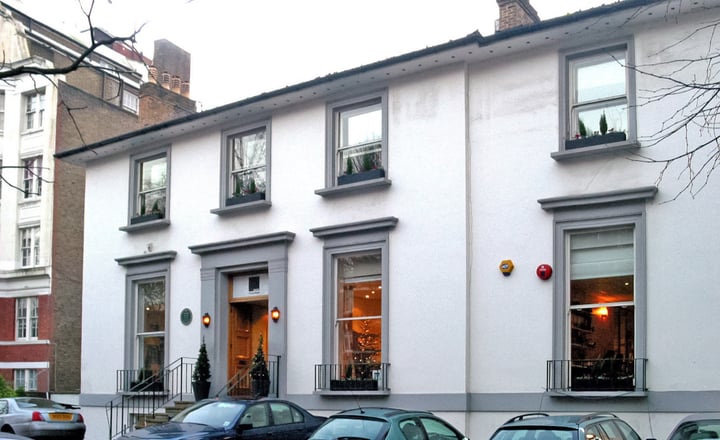
On 11 January 1984, Radio 1 breakfast DJ Mike Read pulled "Relax" off his show on air, objecting to the lyrics and the sleeve. Within two days BBC management had turned that moment into a corporation-wide ban, across every BBC radio and television frequency. The single was already on its way up, having appeared on Top of the Pops on 5 January. The ban did not slow it. It detonated it.
"Relax" reached number one on 24 January 1984 and stayed there for five weeks, then refused to leave the charts at all, clocking 37 consecutive weeks in the Top 40 and selling over 2 million copies in the UK. No banned record on this list sold harder. John Peel and Kid Jensen kept playing it on their night-time shows throughout, which made the daytime ban look less like policy than like one shift of the schedule disagreeing with another. By Christmas Day 1984 the corporation had folded completely, inviting Frankie Goes to Hollywood to perform the banned song on the festive Top of the Pops.
Here is the part the legend leaves out. Mike Read did not ban "Relax," whatever three decades of retelling insist. In a 2014 interview he was blunt about it: "I'm a BBC employee, I can't go around banning records." He had dropped the track for timing, he said, because only the long 12-inch version was to hand. The actual ban came from management, specifically Chris Bellinger, head of Children's Entertainment, who acted after his young daughters saw the explicit video. The most famous ban in British pop history was a management decision dressed up as one DJ's moral stand, and the DJ has spent years trying to give the credit back.
Lineage: The reference point every later BBC ban is measured against, and the clearest case of a corporate decision rewritten into the legend of a single righteous DJ.
God Save the Queen
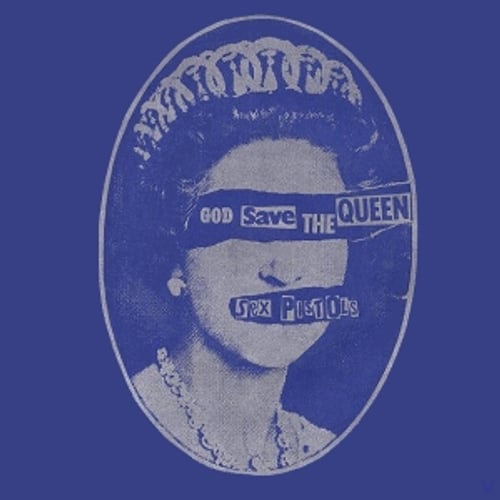
Banned in jubilee week, then kept off number one by a chart rule invented to do exactly that.
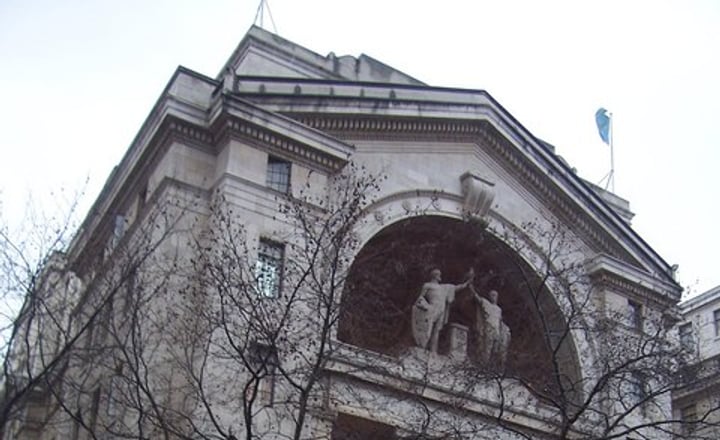
Return to the blank line on the WH Smith chart wall, because this is where it belongs. On 31 May 1977, in the middle of the Queen's Silver Jubilee, BBC Radio 2 controller Charles McLelland banned the Sex Pistols' "God Save the Queen" across all BBC radio and television, calling it "in gross bad taste." ITV refused it. Woolworths, Boots and WH Smith refused to stock it. Workers at Virgin's pressing plant walked out rather than make it. The British establishment closed ranks against a single in a way no other record on this list provoked.
It sold anyway, around 150,000 copies a day at its peak, over 200,000 in one week. And here the story turns from censorship into something closer to a fix. The single reached number two on the official chart while the NME's own chart showed it at number one. WH Smith displayed a blank line at number two rather than print the title. A 1998 Independent investigation found why the official figure fell short: chart compilers had brought in a special rule excluding sales from shops owned by record labels, which meant Virgin's own megastores, where the Pistols sold heaviest, did not count. The rule was revoked the following week, too late to change the result.
The corporation conceded in the end, which is the rarest thing on this list. In a 2001 statement the BBC acknowledged the song had "reached number one in the UK." In 2022 a Platinum Jubilee re-release finally put it at the official top, 45 years late. A blank line on a shop wall became the defining image of British state censorship, and the institutions that engineered it spent decades quietly admitting they had. No ban was more consequential, more political, or more nakedly rigged, and none took longer for the powers behind it to own up to. That is why it sits at number one.
Lineage: The most politically consequential BBC ban ever, the one the corporation itself eventually conceded it had got wrong.
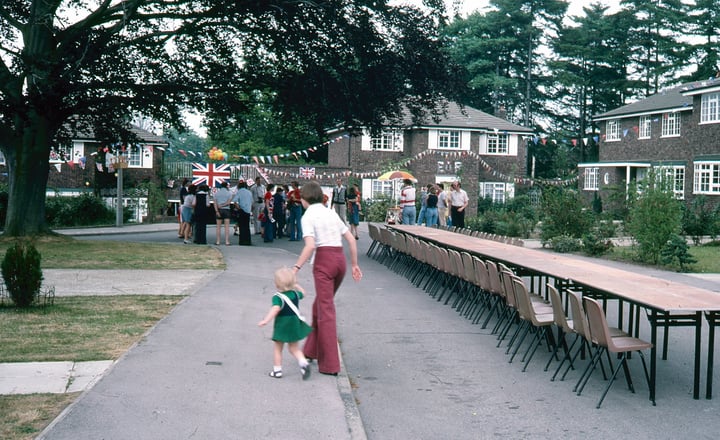
The records they didn't ban
Here is the part the legend gets wrong, and it matters as much as the bans. For every record the BBC silenced, there is one the corporation is wrongly blamed for, and the gap between the two tells you how British music mythology works. Lou Reed's "Walk on the Wild Side" went out uncut on Radio 1 because the censors did not know what "giving head" meant. Reed had said as much about his own writing, that it was worded so the straights would miss the implications, and the BBC missed them completely. The most explicit line of the decade slipped through because nobody upstairs was streetwise enough to catch it.
The false bans pile up once you look. Pulp's "Sorted for E's & Wizz" was a Daily Mirror front-page campaign, "Ban This Sick Stunt," and the BBC never acted on it; the song got normal airplay and reached number two. Robin Thicke's "Blurred Lines" was banned by student unions and an advertising regulator, never by the corporation, which playlisted it to number one. Radiohead's "Creep" was not banned either: Radio 1 simply dropped it after two plays as "too depressing," and a year later it re-charted at number seven, the most embarrassing playlist call in the station's history. Each gets repeated as a BBC ban until the repetition becomes the record. A student union is a private club. The BBC was the national broadcaster. Collapsing the two flatters the corporation's reach and rewrites what actually happened.
Look back over the 25 and one fact holds throughout. Every ban on this list is also a sales chart. Number ones while banned, million-sellers with no airplay, three chart runs from one suppressed single, a Guinness record built entirely on refusal. The BBC spent ninety years deciding what Britain could hear, and the country kept buying the answer it was told to ignore. The modern frontier is quieter and harder to fight. When 1Xtra handles drill, it names no songs and publishes no list. It decides case by case, behind the editorial curtain, and a censorship with nothing to leak is a censorship nobody can print. The blank line on the chart wall was at least honest about itself. What replaced it does not even leave a gap.

Loading comments…