Twenty-five records that doubled as divorce papers, ranked from the bands that cracked but survived to the biggest, most public breakup music has ever staged.
Every band is a marriage with more egos and worse lawyers. Four or five people share one bank account, one bus, one set of in-jokes, and one name that none of them owns alone, and they do it for years while the money and the fame warp every old loyalty out of shape. The amazing thing is never that they fall apart. The amazing thing is that any of them last long enough to finish a second album.
Some records get made inside the wreckage, the band detonating in slow motion while the tape keeps rolling. Some records are the wreckage, the sessions themselves the thing that finally snaps the cord. A few are both at once, a masterpiece and a murder weapon sharing the same catalogue number. This list runs through twenty-five of them, the albums where the music and the breakup are the same story told from two angles.
The countdown climbs by severity. It starts with bands that cracked under the strain but lived to reform, moves through the real fallout, the firings and the on-stage threats and the faxed goodbyes, and ends with the implosions that left nothing standing. Number one is the biggest band that ever existed, coming apart on a cold soundstage with the cameras running. Here are the records that broke up the band.
1984
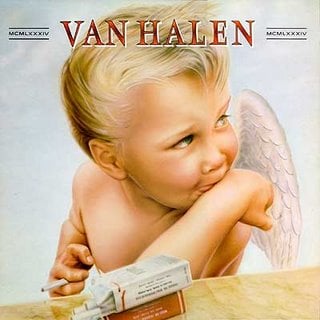
The synth that conquered the world also pried the singer loose.
5150, the home studio Eddie Van Halen built in his Los Angeles backyard, is where the band cut the album that nearly outsold everything else they ever made. 1984 landed on Warner Bros in January of that year and stalled at number two on the Billboard chart, blocked from the top only by Michael Jackson's Thriller. The cover showed a cherub smoking a cigarette. Inside sat "Jump," a song built on a keyboard riff so bright and rubbery it felt like a trampoline, the first time Eddie had let a synthesizer carry a Van Halen single instead of a guitar.
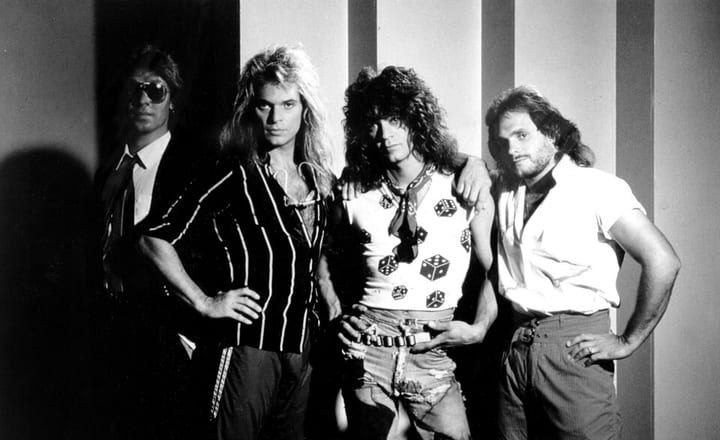
That switch matters, because the keyboard was a fault line. David Lee Roth wanted Van Halen to stay a guitar band, all spandex and high kicks and Eddie's fingers blurring across the fretboard. Eddie wanted to grow, to bring the Oberheim OB-Xa into the front of the mix and let the songs breathe differently. "Jump" proved Eddie right with the public and wrong with his singer. The track hit number one in February 1984, the band's only chart-topping single, and the tension over who Van Halen was supposed to be hardened into something nobody could joke away.
Roth's voice on the record is the sound of a man having the time of his life. He whoops and slides and mugs through "Panama" and "Hot for Teacher," the latter opening with Alex Van Halen's double-kick drums rattling like a motorbike turning over before Eddie's guitar tears in. The band sounds enormous, loose, completely in control. None of it suggested they were about to come apart at the seam, which is what makes the timing so cruel.
The 1984 tour was the classic lineup's last ride. Roth had started recording solo material on the side, a covers EP that went big, and the gap between his ambitions and the brothers' patience widened with every date. He left in 1985 to chase a film and music career. Sammy Hagar walked in, and Van Halen kept selling records, kept topping charts, even improved their commercial standing for a while. The magic of the first lineup, that specific chemistry of a guitar genius and a circus ringmaster pulling against each other, never came back the same way.
Sammy Hagar's arrival changed the band's whole character. The "Van Hagar" era leaned heavier on Eddie's keyboards and on power ballads, four straight number one albums following through the late eighties and early nineties, more commercial success than the Roth lineup ever managed on paper. Yet the records traded the danger for polish, the leering menace of "Hot for Teacher" for the radio sheen of "Why Can't This Be Love." The band got bigger and lost the thing that had made it dangerous, the sense that the singer might do anything at any moment.
They reunited and split and reunited again over the decades, a slow on-off saga that outlasted patience itself. Hagar was fired in 1996, a brief and disastrous one-album dalliance with Extreme's Gary Cherone followed, and Roth drifted in and out of the picture for years before a proper reunion finally stuck in 2007. The original four sharing a stage stayed rare and uneasy to the end. Eddie died in 2020 with the reconciliation still half-finished.
---
The keyboard that gave them their only number one was the same keyboard that told the singer it was time to go.
Use Your Illusion I & II
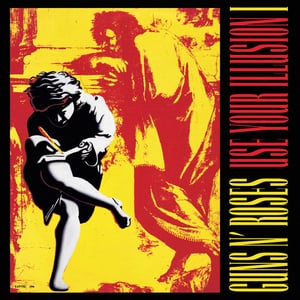
Two albums in one day, and the slow strangling of a band by its own frontman.
September 17, 1991, Guns N' Roses released two full albums on the same day, Use Your Illusion I and II, thirty songs of orchestras and pianos and nine-minute epics piled on top of the bar-band sleaze that had made Appetite for Destruction the biggest debut in rock. The ambition was vast. So was the ego it took to attempt it. Both records went straight to the top two spots on the Billboard chart, a feat almost no act had managed, and for a moment Guns N' Roses looked unstoppable.
The cracks were already wide. Axl Rose had spent the sessions tightening his grip on every decision, the lineup churning around him as he pushed for control over the songs, the artwork, the videos, the schedule. Steven Adler, the original drummer, was fired in 1990 over his drug use before the albums were even finished, his playing largely replaced by Matt Sorum. The band that had sounded like five guys who would die for each other on Appetite now sounded like one man's vision executed by hired hands and resentful friends.
You can hear the strain in the music. "November Rain" runs nine minutes with a full orchestral arrangement and three separate guitar solos from Slash, who plays the final one standing outside a church in the video, and it is genuinely huge, a power ballad built like a cathedral. Next to it sits "Get in the Ring," a paranoid rant where Axl names journalists he wants to fight. The two impulses, grand artistry and self-destructive grievance, sit side by side across both discs.
The Use Your Illusion tour ran for two and a half years and became infamous for late starts, cancelled shows, and a riot in St. Louis after Axl dove into the crowd to grab a fan's camera. Izzy Stradlin, the rhythm guitarist and Axl's oldest collaborator, quit in late 1991, exhausted by the chaos and the touring. Slash and bassist Duff McKagan held on until the mid-nineties, then left too. Axl kept the name, kept the band, and disappeared into a fifteen-year quest to finish Chinese Democracy with an entirely new cast.
The departures came in a slow bleed, not a single rupture. Izzy Stradlin went first, in late 1991, slipping out before the tour had even built up steam, and his replacement never filled the same role in the songwriting. Slash and Duff McKagan held on through the long, sprawling road campaign, watching the band they had built turn into a vehicle for one man's mood. Slash left in 1996, McKagan in 1997, and by the end Axl Rose owned the name outright. The lineup that recorded "Sweet Child o' Mine" would not stand on the same stage again until a reunion tour in 2016, twenty-three years after Slash walked out.
The classic lineup did not so much break up as get whittled down, one departure at a time, until only the singer remained holding the logo.
---
They put out two albums in a single day and somehow had less band by the end of it.

Made in the A.M.

A boy band's farewell record, made by four-fifths of a boy band.
March 2015, Zayn Malik walked away from the biggest pop group on the planet mid-tour, citing the stress of fame and a wish to be a "normal" twenty-two-year-old. Made in the A.M., the fifth and final One Direction album, arrived that November on Columbia and Syco as the only record the group ever made without him. Four faces on the promo instead of five. Everyone knew what the gap meant before a single note played.
The album is the sound of a group writing its own eulogy while pretending the party continues. "History," its biggest single, is a stadium singalong aimed straight at the fans, all "you and me got a whole lot of history," the kind of warm communal chorus built for one last lap of arenas. "Drag Me Down" opens with a clipped funk guitar and a confident strut, the band insisting they are fine, more than fine, fully intact. The brighter the songs push, the more you hear the thing they are not saying.
One Direction came out of The X Factor in 2010, five teenagers thrown together by Simon Cowell who turned into a phenomenon that sold tens of millions of records and turned stadiums into screaming walls of noise. That kind of success has a half-life. Five young men cannot stay teenage products forever, and the machine that built them ran them ragged across five albums and five world tours in five years, a brutal pace with no real break.
Zayn's exit was the first crack to go public, but it was not the whole story. By the time Made in the A.M. came out, the remaining four had already decided. In January 2016, weeks after the album cycle wound down, they announced an "indefinite hiatus." The word "hiatus" did a lot of polite work. Everyone understood it as the end. Harry Styles, Niall Horan, Louis Tomlinson, and Liam Payne all launched solo careers, and the group never reconvened.
The numbers behind the goodbye were staggering. One Direction had sold tens of millions of albums in five years, headlined stadiums across every continent, and built a fan base so intense that airports needed extra security for their arrivals. Made in the A.M. still went to number one in the UK and number two in the US, a commercial force even as the group dissolved. The machine that made them never let them rest, five albums and five world tours stacked back to back, and the exhaustion of that pace sat under every bright chorus on the final record. The songs insisted everything was fine. The schedule had already broken them.
The hiatus turned permanent in the way these things do, by simply never ending. Liam Payne's death in 2024 closed off any real chance of a reunion for good.
---
They titled it for the small hours and released it as a long goodnight.

Destiny Fulfilled
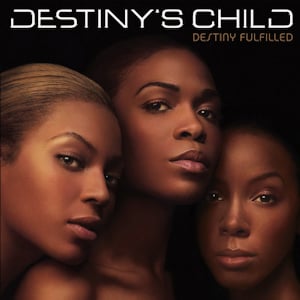
A girl group that announced its own ending to sixteen thousand people, on its own terms.
Barcelona, June 11, 2005, the Palau Sant Jordi arena, Kelly Rowland stepped to the microphone mid-show and told sixteen thousand fans that Destiny's Child would split when the tour ended. Beyoncé and Michelle Williams stood beside her. The announcement was planned, dignified, and entirely on the group's own terms, a rare thing in a business that more often ends with lawyers and silence. They had reunited in 2004 after two years apart, each chasing solo records, to make one final album together.
Destiny Fulfilled came out in November 2004 on Columbia, and the title was a thesis statement. The group framed it as a deliberate full stop, the closing of a story they wanted to end while they were still on top instead of letting it curdle. "Lose My Breath" opens with a marching, militaristic drum pattern and the three voices trading lines like a relay team, tight and competitive and clearly enjoying the friction. "Soldier" rides a slow Southern bounce, all syrupy menace and Lil Wayne and T.I. guesting.
Destiny's Child had survived more internal turmoil than most groups see in a lifetime. The lineup had shuffled and shed members in the early days, lawsuits and bad feeling trailing the changes, before settling into the trio that became globally famous. By 2004 Beyoncé's solo star had already eclipsed the group with Dangerously in Love, and everyone involved understood the gravity had shifted. Instead of letting resentment build, they chose to make one more record and close the book cleanly.
The Destiny Fulfilled... and Lovin' It tour rolled through 2005 as a victory lap, not a wake. The Barcelona announcement made it official. By the time they played their final dates, the breakup was less a rupture than a graduation, three women walking out the front door together instead of being dragged out the back.
The decision to end early was sharp business as much as friendship. Destiny's Child had endured the public, lawyer-heavy departures of original members LaTavia Roberson and LeToya Luckett in 2000, a messy split that produced ill will and legal threats and a national debate about how the group was run. Having survived that storm once, the surviving trio had no appetite to slowly rot in front of the same cameras. Williams pursued gospel and theatre, Rowland kept making R&B records, and Beyoncé's solo run turned into one of the largest careers in music history. The group folded its hand while it still held the best cards in the room.
It worked. They stayed friends, reunited for one-off performances over the years, and avoided the bitterness that defines most of this list. Beyoncé became Beyoncé. The group ended as a choice, not a casualty.
No genre has burned through girl groups faster than R&B and pop, the form littered with acts that ended in lawsuits, betrayals, and silence. Destiny's Child looked at that long list of casualties and refused to join it, ending the act as a clean decision while the three of them still liked each other.
---
Most bands get broken up; Destiny's Child resigned, with a press release and a smile.

Rumours
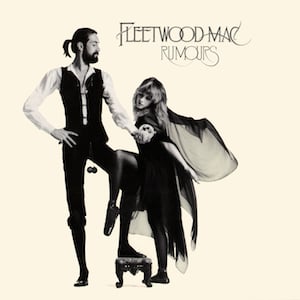
The best-selling breakup album ever made, recorded by people who could not stand to leave each other.
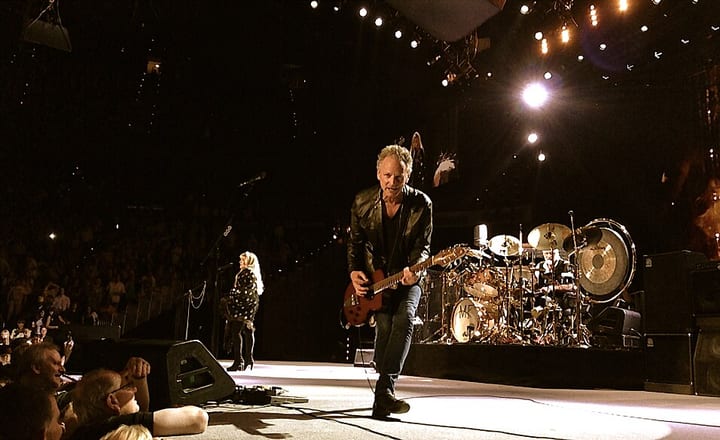
The Record Plant in Sausalito, California, late 1976, two couples inside one band fell apart at the same time while the tape rolled. John and Christine McVie were divorcing. Stevie Nicks and Lindsey Buckingham were ending a long, volatile relationship. Mick Fleetwood was discovering his own marriage in ruins. Everyone medicated heavily, everyone stayed up too late, and everyone wrote songs about the person standing on the other side of the glass. Rumours came out on Warner Bros in February 1977 and went on to sell more than forty million copies.
The genius of the record is that it weaponizes the divorce. Buckingham wrote "Go Your Own Way" about Nicks, and then Nicks had to sing harmony on it, adding her voice to a song that accused her of wanting to break up the relationship she was actively breaking up. She got her answer in "Dreams," a slow, drifting reproach built on a hypnotic two-chord groove, telling him that thunder only happens when it's raining. Christine McVie wrote "You Make Loving Fun" about a new lover and told her ex-husband, the band's bassist, that it was about her dog.
Musically it is impossibly clean for something made in such chaos. Buckingham's production is all sun-bleached precision, acoustic guitars layered like California light, harmonies stacked until they gleam. "The Chain" stitches together fragments from different sessions into one song, John McVie's bass walking up alone in the final stretch before the whole band crashes back in, the most famous bass line the group ever recorded built literally from broken pieces.
The personal damage was real and lasting. The five of them frayed for decades after, through firings and absences and reunions and one more divorce-by-band as members came and went. Buckingham was pushed out in 2018 amid fresh acrimony. Christine McVie died in 2022. The lineup never fully ended so much as it slowly wore down, the relationships too tangled to ever cut clean.
The conditions in Sausalito were as wild as the legend says. The band worked through the night for weeks, the cocaine and the drinking heavy enough to become part of the studio's daily rhythm, the sessions stretching for months as relationships detonated between takes. Buckingham would hand Nicks a song attacking her, she would sing it perfectly, and then they would go back to not speaking. "Songbird," Christine McVie's quiet piano ballad, was recorded in an empty concert hall to get the right echo, a moment of stillness inside the chaos. The record's warmth and its wreckage came from the same room, the same sleepless nights, the same five people who could neither stay together nor stand to be apart.
The breakups made the record. The record outlived nearly everyone in it.
---
They split up with each other and stayed in the band, which is the most expensive way to get divorced ever devised.
Second Coming
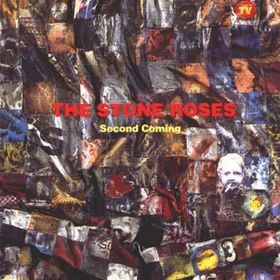
Five years late, and the guitarist's takeover poisoned the well.
December 1994, five and a half years after a debut that had defined a city's whole sound, The Stone Roses returned with Second Coming on Geffen. The wait had been absurd, the band locked in label disputes and rural seclusion in Wales, recording at a glacial pace while Madchester rose and fell without them. The album that emerged sounded almost nothing like the shimmering jangle of their 1989 debut. It was heavy, bluesy, dominated by John Squire's guitar, a Led Zeppelin record wearing a baggy haircut.
That shift was the problem. Squire had taken near-total control of the songwriting, and his rock ambitions crowded out the loose, danceable interplay that had made the band special. "Love Spreads" leads with a thick, swampy slide-guitar riff that announces whose record this is, and Ian Brown's vocals, never technically strong, sounded exposed and strained against the heavier backing. The chemistry between Brown's loose-limbed cool and Squire's playing had curdled into resentment.
Reni, the drummer whose jazzy fluid playing was central to the band's groove, walked first, in early 1995, just as the album campaign should have been building. Squire left in April 1996, after a disastrous run that included a notorious Reading Festival headline slot where Brown's singing was savaged by critics and crowd alike. Brown and bassist Mani held the wreckage together for a few more months, then dissolved the band entirely in October 1996.
The debut had promised everything. Second Coming delivered a divided, exhausted band that no longer agreed on what it was for. The gap between the two records, both in years and in sound, told the whole story of a group that lost its nerve and its unity in the dead air between them.
The wait itself had been part of the problem. The Stone Roses spent the late eighties and early nineties tangled in a bitter legal war with their first label, Silvertone, a court fight that froze their career at the exact moment their debut had made them the most exciting band in Britain. By the time they were free to record for Geffen, the momentum was gone and the scene they had inspired had moved on without them. Squire's retreat into long, blues-rock guitar workouts filled the dead air with his own taste, and Brown, isolated and increasingly resentful, found himself fronting a record that no longer sounded like his band. The five-year silence had let the cracks set like concrete.
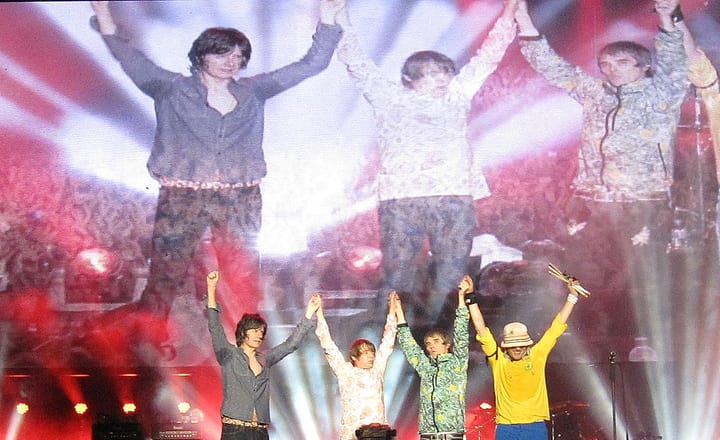
They reformed in 2011 for a lucrative run of reunion shows, the old chemistry flickering back to life on stage. It did not last, but it proved the bond was never fully dead, only badly bruised. Squire and Brown fell out again within a few years, the old rivalry resurfacing the moment the nostalgia faded.
---
They called it Second Coming and it turned out to be the long goodbye.
Machina/The Machines of God
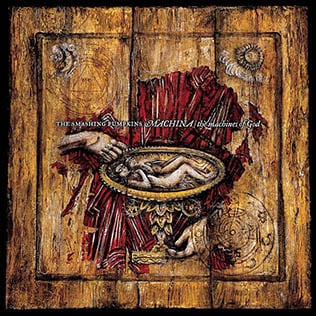
Billy Corgan announced the end on the radio, then played for four and a half hours to prove he meant it.
May 23, 2000, Billy Corgan announced the breakup of Smashing Pumpkins live on the air during a KROQ radio interview, the same year Machina/The Machines of God hit shelves. The album, a dense concept record about a fictional rock star, debuted at number three on the Billboard chart in February and then dropped away with startling speed, a commercial disappointment after the multi-platinum runs of Siamese Dream and Mellon Collie and the Infinite Sadness. The band that had once sold ten million records was visibly running out of road.
The lineup had been fracturing for years. Drummer Jimmy Chamberlin had been fired in 1996 after a heroin overdose killed touring keyboardist Jonathan Melvoin, then returned for Machina. Bassist D'Arcy Wretzky left during the recording, replaced for touring by Melissa Auf der Maur. Corgan, a famously controlling bandleader who played most of the instruments on the early records himself anyway, was steering a band that kept losing its other passengers.
Machina is dense, layered, and overstuffed, Corgan piling guitars and electronics into a wall of sound that buries the songs as much as it serves them. "Stand Inside Your Love" is the clearest moment, a soaring, distortion-drenched love song with a chorus that opens up like the sky cracking. Beneath the concept-album scaffolding, you can hear a man trying to recapture the scale of his peak and falling just short.
The farewell show in December 2000 was its own kind of statement. They played the Metro in Chicago, the same small venue where they had started twelve years earlier, for four and a half hours, thirty-five songs, a marathon goodbye to the room that birthed them. It felt final, deliberate, complete.
The album's commercial failure stung because of how high the band had climbed. Mellon Collie and the Infinite Sadness, the 1995 double album, had sold in the millions and produced a run of hits that made Smashing Pumpkins one of the defining alternative acts of the decade. Machina arrived to a public that had moved on toward nu-metal and pop, and Corgan's dense, conceptual rock found few takers. Virgin reportedly balked at promoting it heavily, and the band released the follow-up, Machina II, for free over the internet, a quiet acknowledgment that the commercial run was over. The breakup that followed felt less like a decision than a recognition of facts already on the ground.
Then Corgan reformed the band seven years later, with himself and Chamberlin and a rotating cast, the name resurrected even as the original four never fully reassembled. The marathon goodbye at the Metro turned out to be a comma, not a period, which somehow only made the original ending sadder. Wretzky, the bassist who left during the sessions, stayed gone for good.
---
He ended the band in the room where it began, then changed his mind once the room was empty.
Naked
The other three found out the band was over by reading it in the papers.
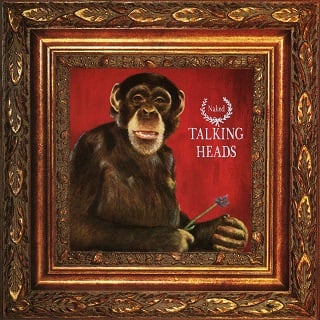
Paris, early 1988, Talking Heads recorded their eighth album at Studio Davout with a cast of African and Latin session musicians, layering polyrhythms and horns under David Byrne's nervous yelp. Naked came out on Sire in March 1988. "(Nothing But) Flowers" rides a bright, looping Afropop guitar figure courtesy of Johnny Marr, a former Smith now lending his chiming touch to Byrne's vision of a paved-over world growing wild again. It was a strong record. It was also the last one.
The band had been a fraying unit for years. Byrne's growing dominance, his side projects, his film work, and his tendency to treat the other three as a backing group instead of equal partners had built up a quiet, corrosive resentment. Tina Weymouth and Chris Frantz, the married rhythm section, had long felt sidelined. Jerry Harrison watched the songwriting credits and creative control consolidate around the frontman. Naked was made by a band that no longer functioned as one.
After the album, Talking Heads slid into a "hiatus" that nobody officially ended. Members scattered to side projects, Byrne to his solo and world-music ventures, Weymouth and Frantz to Tom Tom Club. The hiatus stretched on with no announcement, no farewell tour, no closure of any kind, just an absence that grew until it was obviously permanent.
The breakup became official in the coldest way imaginable. In December 1991, David Byrne quietly confirmed to the press that Talking Heads had dissolved. According to accounts from the others, the remaining members learned their own band was finished by reading about it in the newspapers. There had been no meeting, no call, no shared decision, just a frontman informing the world before he informed his bandmates.
The music on Naked makes the silence around the breakup stranger still. It is a rich, busy, generous record, the band augmented by a wide cast of session players into something looser and more global than the tight art-funk of their peak. "Blind" stomps along on a horn-driven groove, and "(Nothing But) Flowers" turns an apocalyptic premise into one of the sunniest songs they ever cut. None of it sounds like a band that hated each other, which is what makes the cold ending so jarring. The players found their chemistry on tape and lost it everywhere else, the warmth of the music utterly disconnected from the frost between the four of them.
The bitterness lasted decades. They reunited only once, briefly, at their Rock and Roll Hall of Fame induction in 2002, where they played three songs together and then walked off into permanent separation. Byrne has shut down every reunion offer since, treating the band as a finished thing he has no wish to revisit.
---
Byrne told the press the band was over before he told the band, which is somehow the most Talking Heads ending possible.
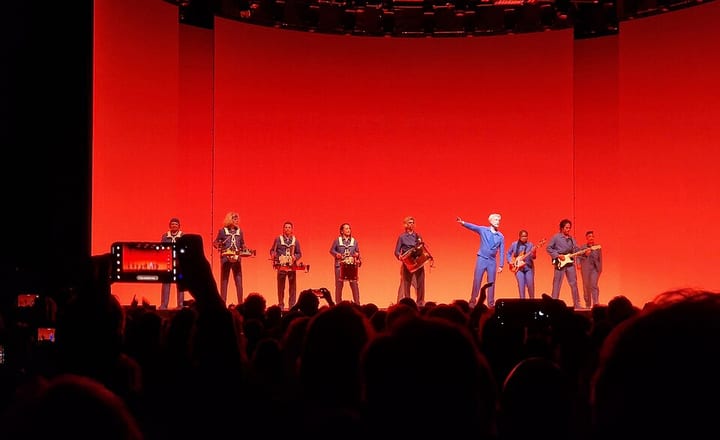
All Shook Down
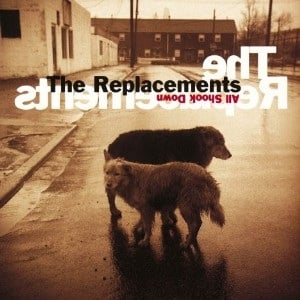
A band record in name only, ending with the frontman handing his guitar to a roadie.
1990, Paul Westerberg walked into the studio to make what was supposed to be a Replacements album and came out with something closer to a solo record. All Shook Down, released on Sire that year, leaned heavily on session players, Westerberg crafting quieter, more deliberate songs while the band that had once defined drunken Minneapolis chaos drifted at the edges of its own album. The title was honest. Everything was shaking loose.
The Replacements had built their legend on glorious unreliability, shows that collapsed into covers and shambles, a refusal to behave that made them heroes to a generation of underground kids. By 1990 the chaos had stopped being fun. Original guitarist Bob Stinson had been fired in 1986 over his addictions. The remaining members, Westerberg, bassist Tommy Stinson, and drummer Chris Mars, were pulling in different directions, with Westerberg increasingly writing alone and using outside musicians.
You can hear the band dissolving in the grooves. All Shook Down is sober, considered, and a little sad, a long way from the speed-fueled racket of Let It Be. "Merry Go Round" jangles along on a clean guitar with a weary, hungover melody, Westerberg singing like a man who has run out of road. It is a good record. It is barely a band record.
By 1991 Tommy Stinson and Chris Mars both wanted out. The final show, in Chicago on July 4, 1991, ended the way the whole band's career had threatened to end all along, in a deliberate act of self-sabotage. During the set, the members began handing their instruments to members of the road crew, who finished the songs while the band walked off. The Replacements did not so much break up as physically hand themselves over to other people, mid-song, in front of the crowd.
The slow drift toward a solo record had been building for years. The Replacements signed to a major label, Sire, in the mid-eighties, and the move toward cleaner production and Westerberg's increasingly personal songwriting pulled the band away from the ramshackle punk that made its name. By All Shook Down, the others were so peripheral that the album credits read like a session date, with outside drummers and guest players filling space the band used to own. Westerberg had stopped writing for a group and started writing for himself, and the record documents the exact moment a band becomes one man and a backing crew. The instruments handed to the roadies at the final show were the logical end of that drift.
Westerberg went solo. The reunion took twenty-two years to arrive, and Bob Stinson, the founding guitarist, was long dead by the time it did, lost in 1995 to the addictions that had got him fired in the first place.
---
They ended their last show by handing their guitars to the roadies, the only band ever to quit while still on stage and let strangers finish the set.
The Gift
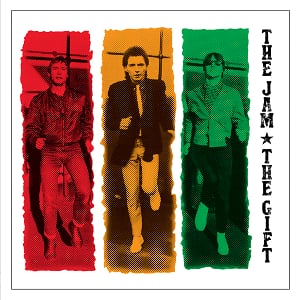
A number one album, and a frontman who blew up his own band instead of letting it coast.
Polydor, March 1982, The Jam released their sixth album The Gift and watched it become their first and only UK number one. They were the biggest band in Britain, three young men from Woking who had ridden the mod revival to a string of hit singles and a fierce, devoted following. They had everything a band is supposed to want. Paul Weller decided to destroy it anyway.
The Gift shows where Weller's head had gone. The punchy mod-pop of the early Jam had given way to soul and funk influences, horns and a looser groove creeping in. "Town Called Malice" rides a Motown-style bassline lifted from the spirit of "You Can't Hurry Love," all bright organ stabs and Weller's vocal snapping out a portrait of austerity Britain. The song hit number one. It also sounded like a man itching to be somewhere else, reaching for the soul music that The Jam's format could not fully contain.
That itch was the end. At the peak of their commercial power, Weller told bassist Bruce Foxton and drummer Rick Buckler that he was finished with the band. He wanted to start over with the Style Council, to chase the smooth soul and political pop that The Jam's punky framework would not allow. He refused, by his own account, to let the band become a nostalgia act coasting on past hits. Foxton and Buckler were blindsided, given no real say in the decision.
The Jam split at the end of 1982, going out at the absolute top, a farewell tour selling out instantly while the records still charted. Weller walked away from one of the most successful British bands of the era because staying felt like dying slowly. Foxton and Buckler, less convinced, carried the resentment for years.
The timing made the decision almost unthinkable to outsiders. The Jam had placed four singles at number one on the UK chart, sold out arenas, and built a following so devoted that fans dressed in their image and hung on every lyric Weller wrote about working-class English life. To walk away from all of it at twenty-four, with the band more popular than ever, looked like madness to everyone except Weller himself. He had watched older bands curdle into nostalgia acts and chose to end clean instead of slowly becoming a tribute to his younger self. The farewell tour in late 1982 sold out instantly, fans weeping at shows for a band that was choosing to die at full strength.
The split stuck. Weller has refused every reunion offer for decades, treating The Jam as a closed chapter he has no interest in reopening, no matter the money, while Foxton and Buckler eventually toured together as From the Jam without him.
---
Most bands break up because they fail; The Jam broke up because succeeding bored their leader senseless.

The Battle of Los Angeles
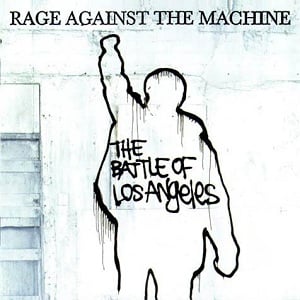
A number one debut, and a singer who walked because the band had stopped working as a democracy.
November 1999, Rage Against the Machine released The Battle of Los Angeles and watched it debut at number one on the Billboard chart, moving roughly 450,000 copies in its first week on the way to double-platinum. The band was at its commercial and political peak, four musicians fusing hip-hop and metal into a fist of rhythm, Tom Morello's guitar making sounds like a turntable and a siren and a machine gun all at once. They had never been bigger. They were also nearly done.
The music gave no warning. "Guerrilla Radio" hammers in on a clipped, scratchy Morello riff and Zack de la Rocha's barked verses, all coiled tension and political fury, before exploding into a chorus that demands you turn it up. "Sleep Now in the Fire," directed in its video by Michael Moore, storms the steps of the New York Stock Exchange. The band sounds unified, ferocious, completely locked in. The reality behind it was a partnership coming apart.
The fault was less personal feud than structural collapse. De la Rocha, the band's voice and political conscience, had grown frustrated with the decision-making process, the slow grind of four strong personalities trying to agree on everything. He walked on October 18, 2000, and his statement said it plainly: "our decision-making process has completely failed... it is no longer meeting the aspirations of all four of us." No drugs, no on-stage brawl, just a creative democracy that had ground itself to a halt.
The other three, Morello, bassist Tim Commerford, and drummer Brad Wilk, regrouped fast. They recruited Chris Cornell of Soundgarden and formed Audioslave, a more conventional rock band that sold millions and proved the instrumental core was intact. What they could not replace was the specific friction that made Rage what it was.
The split had a strange afterlife. Rage Against the Machine actually released one more record after de la Rocha's exit, Renegades, a covers album of work by other artists that had been recorded before the breakup, a posthumous footnote and not a true final statement. Audioslave, the band the other three formed with Chris Cornell, went on to multi-platinum success and three albums of polished, muscular rock, proving the rhythm section and Morello's guitar could carry weight in any context. What they could not manufacture was de la Rocha's specific fury, the political conviction and the coiled vocal attack that made Rage a genuine threat instead of a heavy rock band. The instrument was intact. The voice was the thing that left.
The band reunited for tours years later, the music as urgent as ever live, but the records stopped with The Battle of Los Angeles. They never made another one, a studio silence that has now lasted longer than the band's entire original run.
---
They went out at number one, undone not by hatred but by a meeting that never reached agreement.

The Final Cut
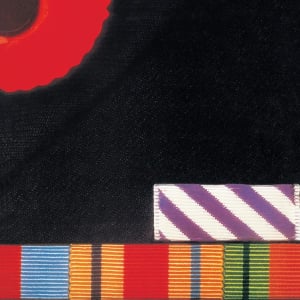
A solo record with the band's name on it, and the war that nearly killed the band for good.
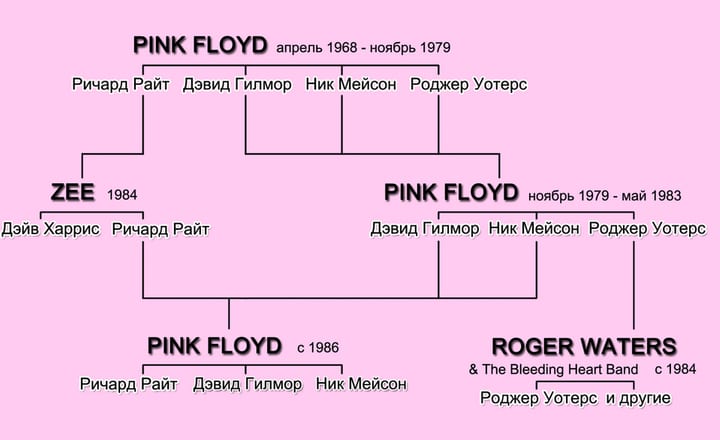
1983, Pink Floyd released The Final Cut on Harvest and Columbia, an album subtitled in spirit if not in print as a Roger Waters solo project wearing the band's logo. Keyboardist Richard Wright had already been forced out during the The Wall sessions a few years earlier, reduced to a salaried session player. David Gilmour, the guitarist whose tone was half of Pink Floyd's identity, was sidelined and barely present, his contributions minimized as Waters seized near-total control of the writing and the concept.
The album is bleak, spare, and bitter, a meditation on war and Waters's own father, who died in the Second World War. There is little of the expansive, floating Pink Floyd sound here. "The Gunner's Dream" builds slowly to a saxophone solo that wails like grief itself, Waters's voice cracking at the edges, the arrangement stripped back to leave him exposed. It was the band's lowest-selling album in a decade, a difficult, interior record that felt nothing like the stadium-filling spectacle of their peak.
Behind it, the band had stopped being a band. Waters and Gilmour could barely work together, their relationship poisoned by years of arguments over money, direction, and who Pink Floyd really belonged to. The Final Cut was made largely by separating the combatants, Waters dictating, Gilmour resentful and disengaged. The democracy that had built The Dark Side of the Moon was gone.
Waters left after the album and tried to dissolve Pink Floyd entirely, taking the matter to court on the theory that the band was a spent creative force that should not continue without him. Gilmour disagreed, kept the name, and carried on, recruiting Wright back and making new records under the Pink Floyd banner. The legal war was vicious and public, two former partners fighting over a logo worth millions.
The roots of the war ran back through the band's biggest years. Waters had taken creative control during The Wall in 1979, a project so much his own vision that he forced Wright out of the band during its making, keeping him on only as a paid sideman for the tour. By The Final Cut there was barely a collaboration left to defend, the album built around Waters's words, Waters's voice, and Waters's grief, with Gilmour relegated to a few guitar parts on a record he reportedly thought was weak. The democratic four-piece that had floated through The Dark Side of the Moon had become a dictatorship with two reluctant subjects, and the resentment had nowhere left to go but court.
They eventually patched things up enough to reunite for one performance at Live 8 in 2005, a brief, moving truce. The full reconciliation never came, and Wright died in 2008.
---
The Final Cut promised an ending and delivered a lawsuit instead.
The Long Run
A number one album that nearly killed them, ending in on-stage death threats.
Asylum Records, September 1979, The Eagles released The Long Run, the album that had to follow Hotel California and nearly broke the band trying. The sessions dragged on for almost two years, the group buckling under the pressure to top a masterpiece, cocaine and exhaustion and creative paralysis stretching what should have been a single record into a grueling slog. It came out, it went to number one, and it left the band hollowed out.
The strain shows around the edges of a record that still glides on the surface. "The Long Run" itself rolls on a smooth, mid-tempo R&B groove, Don Henley's voice weary and knowing, the harmonies as polished as ever. But the easy California warmth of the early Eagles had hardened into something more cynical and more labored, the sound of a band manufacturing the feeling instead of living it.
The personal hatred had reached a boiling point. Guitarist Don Felder and frontman Glenn Frey had grown to loathe each other, and on July 31, 1980, at a benefit concert in Long Beach, the loathing spilled onto the stage in front of the crowd. The two traded threats between songs, audible to the audience, Frey reportedly snarling some version of "I'm gonna kick your ass" as they counted down the songs left in the set, each one a step closer to a backstage fight. They were threatening violence into live microphones while playing "Take It Easy."
The band split within weeks of that show. The wounds were deep enough that Henley famously said the Eagles would reunite "when hell freezes over," a line that held for fourteen years. They stayed apart through the entire 1980s, each member pursuing solo work, the bad blood too thick to wash out quickly.
The pressure that warped the band came straight from the album before it. Hotel California had been a phenomenon, a record so successful and so acclaimed that following it felt impossible, and the two years they spent on The Long Run were a slow grind of writer's block, perfectionism, and chemical excess. Henley and Glenn Frey, the band's two creative leaders, argued endlessly over songs while the deadlines slipped. By the time they finished, nobody had much left, and the on-stage threats at Long Beach were the eruption of pressure that had been building through the entire miserable making of the album. The record went to number one and the band that made it was already a corpse walking.
They did reunite, in 1994, with a tour pointedly titled Hell Freezes Over. The money was enormous. The old tensions never fully thawed, and Don Felder was fired again in 2001, a second exit that ended in lawsuits between him and his former bandmates.
---
They wrote "Take It Easy" and then spent a decade refusing to take their own advice.

Combat Rock
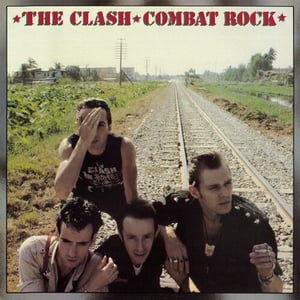
Their biggest record, and the firing that cut out the band's musical heart.
CBS Records, May 1982, The Clash released Combat Rock and it became by far their biggest seller, the album that finally cracked America with "Rock the Casbah" and "Should I Stay or Should I Go." After years as the great hope of British punk, the band that had matched the Sex Pistols for fury and outstripped them for ambition finally had a genuine global hit. The success arrived just as the band was tearing itself apart.
Drummer Topper Headon, whose groove anchored the band's expansion into reggae, funk, and dub, was fired days before the album's release. His heroin addiction had made him unreliable, and the band cut him loose at the worst possible moment, right as the record that contained his playing was about to make them famous. Headon had written the music for "Rock the Casbah," the track that became their biggest American hit, and he was gone before he could enjoy a second of it.
The music on Combat Rock still crackles with the band's restless range. "Straight to Hell" rides a slow, swaying rhythm with a haunting two-note guitar figure and Joe Strummer's mournful vocal, a song about abandonment and empire that sounds nothing like punk and everything like a band that had outgrown the cage. "Should I Stay or Should I Go" is the opposite, a straight-ahead rock stomp built on a chugging Mick Jones riff.
The atmosphere on the subsequent tour turned, by the band's own description, toxic. Strummer and bassist Paul Simonon fired guitarist Mick Jones on September 1, 1983. Jones was the band's chief musical architect, the man who wrote the riffs and shaped the arrangements, and cutting him out gutted the band of its sound. Strummer later admitted the firing was a mistake born of paranoia and exhaustion. They made one more album without Jones, the widely panned Cut the Crap, and then the Clash were finished.
The decision to fire Mick Jones came from a real grievance turned poisonous. Jones had grown difficult on the road, late to rehearsals, increasingly remote, his musical ambitions pulling toward the studio experimentation that would later define his next band, Big Audio Dynamite. Strummer and Simonon, exhausted and convinced he had lost the plot, made the call to cut him. The trouble was that Jones was the plot, the man who turned Strummer's words and politics into actual songs, and the version of the Clash that recorded Cut the Crap in 1985 without him was an embarrassment that Strummer spent the rest of his life regretting. He admitted later that firing Jones had been a catastrophic mistake, a piece of paranoid self-sabotage that ended the band as a creative force.
The four never reunited. Strummer died in 2002, and any chance of a real reconciliation died with him.
---
They fired the man who wrote their biggest hit, then made one terrible album to prove they shouldn't have.
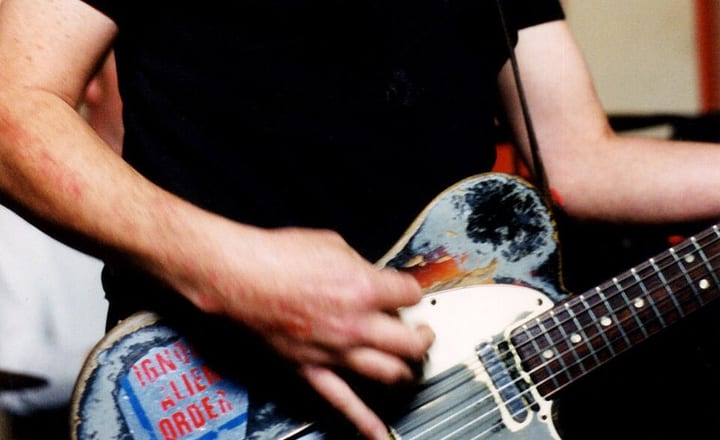
Never Mind the Bollocks
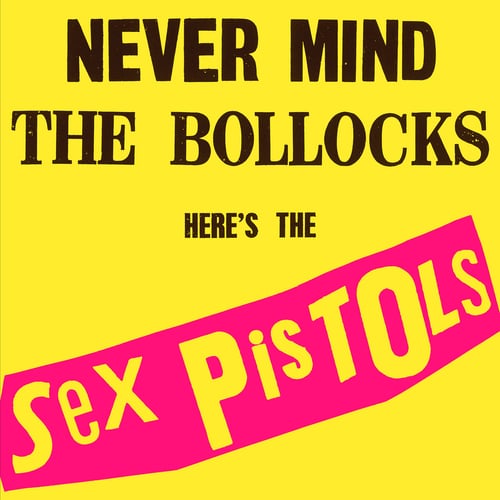
The most important punk record ever made, and the band's headstone in one sleeve.
Virgin Records, October 1977, the Sex Pistols released Never Mind the Bollocks, Here's the Sex Pistols, the only studio album they ever made and one of the most influential records in the history of popular music. Twelve tracks of pure aggression, Steve Jones's guitars stacked into a wall of overdriven noise, Johnny Rotten sneering and gargling his way through "God Save the Queen" and "Anarchy in the U.K." It changed everything. It also marked the beginning of the end, arriving when the band had barely months left.
The record sounds like a fight breaking out. Jones layered guitar upon guitar until the wall of sound felt physical, a flat slab of distortion that hit like a door slamming. Rotten's voice carried pure contempt, every line delivered as an insult. "Pretty Vacant" rides a deliberately dumb, hammering riff, the band weaponizing simplicity into something genuinely threatening. For all the chaos around them, the album itself is tight, focused, and ferocious.
The band could not survive its own success and dysfunction. Manager Malcolm McLaren had built the Pistols as much as a provocation as a band, and the tensions between Rotten, the increasingly out-of-control Sid Vicious, and McLaren's manipulations pulled the whole thing apart. They launched a US tour in January 1978 that became a slow-motion collapse, a deliberately perverse route through the American South where every show seemed to make things worse.
It ended in San Francisco. At the Winterland Ballroom on January 14, 1978, a broke, exhausted, and disgusted Rotten closed the final song, knelt at the front of the stage, and asked the crowd, "Ever get the feeling you've been cheated?" Then he walked off and quit. The band that had set fire to British music lasted barely two years and one album.
The band had been a contradiction from the start, which is part of why it could not hold. Glen Matlock, the original bassist who co-wrote much of Never Mind the Bollocks, had been pushed out in early 1977, replaced by Sid Vicious, who could barely play but looked the part, a swap that prioritized image over the music and gutted the band's actual songwriting ability. By the US tour, Vicious was deep in heroin addiction, Rotten was disgusted with McLaren's manipulations and the circus the band had become, and the whole project was buckling under the weight of its own provocation. The Pistols had been built to detonate, and they detonated more or less on schedule, the only studio album barely cold on the shelves when the band ceased to exist.
Sid Vicious was dead within thirteen months. The reunions that came later, decades on, were billed by Rotten himself as money-grabs, the original spirit long gone.
---
The greatest punk album ever made came with its own epitaph: ever get the feeling you've been cheated?
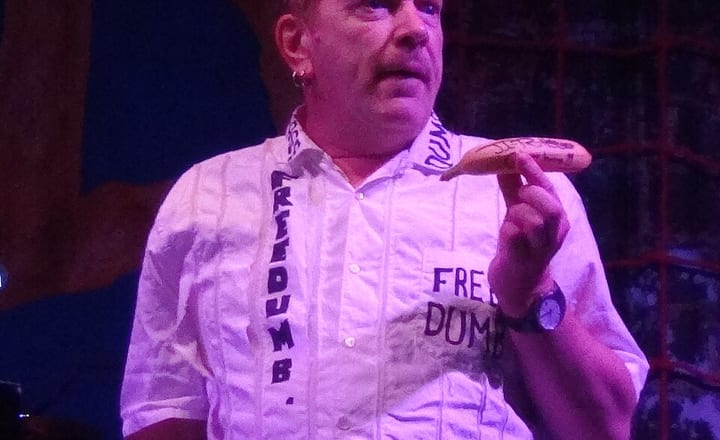
Goodbye
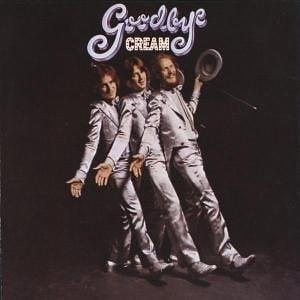
They were so finished they named the record after the breakup.
Polydor, 1969, Cream released an album called Goodbye, which tells you everything about how the band felt by the end. The trio of Eric Clapton, Jack Bruce, and Ginger Baker had burned hot and fast, three of the most gifted musicians in Britain colliding for two years of blues-rock that practically invented the power trio. By the time Goodbye came out, they had already played their farewell shows. The album was a posthumous release for a band that was already a corpse.
The music had always run on conflict. Bruce and Baker, the bassist and the drummer, hated each other with a volcanic intensity that predated Cream and outlived it, a feud that reached back to their days in the Graham Bond Organisation and sometimes turned physical. That hostility was the engine of the band, two virtuosos trying to outplay and out-shout one another while Clapton soloed over the top, the whole thing barely holding together by sheer competitive force.
Goodbye mixes live recordings with three studio tracks, and the best of them, "Badge," co-written by Clapton and George Harrison, shows what they could do when they stopped fighting long enough to play. It opens on a clean, ringing guitar figure before Clapton's solo cuts in, melodic and restrained, a glimpse of the player he would become. The live tracks capture the other Cream, the one that stretched songs into endless improvised duels, glorious and exhausting in equal measure.
The exhaustion won. Clapton, the youngest, had grown weary of the volume wars and the egos, and reportedly the final straw came when he heard the band described as overblown and realized he agreed. They announced the breakup and played a farewell run at the Royal Albert Hall in November 1968. By the time the album reached shops, Cream no longer existed.
Cream had burned through a staggering amount of music in barely two years. Three albums of studio work plus a torrent of live recording, the band inventing the template for the heavy power trio almost in passing, Clapton's blues-rock guitar heroics setting the standard a generation of players would chase. The pace was unsustainable and so was the volume, both onstage and off. Bruce and Baker fought constantly, the bassist and drummer locked in a competition for space that turned every gig into a contest, and the music grew longer and louder as a result, twenty-minute jams that thrilled audiences and exhausted the men playing them. By 1968 Clapton had simply had enough of being the calm man in the middle of two warring egos.
They reunited for a handful of shows in 2005, the old hatreds softened by age. Bruce died in 2014, Baker in 2019, the feud finally ended by mortality.
---
Naming your last album Goodbye is the most honest thing a dying band has ever done.
Mardi Gras
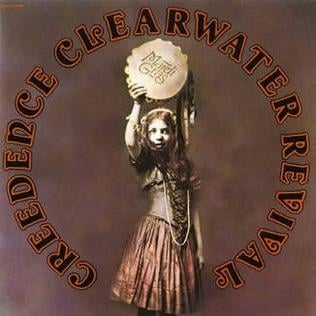
A frontman who proved a point by forcing his bandmates to ruin the album.
Fantasy Records, 1972, Creedence Clearwater Revival released Mardi Gras, an album widely regarded as one of the worst final records by a great band, and it was bad on purpose. John Fogerty, the singer, guitarist, and songwriter who had written nearly everything in the band's run of swamp-rock classics, had been locked in a power struggle with the others over creative control. His brother Tom, the rhythm guitarist, had already quit in 1971, worn down by John's dominance. The remaining trio limped into the studio at war.
Fogerty's solution to the complaints about his iron grip was to hand the others exactly what they had asked for, and let it sink them. He insisted that bassist Stu Cook and drummer Doug Clifford each write and sing a third of the album. Neither was a songwriter or a singer of Fogerty's caliber, and the result was a lopsided, deflated record that critics savaged. Many read it as Fogerty proving a point, demonstrating through the album's failure that the band needed him and only him.
The contrast with what Creedence could do is brutal. Fogerty's own contributions, like "Someday Never Comes," carry the same tight, swampy precision that defined their hits, his guitar clean and biting, his voice a gravelly howl that sounds like the Mississippi delta even though he came from El Cerrito, California. Surrounded by the weaker tracks, his songs only highlighted the gap, the sound of a great band with a great writer being deliberately diluted.
The band never played again after Mardi Gras. The split hardened into lawsuits, much of it tangled with the band's brutal contract with Fantasy's Saul Zaentz, and a permanent family estrangement between John and his bandmates that included his own brother. John Fogerty spent years unable even to play his own Creedence songs over legal disputes, a wound that lasted decades.
The power struggle behind Mardi Gras had been building since the band's peak. Creedence had run on John Fogerty's songwriting almost entirely, a torrent of hits like "Proud Mary," "Bad Moon Rising," and "Fortunate Son" pouring out of one man across just a few years, while Cook, Clifford, and brother Tom played the parts he wrote. That arrangement curdled into resentment, the others chafing at their lack of creative input, John refusing to loosen his grip. When the complaints reached a breaking point, his answer was to give them everything they wanted and let the results speak, a piece of spite dressed up as democracy. The album that resulted was a deliberate demonstration, and it worked exactly as designed, proving his point at the cost of the band's reputation.
Tom Fogerty died in 1990 without reconciling with his brother. John refused to perform with Cook and Clifford ever again.
---
He gave his bandmates the creative freedom they begged for, knowing exactly how much rope it would take.
Trompe le Monde
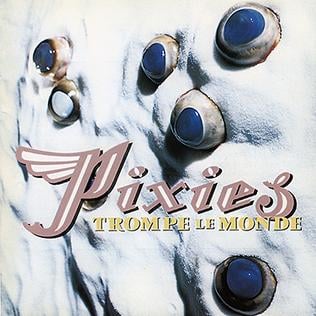
He announced the breakup on the radio, then told his own band by fax.
4AD and Elektra, 1991, the Pixies released Trompe le Monde, their fourth album and their last for over a decade. It is their loudest, most frantic record, the loud-quiet-loud dynamics they helped define cranked toward pure noise, Black Francis screaming over guitars that lurch and squeal. The band that had shaped the sound of the coming alternative explosion was, at the moment of that record, already poisoned beyond saving.
The rot ran along a single fault line. Black Francis, the frontman and songwriter, had grown to resent bassist Kim Deal, whose rising profile and the runaway success of her side project, the Breeders, grated against his control of the band. Deal's harmonies and presence were central to the Pixies' magic, her voice the cool counterweight to Francis's mania, but the dynamic had curdled into a cold war between the two. Trompe le Monde was made by a band where the two key members could barely communicate.
The music channels the tension into something thrilling. "Planet of Sound" detonates on a buzzing, overdriven riff and Francis's full-throated bark, the song over almost before it starts, all aggression and no apology. The album crackles with the energy of a band at the height of its powers and the edge of its endurance, brilliant and brittle at once.
The end was as cold as any on this list. In January 1993, Black Francis announced the breakup of the Pixies in a radio interview, before he had told the rest of the band. The others, Deal especially, reportedly learned the news secondhand. Francis then formally informed his bandmates that the Pixies were over by sending them a fax. No meeting, no phone call, no conversation, just a machine spitting out the death notice of one of the most influential bands of their generation.
The Deal problem had been brewing across the band's whole run. Kim Deal sang lead on "Gigantic," one of the band's best-loved early songs, and her presence as a counterweight to Black Francis was central to what made the Pixies feel alive instead of just loud. As the Breeders, her side project, gained traction and critical love, Francis appeared less willing to share the spotlight, cutting back her contributions and tightening his control over the material. Trompe le Monde leaned almost entirely on his songs and his scream, Deal's role shrinking on the very record that preceded the breakup. The band's secret weapon was being quietly disarmed even as the music stayed thrilling.
The bitterness lasted years. They reunited in 2004 for a long, lucrative run of touring, but Deal eventually left again in 2013, the old fracture never fully healed, and the band has carried on with other bassists in her place ever since.
---
He broke up one of the most important bands of the decade by fax, the coldest goodbye in alternative rock.
The Visitors
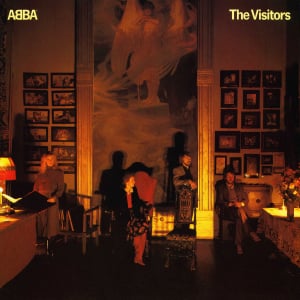
Two divorced couples making one last record in the same vocal booth.
Polar Music, November 1981, ABBA released The Visitors, the last album they would make for forty years, and it is the sound of a pop group dissolving its own marriages in real time. The four members were two married couples: Björn Ulvaeus and Agnetha Fältskog, Benny Andersson and Anni-Frid Lyngstad. Björn and Agnetha had divorced in 1980. Benny and Frida divorced in 1981. Both shattered relationships then walked back into the studio to make a record together, the women singing words the men had written about the end of their love.
The cheer that defined ABBA's seventies hits is gone. The Visitors is darker, colder, more synthetic, Andersson leaning into icy synthesizers and the production turning glassy and remote. "One of Us" is the clearest wound, a song about a breakup sung by a woman who had just lived one, Agnetha's voice carrying a brittle ache over a melody that should be a pop hit and instead feels like a confession. "When All Is Said and Done" is Frida singing about the dignity of a marriage ending, a year after her own began to fall apart.
You can hear the divorces in the arrangements. The harmonies that once gleamed with joy now sound heavier, the gorgeous blend of two female voices carrying a sadness the lyrics make explicit. This is a group using the studio as a place to process its own collapse, the four of them professionals enough to keep making perfect pop while their private lives burned down around them.
The band did not announce a breakup so much as quietly stop. After The Visitors and the sessions that trailed it, ABBA simply ceased, the members drifting into other projects, the divorces making any continuation unbearable. There was no farewell tour, no final statement, just a slow fade into a silence that lasted four decades.
The genius and the cruelty of The Visitors is that the four of them were too professional to let the pain show in the craft. The arrangements are immaculate, the harmonies flawless, the songwriting at the level that had made ABBA the biggest pop act in the world. Andersson and Ulvaeus wrote the words and music, the two men handing their ex-wives lyrics about loss to sing with perfect control, the women delivering them without a crack in the vocal even as the lyrics named their own lives. The title track itself, a tense, paranoid song about Soviet dissidents, sits oddly against the divorce ballads, a band stretching for new territory just as it ran out of reasons to continue. They made beauty out of their own collapse and then quietly walked away from it.
They returned, astonishingly, in 2021 with Voyage, all four reuniting to make new music after forty years apart. The long silence had been a grief, not a feud.
---
They divorced twice and then sang about it in harmony, the most graceful breakup in pop and the saddest.
Niggaz4Life
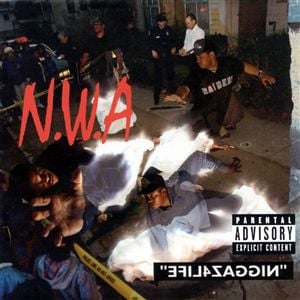
The biggest group in hardcore rap, blown apart by withheld royalties.
Ruthless Records, 1991, N.W.A released Niggaz4Life, an album that debuted at number one on the Billboard chart and proved that the most confrontational rap group in America could sell to the mainstream on its own terms. Dr. Dre's production was at its peak, thick funk samples and heavy low end laying the foundation for the West Coast sound that would dominate the decade. The group was on top. Within a year, it no longer existed.
The breakup came down to money. Dr. Dre discovered that Eazy-E, the group's founder and the head of Ruthless, along with manager Jerry Heller, had been withholding royalties, paying the other members a fraction of what they were owed. Ice Cube had already left in 1989 over the same financial disputes, launching a solo career and firing back at the group in fierce diss tracks. Dre, the musical engine of N.W.A, decided he was done too, and walked to co-found Death Row Records with Suge Knight.
The sound Dre built on that record is the sound he took with him. The deep, rolling bass and live-feeling funk of tracks like "Alwayz Into Somethin'" became the template for the G-funk era that The Chronic would launch a year later. You can hear the future of West Coast hip-hop being assembled inside the album that ended the group that made it.
The fallout turned vicious and public. The split between Dre and Eazy-E spilled into a series of brutal diss records, the two former partners trading insults across releases, the business dispute curdling into personal warfare broadcast to millions. The biggest group in hardcore rap had been undone not by creative differences or burnout but by a contract, by a founder and a manager skimming from the people who made the music.
The group had already survived one major loss before the money dispute finished it. Ice Cube, the writer behind much of the venom on Straight Outta Compton, had quit in 1989 over the same kind of royalty grievance, and his departure stripped the group of one of its sharpest voices. N.W.A pressed on, with Dre and MC Ren carrying the lyrical load, and Niggaz4Life proved the group could still top the chart without Cube. But the rot was structural, baked into a business run by a founder and a manager who paid the artists a fraction of their worth. Dre's exit was the second wound and the fatal one, the producer who built the entire sound walking out the door to construct it again for someone else.
Eazy-E died of AIDS in 1995, with the bad blood largely unresolved. A full N.W.A reunion became impossible the moment he was gone, and the surviving members had to settle for telling the story decades later in the 2015 film Straight Outta Compton.
---
The most dangerous group in America wasn't taken down by the police or the FBI; it was taken down by a royalty statement.
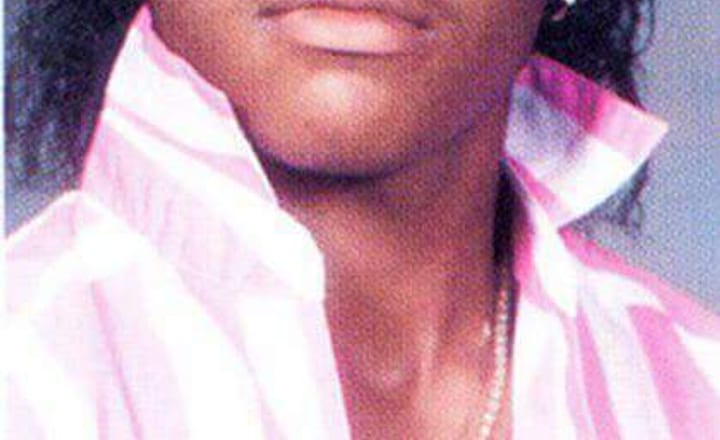
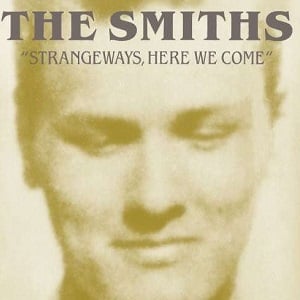
Strangeways, Here We Come
The guitarist quit before the album was even out, and one of pop's great partnerships never spoke again.
Recorded March 1987 for Rough Trade, Strangeways, Here We Come was the fourth and final Smiths album, and the band the two principals both later named their favorite was already dead by the time it reached shops. Johnny Marr, the guitarist whose chiming, layered playing was half of the band's identity, had reached his breaking point. He was exhausted, effectively managing the band's business himself, and increasingly at odds with Morrissey over musical direction.
The flashpoint was telling. Marr resented being pushed to record covers, including a version of Cilla Black's "Work Is a Four Letter Word," and his frustration boiled into one of the great quotes of any breakup. "I didn't form a group to perform Cilla Black songs," he said. The line captured everything, a guitarist who had helped build something singular watching it drift toward the kind of cabaret he had started a band to escape.
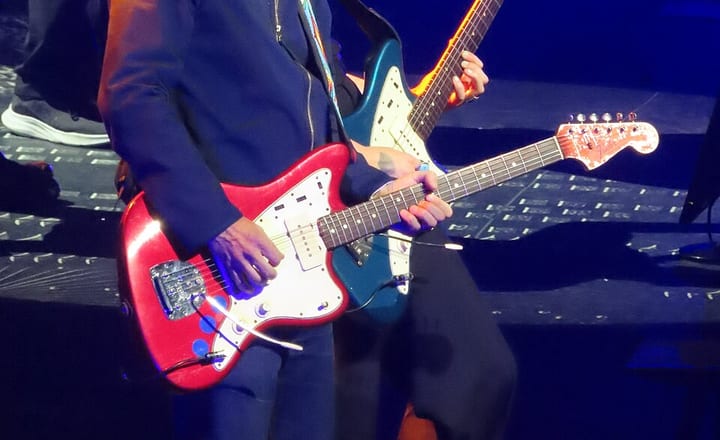
The music on Strangeways showed a band stretching just as it shattered. "Last Night I Dreamt That Somebody Loved Me" opens with a long, swelling piano and orchestral build before Morrissey's voice enters, the most expansive arrangement the Smiths ever attempted, a grand and sorrowful piece that sounds like a band reaching for something bigger right at the end. Marr's playing throughout is at its most adventurous, layered and textured, a guitarist pushing himself even as he prepared to walk.
Marr left in mid-1987, before the album was released. The partnership of Morrissey and Marr, one of the greatest songwriting teams England ever produced, simply stopped. There was no reconciliation tour, no late-career reunion, no thaw. Legal disputes over royalties, including a bitter court case brought by drummer Mike Joyce, poisoned what little goodwill remained.
The weight that crushed the partnership had been mounting for a while. The Smiths ran without a proper manager for much of their career, leaving Marr to handle the business of one of Britain's most important bands on top of writing all the music, a load that ground him down. The pressure to release constantly, the touring, the covers Morrissey wanted to record, and the singer's resistance to bringing in outside players all pressed on a relationship that had once been the most productive in British music. Across four albums in four years, Marr and Morrissey had written a catalogue of jangling, melancholy guitar pop that defined a decade of indie music, and the speed of it burned the engine out. By the time Strangeways was finished, the most gifted guitarist of his generation was twenty-three and exhausted.
Morrissey and Marr have never reformed the Smiths, and decades of offers and rumors have come to nothing. It remains one of the cleanest, most permanent breakups in pop history.
---
"I didn't form a group to perform Cilla Black songs," and with that, one of England's greatest partnerships closed for good.
The Score
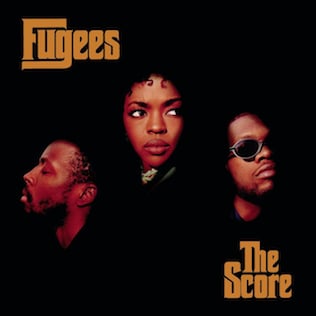
A second album that was also a last, the trio fracturing under the weight of its own success.
Columbia Records, February 1996, the Fugees released The Score, an album that sold more than twenty million copies worldwide and became one of the best-selling rap records of all time. It debuted at number one. It was the trio's second album, and it was their last. Lauryn Hill, Wyclef Jean, and Pras Michel had made something enormous, a warm, soulful fusion of hip-hop and reggae and gospel, and the size of it pulled them apart almost the moment it landed.
The record glows with chemistry the band could not sustain offstage. Their cover of Roberta Flack's "Killing Me Softly" strips the song to a head-nodding boom-bap loop and lets Lauryn Hill's voice carry it, rich and effortless, one of the great vocal performances of the decade. "Ready or Not" rides a haunting sample and Hill's verses, the three voices trading and weaving with a looseness that sounds like friends who have known each other forever. That ease was real, and it did not survive what came next.
Success fractured them fast. Lauryn Hill's talent had become impossible to contain within a trio, and the personal and creative tensions between her and Wyclef Jean, who had largely produced the record, grew sharp as their individual stars rose. Each member drifted toward solo work, Hill toward the masterpiece of The Miseducation of Lauryn Hill, Wyclef toward his own production empire, the group dissolving into recriminations and competing ambitions.
The bitterness was deep enough that Pras Michel later put a reunion in stark terms, saying it was less likely than "Osama bin Laden and Bush having a latte." The line, delivered years after the split, made plain how thoroughly the relationships had broken. The Fugees had reached a commercial and artistic peak that almost no group ever touches, and reaching it was precisely what destroyed them.
The collapse owed everything to one talent outgrowing the group around it. Lauryn Hill's voice and writing on The Score announced a generational artist, and the personal relationship between Hill and Wyclef Jean, who had been romantically involved during the band's rise, added a private fault line beneath the creative one. When that relationship ended, the working partnership had little chance. Hill went on to make The Miseducation of Lauryn Hill, one of the most acclaimed albums of the nineties, a record so complete it confirmed she had never needed the trio at all. Wyclef built a successful solo and production career, Pras drifted, and the three of them never again found the warmth that "Killing Me Softly" had captured so effortlessly.
A few brief reunion attempts surfaced over the years, none of them lasting, including a 2021 tour that collapsed almost as soon as it was announced. The trio's peak and its ending were the same record.
---
Pras said a reunion was less likely than Osama bin Laden and Bush having a latte, and for twenty-five years he was right.

Synchronicity
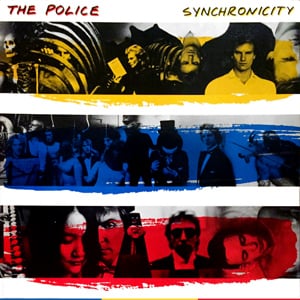
They recorded their biggest album in separate rooms because being together meant fistfights.
AIR Studios on the island of Montserrat, 1983, the Police made Synchronicity, the biggest album of their career, and they made it without being able to stand in the same room. The three of them, Sting, Stewart Copeland, and Andy Summers, had grown so toxic toward one another that they recorded their parts separately, often in different rooms, communicating through producer Hugh Padgham because direct contact tended to escalate into shouting and worse. A&M Records released it in June 1983, and it went to number one around the world.
The hatred was physical. Sting and Copeland, the singer-bassist and the drummer, had a rivalry that kept turning to blows, and during the recording of "Every Breath You Take," the biggest song the band would ever make, the two reportedly came to actual fistfights in the studio. The most famous song in their catalogue, a quietly menacing meditation on surveillance and obsession, was tracked by men who could barely tolerate each other's presence.
None of the bile reached the tape. "Every Breath You Take" is all restraint, Andy Summers's clean, hypnotic guitar arpeggio repeating like a heartbeat under Sting's smooth, controlled vocal, a song so polished it became a wedding staple despite its stalker's lyrics. "Synchronicity II" rumbles with a darker energy, Copeland's drumming sharp and propulsive, the band sounding tight and enormous even as it disintegrated behind the glass.
The Synchronicity tour was a triumph and a wake at once, the band playing stadiums while the members traveled and lived separately, the success making the dysfunction only more unbearable. After the tour, the Police announced a "sabbatical." It was never anything but a euphemism. The band quietly stopped, each member, especially Sting, moving toward solo work, and the most successful trio of their era simply ceased while it was selling more records than ever.
The friction had been the band's fuel from the beginning. The Police were three strong, ambitious musicians, Copeland a powerhouse drummer with his own songwriting itch, Summers a seasoned guitarist far older than his bandmates, and Sting a frontman whose star and whose control were both expanding fast. As Sting's songs came to dominate and his fame outgrew the group, the resentment sharpened, the other two increasingly sidelined on records built around the singer's vision. Synchronicity captured the band at its absolute commercial peak and its lowest point of human tolerance, the music tighter than ever precisely because they recorded it apart. The success made the dysfunction unbearable, and Sting, with a solo career obviously waiting, had every reason to walk.
They reunited for a global tour in 2007, the music still razor-sharp, the old tensions managed but never gone. They have not recorded together since.
---
They built the most-played song in radio history while throwing punches in the next room.
Bridge over Troubled Water
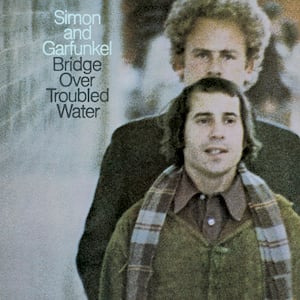
Six Grammys, twenty-five million sold, and a friendship that ran out at the summit.
Columbia Records, January 1970, Simon & Garfunkel released Bridge over Troubled Water, an album that won six Grammys, sold more than twenty-five million copies, and stands among the best-selling records ever made. It was also their last. Paul Simon and Art Garfunkel, friends since childhood in Queens, had worn each other down across years of mounting friction, and the masterpiece that crowned their career was finished by two men who had nearly nothing left to give one another.
The fractures were specific. Garfunkel had taken an acting role in the film Catch-22, and his long absences on location strained the partnership and slowed the album's progress, leaving Simon to carry the workload alone. Simon, the songwriter, increasingly chafed at the dynamic in which Garfunkel's voice often took the spotlight on songs Simon had written. The title track is the perfect, painful example: Simon wrote it, and Garfunkel sang it alone, a soaring solo vocal over a slow gospel piano that became the song everyone remembers, a gift that also stung.
The album is gorgeous and quietly elegiac. "The Boxer" builds from a fingerpicked acoustic guitar to a vast, echoing chorus, recorded with a drum sound captured in an elevator shaft to get that enormous slamming crack. "Bridge over Troubled Water" itself swells from a single piano to a full orchestral climax, Garfunkel's voice climbing and holding as the arrangement rises beneath him, a performance so complete it feels like a farewell even if you know nothing about the band.
The duo split within months of the album's release. Their final concert came in July 1970, and then Simon & Garfunkel were over, two old friends who had run the relationship into the ground at the exact moment of their greatest triumph. Simon went on to a towering solo career. Garfunkel never matched it, and the imbalance only deepened the old wounds.
The imbalance at the heart of the duo had been there since the start. Simon wrote the songs, every one of them, while Garfunkel's pure, soaring tenor often took the lead on the most beloved of them, a division that bred a quiet, lasting resentment in the man holding the pen. The childhood friendship from Queens, where they had performed as teenagers under the name Tom and Jerry, carried decades of accumulated grievance by 1970. Garfunkel's move into acting felt to Simon like abandonment at the exact moment the partnership needed full commitment, and Simon's growing confidence as a solo writer made the duo feel like a cage. They finished the masterpiece on fumes, two old friends with nothing left to give one another.
They reunited for occasional concerts over the decades, most famously in Central Park in 1981, but never permanently. The friendship stayed broken under the success.
---
Simon wrote the most beautiful thing he ever made and handed the whole song to the friend he could no longer stand.
Let It Be
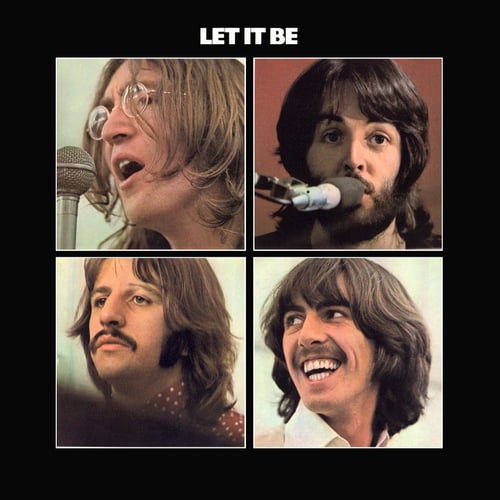
The biggest band in history, coming apart on camera, with the tape still rolling.
Twickenham Film Studios, January 1969, the four Beatles sat in a cold, cavernous soundstage with film cameras pointed at them, trying to make an album live, and the footage caught the greatest band in history coming apart at the seams. The sessions, originally titled Get Back, were meant to strip away the studio trickery and capture the four of them playing together as they once had. Instead they captured the unraveling. George Harrison briefly quit during the filming, walking out over the tensions with Paul McCartney and the general misery of the room.
The misery was earned. Their manager Brian Epstein had died in 1967, removing the one figure who held the business and the personalities together, and the vacuum was filled by chaos. Apple Corps, the company they had founded, was hemorrhaging money and descending into mismanagement. McCartney pulled toward control, Lennon pulled toward Yoko Ono and a life outside the band, Harrison strained against being the junior partner, and Ringo Starr sat in the middle of four men who had been one creative organism for nearly a decade now pulling in four directions.
The record that resulted is haunted by its own ending. "Let It Be" rides a gospel-tinged piano and McCartney's warm, weary vocal, a hymn for a band that knew it was finishing. "The Long and Winding Road" arrived buried under Phil Spector's lush orchestral overdubs, added after the fact, a production choice that infuriated McCartney and became one more grievance in the pile. The album was released on Apple in May 1970, after Spector's work, and it landed as a document of the end, not a fresh start.
The famous rooftop concert, filmed atop the Apple building in Savile Row, gave the band its final live performance, the four of them playing to the London air until the police arrived to shut them down. By the time Let It Be reached shops, McCartney had already publicly announced he had left, effectively ending the Beatles in the press. The biggest band that ever existed had dissolved, and the record was the evidence.
The breakup had been gathering for years before Twickenham. The death of Brian Epstein in 1967 had removed the steadying hand that managed the band's affairs and refereed its personalities, and the vacuum filled with business chaos and competing visions. The White Album in 1968 had been recorded largely as four solo artists in separate studios, Ringo Starr briefly quitting during those sessions before the others coaxed him back. By 1969 the cracks ran through everything, the disputes over Apple, over a new manager, over Yoko Ono's constant presence, over who got to decide anything at all. Lennon wanted out, McCartney wanted control, Harrison had a stockpile of songs nobody would record, and the band that had reshaped popular music could no longer agree on how to be a band. Let It Be caught all of it on film, the warmth of the rooftop and the chill of the soundstage, the last gasp of the closest creative partnership the twentieth century produced.
No band has broken up bigger, or more publicly, or with the cameras rolling the entire time. The greatest group in the history of popular music ended on a film set and a rooftop, and Let It Be is the recording of that ending.
---
Every band on this list broke up; only the Beatles had the breakup filmed, scored, and released as their final album.
The pattern repeats too cleanly to be coincidence. The thing that makes a band great, the friction of several stubborn people forced to share one vision, four egos who would never make this exact music alone, is the same thing that eventually tears it to pieces. A band needs the collision. Lennon needed McCartney to push against, Sting needed Copeland to fight, Squire needed Brown to balance, and the moment one of them tries to win the argument for good, the chemistry that made the records dies with the partnership. The best bands are unstable by design, built on a tension that can only hold for so long before it snaps.
Listen back to any of these albums and you hear two things at once: the music and the fault line running underneath it. The divorce in the harmonies, the power struggle in the production, the resentment buried in a perfect three-minute single. The miracle was never that these bands broke up. Breaking up is what bands do, sooner or later, every one of them. The miracle is that four or five people who had grown to despise the sight of each other held it together long enough, one more session, one more take, to make the record that outlived all the reasons they had to walk away.




Loading comments…