The 1976 War: BBC Radio 1 Playlist vs. The Punk Underground
London in November 1976 felt like a pressure cooker about to burst, as strikes, power cuts, and social decay gripped the city. When the Sex Pistols released "Anarchy in the U.K." on September 24, the track entered a cultural battlefield where the BBC Radio 1 playlist acted as the primary defensive line. Steve Jones's thick, overdriven Telecaster crunch and Rotten's snarling vocals hit the airwaves like a brick through a window. Yet, the daytime producers in their comfortable London offices looked at the chaos of the track and chose to bury it. They refused to include the song in the official rotation, attempting to quarantine the punk contagion before it could infect the mainstream.
The BBC operated as a centralized gatekeeper, a massive, bureaucratic machine that decided which melodies were safe for the breakfast commute and which were too dangerous for the afternoon tea break. While the Sex Pistols were tearing up the social contract, the Radio 1 playlist committee held the power to veto any DJ's personal preference. This committee functioned as a high court of taste, where a single decision could strip a song of its national reach. For a band like the Pistols, whose identity relied on a sudden, violent burst of visibility, this institutional silence acted as a deliberate act of censorship disguised as programming policy.
A rift opened between the polished pop of the charts and the raw aggression of the underground. You could hear the difference in the very texture of the broadcasts. On one hand, ABBA's "Dancing Queen" arrived in late 1976 to dominate the airwaves with its flawless piano glissandos and lush, multi-tracked vocal harmonies. On the other, the distorted, single-take energy of the burgeoning punk scene provided a stark contrast. The BBC did not just choose songs, they chose which version of Britain was allowed to exist in the public consciousness.
The Iron Fist of the BBC Radio 1 Playlist
The Radio 1 playlist committee operated with an authority that would make a modern algorithm look like a suggestion box. This group of producers, comprised of seasoned industry veterans, possessed the absolute power to dictate the rotation of every track played during daytime hours. If a DJ wanted to spin a new, gritty track, the committee could simply strike it from the A-list, moving it to the B-list or removing it entirely. This system ensured that the daytime sound remained a predictable, sanitized loop of melodic, non-threatening pop. It was a mechanism designed to maintain a specific level of comfort for the widest possible audience, leaving no room for the sonic abrasiveness of the London underground.
The A-list served as the inner sanctum of the BBC, a prestigious rotation reserved for tracks that met the strict criteria of the committee. This list drove the UK Singles Chart, providing the heavy rotation necessary to push a song into the Top 10. When ABBA released "Dancing Queen" in late 1976, the committee's machinery smoothed its ascent, allowing its bright, disco-inflected melodies to find a permanent home in the daytime rotation. The committee favored tracks with clear structures, high production values, and a lack of lyrical controversy. They wanted music that functioned as wallpaper, something that could sit behind a conversation without demanding the listener's full, undivided attention.
Punk demanded attention through jarring, dissonant chords and lyrics that attacked the status quo. This made it an easy target for the playlist committee, who viewed the genre as a threat to the stability of the Radio 1 brand. When the Sex Pistols' "Anarchy in the U.K." began gaining traction in the clubs, the committee's response was a coordinated withdrawal. They did not ban the song outright, as that would have invited too much scrutiny, but they simply denied it the rotation required to become a national phenomenon. They attempted to starve the movement of oxygen by denying it the airwaves.
Younger listeners tuning in to find something that reflected their own reality felt a growing sense of frustration. The mismatch between the upbeat, polished pop on the A-list and the growing unrest in the streets was impossible to ignore. The committee might have controlled the daytime rotation, but they could not control the growing influence of the underground. They fought a war of attrition against a movement that did not care about their approval or their lists. The clash was inevitable, and the battle lines were drawn in the very frequency of the FM signal.
Needle Time and the Politics of Silence
The struggle for airwave dominance involved a battle of legal restrictions and union politics. The "Needle Time" agreements, a complex and restrictive set of rules between the BBC and the Musicians' Union, dictated exactly how much recorded music could be played on air. These restrictions protected the livelihoods of session musicians, ensuring that live performances remained a primary source of income for the industry. However, the unintended consequence was a massive bottleneck in the broadcasting of new, recorded material. The BBC had to carefully ration every second of recorded music, creating a scarcity that shaped the very sound of British radio.
Producers found creative, albeit much more labor-intensive, ways to introduce new music to the public because of this scarcity. Since they could not simply spin a vast library of new singles without hitting the Needle Time limit, they turned to the studio. They began recording live sessions, where musicians would perform in the BBC studios, often with minimal overdubs and a raw, immediate energy. These sessions allowed the BBC to broadcast music that did not count against the strict recorded music quotas, as the BBC classified them as live performances. This loophole, born of necessity, became a vital cultural lifeline for the entire UK music scene.
The politics of silence revolved as much around economics as they did around censorship. The Musicians' Union held a powerful hand, using Needle Time to ensure that the rise of high-quality studio recordings did not render live musicians obsolete. For the BBC, this meant that the daytime rotation leaned even more heavily toward older, established hits that had already been accounted for in previous quotas. The contemporary, the new, and the experimental all suffered under these legal constraints. The airwaves were being systematically emptied of the very music that was currently being made in London's basement clubs.
A strange, bifurcated musical culture emerged in 1976. On the surface, the radio played a rotating loop of familiar, safe classics, while underneath, a frantic scramble for live recordings took place. The industry remained caught in a loop, unable to move forward because the legal framework of the past strangled the present. This scarcity actually benefited the more aggressive genres, as the live, unpolished nature of the BBC sessions captured the raw essence of punk far better than a polished studio single ever could. The limitations of the medium became the defining characteristic of the sound.
John Peel and the Midnight Loophole
John Peel understood the limitations of the daytime Radio 1 rotation better than anyone, and he used his late-night slot to bypass the committee's authority. While the daytime producers protected the A-list, Peel operated in the shadows, creating a sanctuary for everything the establishment found distasteful. His show functioned as a vital loophole, a place where the rules of the $daytime$ $playlist$ simply did not apply. In the middle of the night, the heavy-handed censorship of the committee vanished, replaced by a frantic, experimental, and utterly unregulated stream of new music.
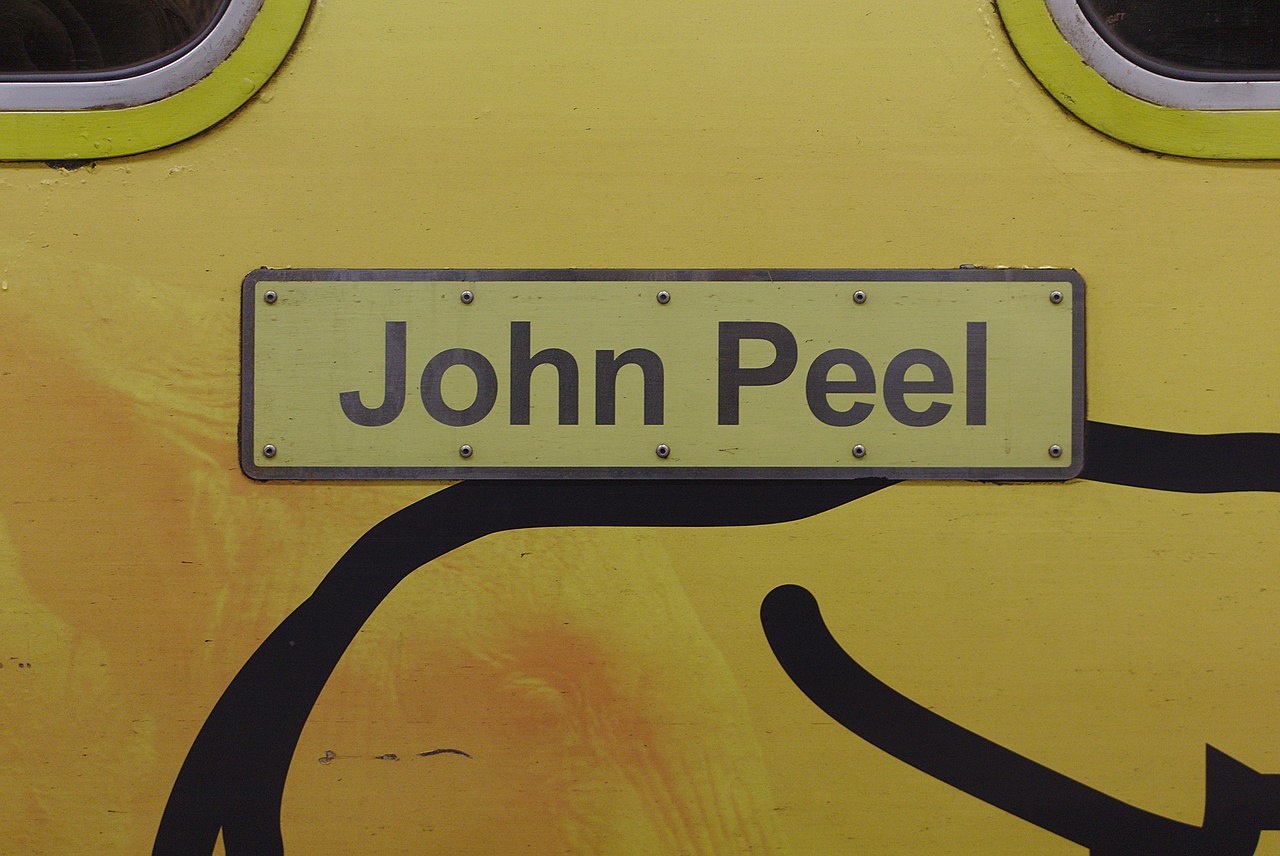
Peel's programming provided the essential platform for tracks like The Damned's "New Rose," which arrived in October 1976. As the first single from the punk genre, "New Rose" possessed a frantic, driving energy that the daytime committee would have instantly vetoed. However, in the late-night hours, Peel could spin it with total freedom, allowing the song's aggressive, garage-rock energy to reach a national audience. He did not just play records, he curated a revolution that happened while the rest of the country was asleep. His studio became a laboratory for the sounds of the future.
Peel's late-night slot provided the only consistent way for the underground to communicate with the mainstream. He gave a voice to the disenfranchised, the loud, and the abrasive, creating a sense of community among listeners who felt ignored by the daytime pop machine. When a new band appeared on his show, they were being validated by the most influential tastemaker in the country. Peel's authority did not come from a committee, it came from his genuine, unpretended passion for the noise.
This midnight loophole created a fascinating tension within Radio 1 itself. The station functioned simultaneously as a bastion of the establishment and the birthplace of the counter-culture. During the day, listeners might hear the smooth, professional delivery of a pop announcer playing ABBA, but as the sun went down, the station shifted toward the jagged, the distorted, and the unknown. This duality made Radio 1 the most interesting station in the world, a place where the two warring factions of British music occupied the same frequency, even if they never truly met.
"No one is watching, no one is listening, no one cares, anarchy in the UK!"
The lyrics of the Sex Pistols, specifically from "Anarchy in the U.K.", encapsulated the very sentiment that Peel's show thrived upon. The song's nihilism and its direct attack on social order provided the perfect soundtrack for a late-night broadcast that ignored all traditional rules. While the daytime producers feared the song's impact, Peel embraced its chaos, recognizing that the energy of the track reflected the real social friction occurring across the $UK$. He provided the stage for the chaos to be heard, even if the daytime rotation refused to acknowledge it.
The Daytime Sound of Tony Blackburn
Tony Blackburn represented the pinnacle of the daytime Radio 1 sound, a polished, upbeat, and entirely safe persona that stood in direct opposition to the grit of punk. His presentation featured a bright, manic energy, a friendly tone, and a selection of music that avoided any hint of controversy. Blackburn acted as the voice of the establishment, the personification of the BBC's desire to maintain a pleasant, unchallenging atmosphere for the British public. His shows provided a cheerful backdrop to the morning routine of millions of listeners.

The music Blackburn played resembled a well-lit, brightly colored living room, devoid of any shadows or jagged edges. He leaned heavily into the pop hits, the light disco, and the melodic easy listening that defined the A-list. There was no room for the distorted, feedback-heavy textures of the London underground in his rotation. To include a band like the Sex Pistols would have been a betrayal of his role as the guardian of the daytime sound. His job ensured that the transition from the news to the midday meal remained as smooth and pleasant as possible.
This stylistic gap between Blackburn and the underground created a profound cultural divide. To a teenager in a leather jacket, Blackburn's show sounded like the propaganda of a dying empire, a hollowed-out version of reality that ignored the very real tension in the streets. The polished, high-frequency pop of the daytime rotation felt increasingly disconnected from the low-frequency, bass-heavy aggression of the clubs. The more the daytime presenters pushed for a sanitized, melodic sound, the more the underground pushed back with something intentionally ugly and difficult. The contrast was not just musical, it was political.
Blackburn's dominance ensured that the mainstream remained insulated from the shock of punk, at least for a time. He provided a sense of continuity, a reliable stream of familiarity that helped maintain the status quo. However, this insulation also created a sense of resentment. The daytime airwaves were increasingly seen as a closed loop, a playground for the privileged and the polished, while the real energy of the era was being pushed into the $margins$. The very success of the daytime sound made the emergence of the underground even more explosive when it finally broke through the barricades.
Anarchy in the Airwaves
The release of "Anarchy in the U.K." in November 1976 served as the ultimate test of the BBC Radio 1 playlist's defenses. Despite the intense efforts of daytime producers to suppress the track, the sheer momentum of the Sex Pistols could not be entirely contained. The song's impact reached the streets, the clubs, and even the very way people talked about music. Even without the heavy rotation of the A-list, the track began to climb the charts, eventually peaking at number 34 in early 1977. This achievement, accomplished in the face of institutional resistance, stood as a victory for the underground.
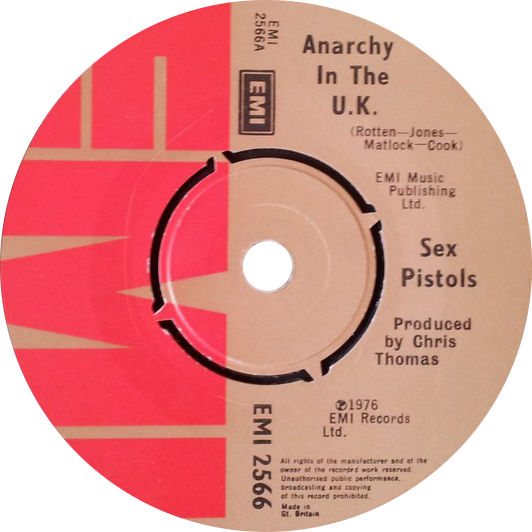
The lack of heavy daytime support meant that the song's success relied on a different kind of energy, one built on word-of-mouth, independent record shops, and the late-night broadcasts of DJs like Peel. This was a grassroots ascent, a movement that bypassed the traditional gatekeepers and went straight to the people. The fact that a song so fundamentally opposed to the BBC's values could reach the Top 40 exposed a crack in the foundation of the entire broadcasting system. It proved that the committee's power was not absolute, and that the public's appetite for something more visceral was growing.
The battle for the airwaves during this period concerned the legitimacy of the medium itself. When the Sex Pistols were denied their rightful place in the daytime rotation, it highlighted the disconnect between the BBC and the actual cultural pulse of the nation. The protest happened in the streets and through the very act of listening to the radio. Every time a listener sought out a track that the committee had ignored, they participated in a small act of rebellion against the centralized authority of the BBC.
The 1976 war ended with the side that embraced the chaos. The establishment's attempts to curate a safe, melodic, and unchallenging environment only served to sharpen the edges of the movement they were trying to suppress. The very resistance they mounted provided the friction necessary to ignite the punk phenomenon. The airwaves, once a controlled and predictable space, had become a battlefield where the old world and the new fought for the soul of British music.
The Legacy of the Session Recording
The true legacy of this era lies in the strategic use of the "Peel Sessions" by artists who realized that the only way to bypass the commercial constraints of the official playlist was to go live. These sessions became a vital tool for bands to reach a national audience without needing the approval of the daytime producers. By recording live in the BBC studios, bands presented a raw, unmediated version of their sound that captured the energy of their live performances. This allowed them to bypass the Needle Time restrictions and the playlist committee's veto, creating a parallel stream of musical discovery.
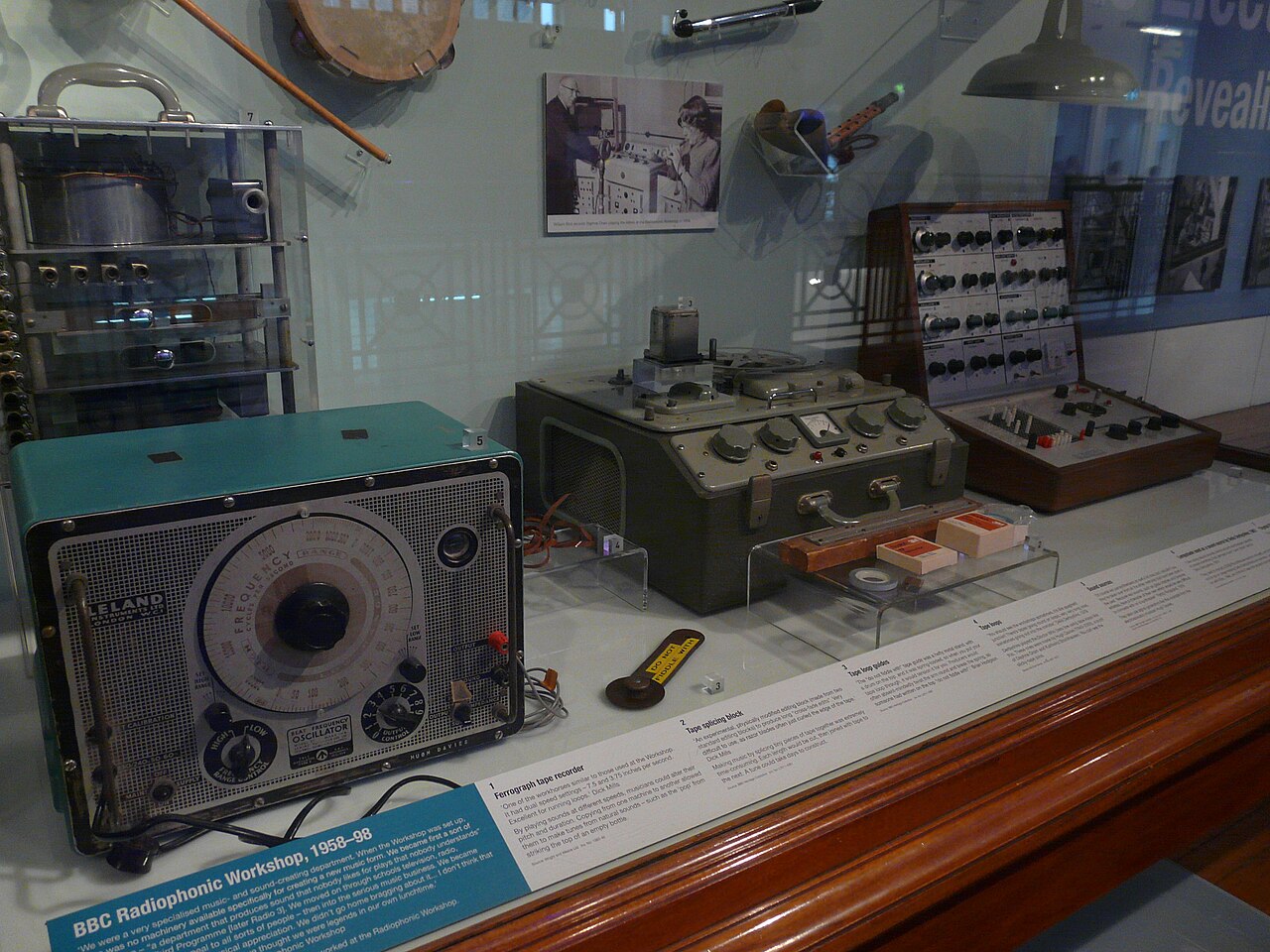
The texture of these sessions often felt much more visceral than the studio singles. Without the ability to rely on heavy-handed production or polished overdubs, the musicians relied on their fundamental playing skills and the raw power of their instruments. Listeners could hear the breathing, the mistakes, and the sheer, unadulterated aggression of the performance. For many bands, the Peel Sessions were the most important recordings of their careers, providing a definitive document of their sound at its most potent. It was a way of reclaiming the airwaves through the very medium that was trying to restrict them.
Specialist DJs like Bob Harris also played a crucial role in this ecosystem, providing a middle ground between the polished pop of Blackburn and the extreme anarchy of Peel. Harris's programming allowed for a more nuanced exploration of genres like prog-rock and early new wave, much of which also bypassed the daytime pop-centric restrictions. He created a space where the experimental could exist alongside the more structured, providing a bridge for listeners who were moving away from the mainstream but were not yet ready for the full-scale assault of punk. His shows acted as a much-needed buffer in an increasingly polarized musical landscape.
The conflict between the BBC Radio 1 1976 playlist and the punk underground fundamentally changed the way music was consumed and broadcast in the UK. It broke the monopoly of the daytime producers and paved the way for a more fragmented, more diverse, and more democratic musical culture. The struggle proved that the audience's connection to music is not something that a committee can manufacture or control. The cracks that formed in 1976 eventually became the fault lines that reshaped the entire industry, ensuring that the loud, the strange, and the subversive would always find a way to be heard.