Ten Gear Failures That Accidentally Created New Genres
Birmingham, 1970, felt like a heavy, gray weight on the chest of the UK. Tony Iommi sat in a cramped rehearsal space, staring at the bloodied tips of his fingers. A factory accident had sliced through his ring and middle fingers, leaving him with a physical deficit that threatened his entire musical future. He could not grip thick guitar strings with the strength required for blues-rock. He needed a way to play that did not involve agonizing pain or snapped tendons.
Iommi turned to the only solution available to a guitarist with mutilated hands. He swapped heavy-gauge strings for lighter, thinner sets that offered less resistance. He cranked his Laney amplifiers to punishing volumes to compensate for the loss of string tension and sustain. This physical necessity changed the physics of the electric guitar. The strings slackened, the notes sagged, and the pitch slumped into a thick, muddy sludge.
Black Sabbath released their self-titled debut on Vertigo Records that same year. The sound lacked polish or brightness. It was a dense, suffocating fog of low-end frequencies and detunes. Listeners heard a heaviness that never existed in the psychedelic blues of the late sixties. The heavy, drooping notes of "Black Sabbath" created a sense of dread that felt like a funeral march. This accidental adjustment of string tension birtched the entire doom metal genre.
The heavy, vibrating notes of Iommi's riffs provided the DNA for every stoner rock and sludge band that followed. Without those broken fingertips, we might never have heard the crushing weight of "Iron Man." The genre exists because a man refused to stop playing despite his injuries. It is the sound of physical struggle turned into sonic power.
The Malfunctioning Ring Modulator of Brian Eno
Oxfordshire, 1977, offered a different kind of sonic tension at the Manor Studio. Brian Eno sat surrounded by patch cables and oscillating signals. He did not seek a melody. He wanted to find the sound of a machine losing its mind. He reached for the EMS VCS3 synthesizer, a strange, portable unit with a patch matrix instead of a traditional keyboard.


The ring modulator on his VCS3 began to behave erratically. Instead of clean, mathematical multiplication of frequencies, it produced jagged, non-musical textures. These sounds did not follow the rules of Western harmony. They screamed and pulsed with an unpredictable, organic instability. Eno did not turn the machine off. He leaned into the malfunction.
His solo debut, Here Come the Warm Jets, captured this exact instability. Tracks like "Baby's on the Wall" utilized these erratic, oscillating textures to create a sense of organized chaos. The synthesizer sounded like it was struggling to exist within the song. It provided a layer of electronic grit that felt much more alive than the polished prog-rock of the era.
The VCS3 was a strange beast, and its ability to produce unclassifiable noise was its greatest strength.
Eno used these errors to move away from traditional song structures. He treated the studio itself as an instrument that could fail. This approach laid the foundation for ambient music and art-pop. He proved that a mistake in a signal path could be more interesting than a perfect melody. The error became the aesthetic.
The Overheating Vox Super Beatle
Detroit, 1969, smelled like sweat, cheap beer, and hot vacuum tubes. The Stooges practiced in cramped, poorly ventilated spaces, pushing their equipment far beyond its intended limits. Ron Asheton plugged a battered guitar into a Vox Super Beatle amplifier. This specific amp was never meant to handle the sheer volume the band demanded. As the set progressed, the amplifier began to overheat.
The heat caused the internal components to drift. The transformer struggled under the hyper-extended load. The resulting tone lacked clarity or crispness. It was a distorted, overdriven mess that sounded like a serrable blade dragging across concrete. This was the sound of an amplifier on the verge of total meltdown. It was the sound of the proto-punk movement.
Elektra Records captured this carnage on the band's self-titled debut album. The guitar tone on tracks like "T.V. Eye" possesses a physical, aggressive weight. It is a thick, buzzing distortion that feels dangerous. The amplifier did not just play notes; it struggled to contain the energy of the performance. This specific failure of gear stability defined the sonic template for punk rock.
Punk requires a certain level of sonic violence. The polished tones of the mid-sixties had no place in the Detroit underground. Asheton's ability to harness the overheating Vox created a blueprint for every garage rock revival that followed. The grit came from the hardware failing to keep up with the artist's intent.
The Tape Speed Tricks of Abbey Road
Abbey Road Studios, 1966, housed some of the most expensive technology in the world. The Beatles and their engineer, Geoff Emerick, used these machines with a reckless disregard for the manual. They worked with Studer J37 tape machines, which were capable of high-fidelity recording. They were more interested in what happened when the machines behaved incorrectly.
Emerick began experimenting with the tape speed controls. He would manually manipulate the reels during a take, speeding them up or slowing them down. This created a warping, psychedelic effect. The pitch would sag and then surge. It mimicked the sensation of a dream or a drug-induced hallucinated state. The machines acted as generators of distortion rather than mere recording tools.
The track "Tomorrow Never Knows" on the Revolver album provides the ultimate example of this technique. The vocals and percussion seem to swirl and dissolve. This was not achieved through clever EQ or reverb alone. It much more a result of the physical manipulation of the tape's velocity. The result was a disorienting, psychedelic experience that changed pop music forever.
These engineers understood that stability often kills art. By pushing the Studer machines into unconventional territory, they helped invent psychedelic pop. They found beauty in the wobbling pitch and the dragging rhythm. The error became the effect.
The Failure of the Roland TR-808
The 1980s arrived with a digital heartbeat that sounded nothing like a human drummer. Roland released the TR-808 drum machine with a specific goal in Monte Carlo. They wanted to replicate the sound of a real acoustic kit.
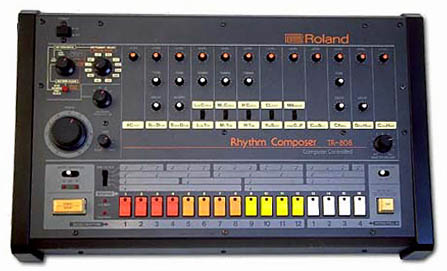
They failed spectacularly. The kick drum sounded like a synthetic thud. The snare lacked any natural snap. The hi-hats sounded like metallic, robotic clicks.
Hip-hop producers in New York saw something different in this failure. They did not want a simulation of a jazz drummer. They wanted something that could shake the walls of a club. Afrika Bambaataa heard the potential in the 808's booming sub-bass. He embraced the synthetic, non-human quality of the machine's output. He used it to build a new sonic language.
The 1982 track "Planet Rock," released on Trax Records, changed the trajectory of dance music. The 808's kick drum hits with a physical, low-frequency impact that cuts through any sound system. It provides a foundation of pure, unadulterated rhythm. This reliance on the machine's synthetic failure birthed electro and influenced the development of techno and house.
The 808's lack of realism was its greatest strength. It provided a texture that was entirely alien to the organic world. Producers like Bambaataa turned a failed percussion simulator into the most influential instrument of the decade. The machine's inability to mimic life allowed it to create a new kind of life entirely.
The Glitch Aesthetic of Warp Records
Mid-1990s Sheffield, England, felt like a laboratory for electronic experimentation. The members of Autechre sat in front of computers and samplers, working through the early, unstable era of digital production. Software lacked the polished, streamlined nature of modern tools. It was full of bugs, crashes, and unpredictable errors. These were not mere inconvenorbances; they were musical opportunities.
Producers began to treat software errors as rhythmic elements. They would intentionally trigger CD-skipping errors or exploit bugs in their digital sequencers. They sought the sound of the machine breaking. This technique appeared frequently during the sessions for the Warp Records release Incunabula. The music relied on the architecture of digital malfunction.
This approach birthed the IDM (Intelligent Dance Music) aesthetic. The tracks feature stuttering rhythms and fragmented melodies that feel like a corrupted data stream. There is no smooth flow here. Instead, there is a jagged, hyper-detailed texture that demands intense listening. The "glitch" became a deliberate stylistic choice.
The music sounds like a computer struggling to process a heavy load. It is cold, precise, and deeply unsettling. By embracing the error, Autechre and their peers created a genre that celebrated the digital void. They found a new kind of rhythm in the wreckage of broken code.
The Claustrophobic Echo of Joy Division
Strawberry Studios, 1979, provided the backdrop for a haunting sonic transformation. Producer Martin Hannett did not want to capture a standard rock performance. He wanted to create a space that felt empty and desolate. He worked with Joy Division to manipulate the very air around the instruments. He used heavy digital delay and custom-built reverb units to sculpt their sound.
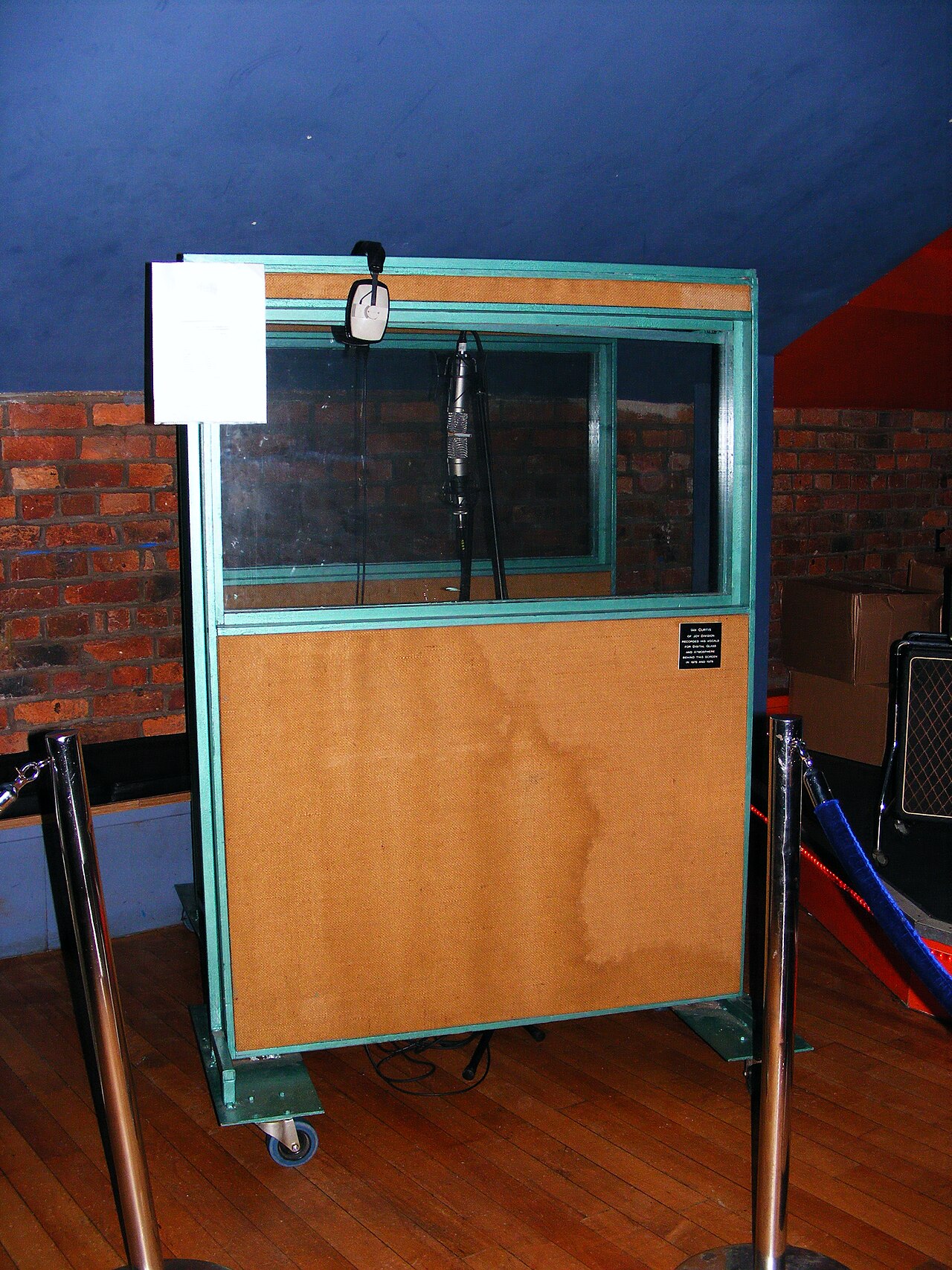
Hannett often pushed his gear into signal clipping. He allowed the drums to hit the limit of the recording medium. This created a harsh, compressed edge to the percussion. The drums did not sound like they were in a room; they sounded like they were echoing in a vast, industrial wasteland. This was the sound of Manchester's post-punk reality.
The album Unknown Pleasures stands as the definitive result of this sonic manipulation. The drums possess a hollow, claustrophobic quality that sits far back in the mix. They are surrounded by a sense of immense, lonely space. This production style made the band's music feel physically heavy and emotionally distant.
The tension between the clipping, aggressive drums and the wide, echoing reverb creates a unique psychological pressure. It is a sound that feels like it even closes in on the listener. Hannett used the limits of his equipment to mirror the internal state of the band. The gear failure was the emotional core of the record.
The Overmodulated Wall of Sound
Los Angeles, 1960s, was the era of the Gold Star Studios. Phil Spector arrived with a vision that defied the standard rules of recording. He did not want a clear, separated mix where each instrument had its own space. He wanted a dense, blurred mass of sound. He called it the "Wall of Sound." To achieve this, he relied on a process of intentional overmodulation.
Spector would record multiple versions of the same part using multiple microphones. He would then push the signals into the red. He used heavy echo chambers to wash the entire mix in a thick layer of reverb. The instruments began to bleed into one another. The distinction between the piano, the guitars, and the percussion began to dissolve. The result was a monolithic sonic entity.
The tracks produced at Gold Star Studios defined the pop era of the decade. The sound is massive and overwhelming. It hits the listener like a tidal wave of melody and rhythm. There is no way to isolate a single instrument because they all exist within the same dense, vibrating cloud.
This technique required a total abandonment of fidelity in favor of impact. Spector used the saturation of the tape and the overflow of the microphones to create a sense of grandeur. He turned the studio into an instrument of overwhelming scale. The density of the mix became the message itself.
The Digital Skipping of IDM
Digital audio workstations, in their early iterations, were prone to catastrophic failures. A misplaced command or a heavy processing load could cause a sudden, jarring skip in the audio stream. For most engineers, this was a disaster. For the emerging IDM producers of the mid-90s, it was a rhythmic breakthrough. They began to sample these exact moments of digital failure.
The sound of a skipping CD or a buffering stream entered the drum programming. These tiny, micro-second errors provided a level of rhythmic complexity that was impossible to play on a human kit. The "glitch" was not just an ornament; it was the rhythmic foundation. It allowed for a type of syncopation that felt both robotic and organic.
This aesthetic transformed the way we perceive digital sound. It stripped away the illusion of perfection. By highlighting the cracks in the digital medium, producers created a sense of tension and release. The music feels like it is constantly on the verge of falling apart.
Listening to these tracks feels like watching a machine struggle to maintain its composure. The precision of the programming is interrupted by the sudden, violent bursts of error. This creates a hypnotic, albeit fragmented, listening experience. The error became the pulse of a new era of electronic music.
The Heavy Compression of the 1960s Pop Era
The 1960s pop era relied on a specific kind of sonic density. Engineers used heavy compression to ensure that every element of a song could be heard through the low-fidelity radio speakers of the time. They pushed the limiters on their consoles to squeeze the dynamic range of the music. This created a sound that was loud, consistent, and incredibly punchy.
This compression was not always a smooth process. Pushing the gear too hard often resulted in unintended pumping effects. The volume of the music would dip every time a heavy drum hit occurred. This "pumping" sensation added a rhythmic energy to the tracks. It gave the music a breathing, almost muscular quality.
The pop hits of the mid-60s benefited from this aggressive leveling. The vocals sat right at the front of the mix, even when accompanied by loud brass sections or heavy percussion. The compression glued the disparate elements together into a single, cohesive unit. It made the songs feel much larger than they actually were.
While modern engineers often avoid this level of extreme limiting, the era's sound remains iconic. The heavy, compressed textures provided the energy necessary for the radio-driven pop explosion. The technical limitation of the era's hardware became the defining characteristic of its greatest hits.
Music history often flows through a series of intentional genius strikes. We celebrate the compositions and the performances. Yet, the most profound shifts in how we hear the world often come from a broken string, a blown amplifier, or a glitch in the code. These moments of failure force us to find new ways to listen, turning the wreckage of technology into the foundation of new worlds.