How Record Labels Use Frequency Manipulation in Retail
August 12, 1991, changed the physics of popular music. When Metallica released their self-titled fifth album, the world heard a sonic weight that felt physically heavy. Steve Hall, a mastering engineer at McClear Mastering, processed those tracks with a punch that hit like a sledgehammer against concrete. This shift went far beyond simple EQ adjustments or cleaner signal paths. It signaled the start of a sonic era where volume and compression dictated how we perceive every sound in our environment.
The music industry began chasing a specific kind of impact. Engineers pushed waveform peaks higher, effectively flattening the peaks and valleys of the music. This trend, known as the "Loudness War," turned music into a dense, unrelenting block of sound. By the late 1990s, the dynamic range of most commercial releases shrank to a tiny fraction of its former self. Labels realized that a louder track grabbed attention more effectively in noisy environments, from radio broadcasts to crowded shopping malls.
This obsession with volume created a permanent shift in audio consumption. It turned the subtle nuances of a performance into a constant, pressurized stream of information. If a song lacks the impact of the previous track, the listener perceives it as a failure. This competitive compression forced artists to sacrifice the breath and space that defined previous decades. The result was a wall of frequency manipulation in retail and radio that demanded attention but left no room for the listener to breathe.
The technical consequences of this era appear with brutal clarity in modern masters. Engineers saw their art stripped of complexity in favor of sheer decibel count. We stopped listening to the fine details and started reacting to the physical pressure of the sound.
The Black Album and the Birth of Loudness
Bob Ludwig, a titan of the mastering world, spoke openly about this sonic decline. In a 2009 interview with Sound on Sound, Ludwig detailed the technical erosion of dynamic range in commercial releases. He described a world where engineers systematically deleted the headroom available for musical expression. The waveform ceased to look like a mountain range and instead resembled a flat, jagged plateau.

The Black Album provided the blueprint for this aggressive sonic profile. While the album maintained significant clarity, its impact relied on a massive, compressed low end. The kick drum and bass guitar locked together with an inescapable force. This high-compression approach became the industry standard for the next twenty years of mainstream production. Producers stopped worrying about quiet moments because the limiter erased them entirely.
Labels understood the commercial power of this density. A loud track cuts through the noise of a car radio or a supermarket PA system with ease. It demands a physical response from anyone within earshot. This necessity drove the industry toward a standardized, compressed sound that favored impact over artistry. The nuance of a soft snare hit or a fading reverb tail became irrelevant if the track could not compete with the volume of a neighbor's radio.
The late 90s accelerated this trend through digital limiting technology. Tools like the Waves L2 Ultramaximizer allowed engineers to achieve extreme levels of compression with minimal effort. It turned mastering into a game of seeing how much signal one could shove into a digital ceiling. This era of the Loud Loudness War fundamentally altered the DNA of pop and rock production.
"The dynamic range of many modern recordings is extremely low, often leaving very little room for the music to breathe or for the listener to experience the nuances of the performance."
The loss of dynamics changed how we perceive tension. In a well-mastered 1970s rock record, the transition from a quiet verse to a loud chorus provides a visceral shock. In a modern, compressed track, that shock disappears because the entire song exists at a constant, punishing volume. We lost the ability to be surprised by music because the music never stops shouting.
The Science of the 60 BPM Retail Loop
Retail environments operate by a different set of rules than concert halls. Store managers do not want a sudden, jarring climax. They want customers to linger near the expensive aisles. This necessity brings the concept of the 60 to 80 BPM (beats per minute) loop into the foreground. This specific tempo range mimics a resting human heart rate, subtly encouraging a physiological state of calm.

A 2014 study from the University of Amsterdam confirmed what retail engineers have known for decades. The researchers found a direct relationship between background music tempo and consumer spending habits. Slowing the tempo in a retail setting correlates with longer dwell times. When the music slows your heart rate, your walking pace slows with it. This extra time in the store leads to more unplanned purchases and higher total basket values.
The 1970s "Supermarket Pop" era perfected this manipulation. Radio stations played heavy rotations of easy-listening artists like Barbra Streisand and The Carpenters. These tracks featured smooth, mid-tempo arrangements that lacked aggressive transients. This music transitioned seamlessly into retail background loops, creating a predictable, non-threatening atmosphere. It turned the shopping experience into a passive, hypnotic state of consumption.
Engineers use these specific BPM ranges to regulate foot traffic. A fast-paced, high-energy track in a clothing store might drive quick, high-turn turnover sales. A slow, rhythmic pulse in a high-end jewelry store encourages a slow, deliberate browsing pattern. The rhythm of the music dictates the rhythm of the consumer's movement through the aisles.
This technique involves biological engineering rather than mere taste. By aligning the music with the human pulse, retailers strip away the sense of urgency. You no longer rush through a task; you drift through an environment. The music acts as a rhythmic anchor, tethering you to the physical space of the store.
Masking the Refrigerator Hum
Retail audio engineering relies heavily on psychoacoustic masking techniques. Every large store contains a layer of unwanted noise. Refrigerator compressors, HVAC systems, and the constant shuffle of foot traffic create a chaotic sonic environment. To combat this, engineers boost specific frequency ranges to mask the ambient noise. They use sound to hide the very noises that would distract you from the merchandise.
The frequency of a refrigerator hum usually sits in the low-frequency range, often between 50 and 100 Hz. To mask this, engineers might emphasize the low-mids in the background music. By saturating the 200 to 500 Hz range, they create a sonic blanket that covers the mechanical drone. This makes the store feel more alive and less like a cold, industrial warehouse. It replaces the mechanical with the musical.
Foot traffic and clattering shopping carts create sharp, transient noises in the high-frequency spectrum. Engineers use compression and specific EQ boosts in the upper-mids to mask these interruptions. If the music has a strong presence in the 2 kHz to 4 kHz range, the sharp "click" of a heel on tile becomes less noticeable. The music occupies the same frequency space as the noise, effectively drowning it out.
This process creates a controlled sonic environment where only the intended elements remain audible. The listener hears the melody and the beat, but they do not hear the air conditioning unit. It serves as a form of auditory camouflage. This manipulation ensures that the shopper remains focused on the sensory experience of the products rather than the reality of the building.
The goal is to create a seamless, uninterrupted atmosphere. If a shopper becomes aware of the mechanical noise of the store, the illusion breaks. They are no longer in a curated space; they are in a grocery store with a broken compressor. Frequency manipulation prevents this psychological break from occurring.
The Shepard Tone and Artificial Urgency
Some sounds design themselves to trigger an inexplicable sense of dread or excitement. The Shepard Tone serves as a masterclass in this kind of auditory illusion. It consists of a series of sine waves separated by octaves, each one playing at a slightly different volume. As the pitch rises, the highest notes fade out while the even lower notes fade in. This creates the sensation of a pitch that constantly ascends without ever reaching a peak.
Film composers like Hans Zimmer use this technique to build unbearable tension in modern cinema. In a retail context, a variation of this principle creates artificial urgency. If a brand wants to drive a "flash sale" or a "limited time offer," they use rising frequencies to trigger a fight-or-flight response. The brain perceives the rising pitch as an approaching event or an approaching danger.
This technique targets the primitive parts of the human brain. We are hardwired to react to changes in pitch and volume. A rising Shepard Tone mimics the sound of an approaching siren or a mounting scream. It prevents the listener from settling into a state of complacency. It forces the brain to stay alert, preparing for a climax that never arrives.
Retailers use this to manipulate the urgency of a shopping session. During seasonal sales, the music might shift from the steady 60 BPM loops to tracks with more aggressive, rising melodic structures. This subtle shift in frequency and pitch tells the consumer that time is running out. It moves the shopper from a state of browsing to a state of deciding.
This represents the dark side of frequency manipulation. While a slow tempo encourages lingering, the rising pitch encourages action. It functions as a way to steer human behavior through pure, unadulterated sound. The music becomes a tool for directing the flow of capital through the aisles.
Streaming Normalization and the Death of Dynamics
The digital revolution brought a much-needed correction to the Loudness War. In the 2010s, platforms like Spotify implemented loudness normalization, often referred to as LUFS (Loudness Units relative to Full Scale). This technology analyzes the integrated loudness of a track and adjusts it to a standard level. The goal was to prevent tracks from being artificially boosted by heavy compression.

This change effectively penalized the "loudness-at-all-costs" approach. If an engineer mastered a track to be incredibly loud and compressed, Spotify simply turned the volume down to match the rest of the library. This stripped away the competitive advantage of high-compression mastering. Suddenly, a track with a wide dynamic range had the same perceived volume as a brickwalled pop song.
Engineers had to rethink their approach to the mixing desk. They could no longer rely on sheer volume to grab the listener's ear. Instead, they had to focus on the clarity of the transients and the impact of the low end. The death of the loudness war as a volume competition allowed for a return to more nuanced production styles. It brought back the importance of the quiet moment.
The battle for attention simply moved to other frequencies. While we no longer struggle with volume disparity, we now struggle with frequency density. The algorithms of streaming services prioritize tracks that "cut through" the noise of a user's playlist. This means engineers still use EQ to emphasize certain frequencies that grab attention on small, low-quality smartphone speakers.
The shift to LUFS normalization changed the economics of mastering. It removed the incentive to destroy the waveform. Modern engineers can now focus on the texture of the sound rather than the ceiling of the signal. It is a technical victory for musicality, even if the battle for the listener's attention remains as fierce as ever.
Spatial Audio and the Future of Physical Movement
The next frontier of sound manipulation is spatial audio. Technologies like Dolby Atmos move beyond stereo into a three-dimensional soundstage. In modern studios like Abbey Road, engineers now mix audio with height and depth in mind. This is not just about surround sound; it involves placing objects in a specific coordinate within a 3D space.
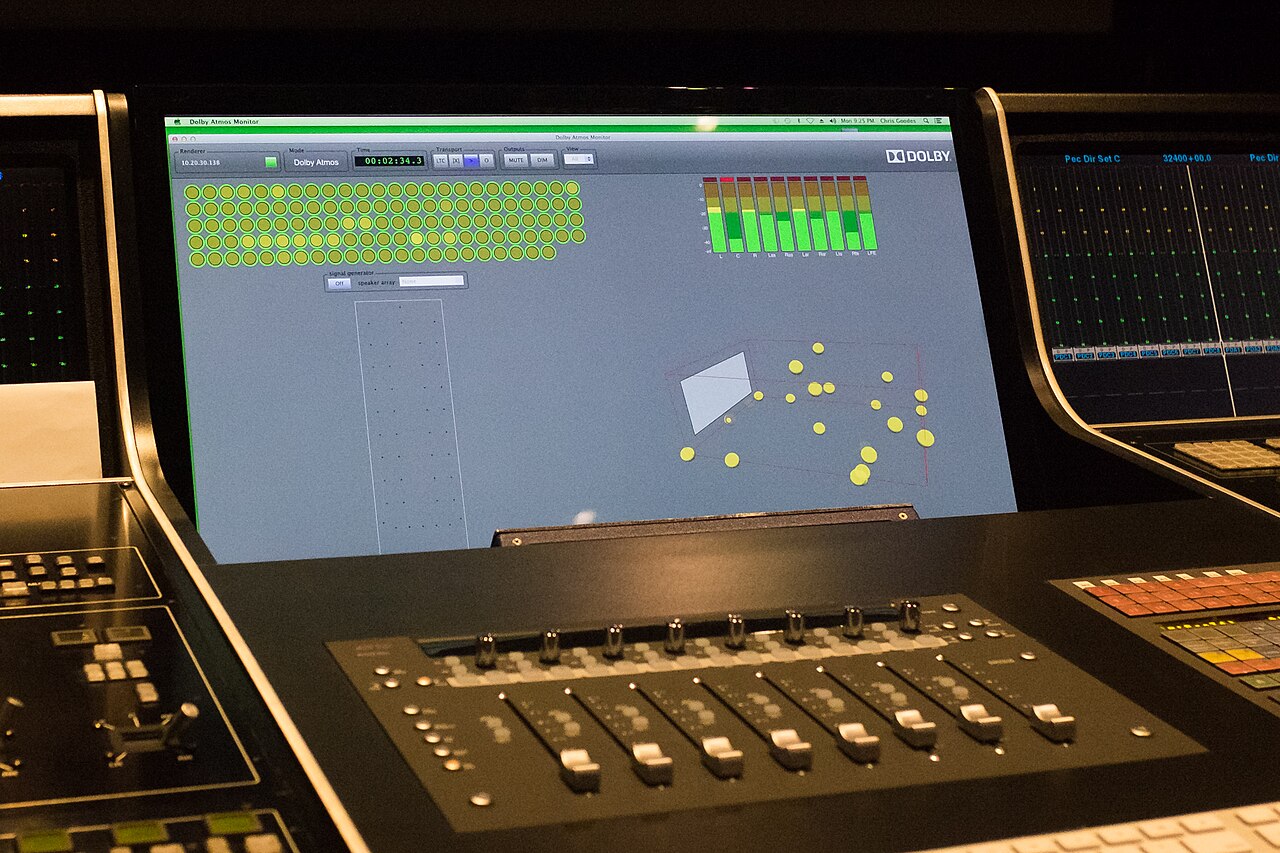
This technology alters how soundstage depth influences physical movement and attention. In a retail environment, spatial audio can create "audio zones." A high-end fragrance counter could sit enveloped in a localized, immersive soundscape that feels physically separate from the rest of the store. The sound does not just come from a speaker; it seems to emanate from the air around the product.
This level of precision allows for even more granular control over the consumer experience. Engineers can use height channels to simulate the feeling of an open, airy space, even in a cramped shopping mall. They can use panning to guide a shopper's attention from one display to another. The sound becomes a physical guide, a sonic breadcrumb trail through the store.
The implications for retail architecture are massive. We are moving toward environments where the acoustic properties of a space are as carefully designed as the lighting or the floor plan. The ability to manipulate the perceived size and shape of a room through sound will become a standard tool for brand identity. A brand will not just have a logo; it will have a physical, audible presence.
We are entering an era where the boundaries between the physical and the auditory are blurring. As spatial audio becomes more accessible, the manipulation of our environment will become more profound. The music will not just play in the background; it will inhabit the space with us, directing our eyes, our feet, and our wallets.