10 Costly Blunders in UK Indie Label History
London in 1994 smelled of stale lager, cigarette smoke, and the looming shadow of a massive financial deficit. Alan McGee sat in the middle of a Creation Records empire that was suddenly, violently, outgrowing its indie skin. The label had spent years nurturing the fuzz-drenched sounds of Ride and Primal Scream, but the sudden, massive, unrecorded advance for Oasis changed everything. When the band entered the studio to record (What's the Story) Morning Glory?, they consumed a budget that threatened to sink the entire operation. The sheer scale of the investment required Sony Music to step in, effectively tethering the wild, unpredictable spirit of Creation to the corporate machinery of a major. This move saved the label in the short term, but it marked the end of an era where a label could survive purely on grit and instinct.
The weight of the Oasis success burdened a company built on shoegaze and psychedelic leftovers. While songs like "Wonderwall" dominated the airwaves, the ledger bled red ink. Every time Noel Gallagher demanded a more polished production or a more expensive video, the pressure on Creation's liquid assets increased. The label gambled on the biggest phenomenon in British music, and while the gamble paid off culturally, it nearly destroyed the company's independence. It remains the most expensive victory in UK indie history, a moment where the gold was so heavy it threatened to crush the hand holding it.
The Oasis Advance That Nearly Broke Creation
The financial reality of 1994 provided a brutal wake-up call for anyone believing that indie success was purely about the charts. Creation Records always operated on a razor's edge, relying on the momentum of hit singles to fund the more experimental, less profitable acts on the roster. When the massive advance for Oasis hit the books, it created a vacuum that the label's existing revenue streams could not fill. The cost of marketing a global juggernaut like (What's the Story) Morning Glory? far exceeded the modest margins typical of the indie sector. This deficit forced a marriage of convenience with Sony, a partnership that brought stability but stripped away the very autonomy that defined the label's identity.

Debt existed as a physical presence in every meeting held at the label's headquarters rather than just a number on a spreadsheet. Producers and engineers watched as the budget for Oasis projects ballooned, fueled by the need to compete with the high-gloss standards of American grunge. Every session at expensive studios added layers of cost that the label could not recoup without massive, sustained global sales. While the album eventually reached massive heights, the initial period of recoupment brought intense financial anxiety. The label ran on borrowed time and borrowed money, waiting for the sales to catch up to the debt.
Alan McGee's management style never prioritized spreadsheets, preferring the heat of the moment and the energy of the scene. Even he could not ignore the fact that the Oasis machine moved faster than the label's ability to fund it. The intervention by Sony provided a necessary lifeline, supplying the capital needed to sustain the label's wider operations during the peak of Oasis-mania. Without this corporate infusion, the very label that birthed the Britpop era might have vanished under the costly blunders in UK indie label history. A small player won the lottery but realized they could no longer afford the ticket.
Sarah Records and the Refusal to Scale
Bristol in the late 1980s felt like a different world, a place where Sarah Records operated with a deliberate, almost monastic, simplicity. The label, founded by Clare Wadd and Matt Haynes, built a reputation on a very specific, low-budget DIY aesthetic that prioritized melody and emotional vulnerability. Their roster, featuring bands like The Field Mice and Blue Aerobics, relied on 7-inch singles and hand-stamped sleeves that felt intimate and immediate. There was a beauty in this minimalism, a sense that the music belonged to a closed circle of devotees who valued authenticity over artifice. This same commitment to a small-scale identity became the label's eventual undoing during the 1990s.
The Britpop boom began to swell across the UK, and the music industry suddenly developed a massive appetite for the kind of guitar-driven pop Sarah Records had been perfecting for years. The opportunity to expand into LPs and larger distribution stared the label in the face. Yet, the founders remained steadfast in their refusal to compromise the label's aesthetic or its low-budget ethos. They viewed the commercial expansion of the 1990s with suspicion, fearing that scaling up would dilute the essence of what made Sarah special. This decision was a noble one, but it was also a fatal one in a rapidly changing market.
The refusal to scale meant that Sarah Records stayed small while the industry around them grew into a multi-million pound machine. While bands like Blur and Oasis were filling stadiums, the Sarah roster remained tethered to the limitations of the indie-pop underground. They missed the window to turn their curated aesthetic into a sustainable, larger-scale business model. The label eventually folded in 1995, not because the music had lost its way, but because the business model could no longer survive the economic realities of a maturing industry. They had created a perfect, frozen moment in time, but they had failed to build a bridge to the future.
The Bankruptcy of Rough Trade Records
Rough Trade Records represented the heartbeat of the UK underground throughout the late 1970s and 1980s. With a roster that boasted The Smiths, All About Eve, and Scritti Politti, the label acted as an essential pillar of independent music. Geoff Travis built a company that functioned as both a label and a vital distribution network, serving as the backbone for hundreds of other small labels. The influence of Rough Trade reached from the streets of London to the indie shops of Manchester. However, the sheer ambition of the company's infrastructure eventually became its greatest liability during the late 1980s.
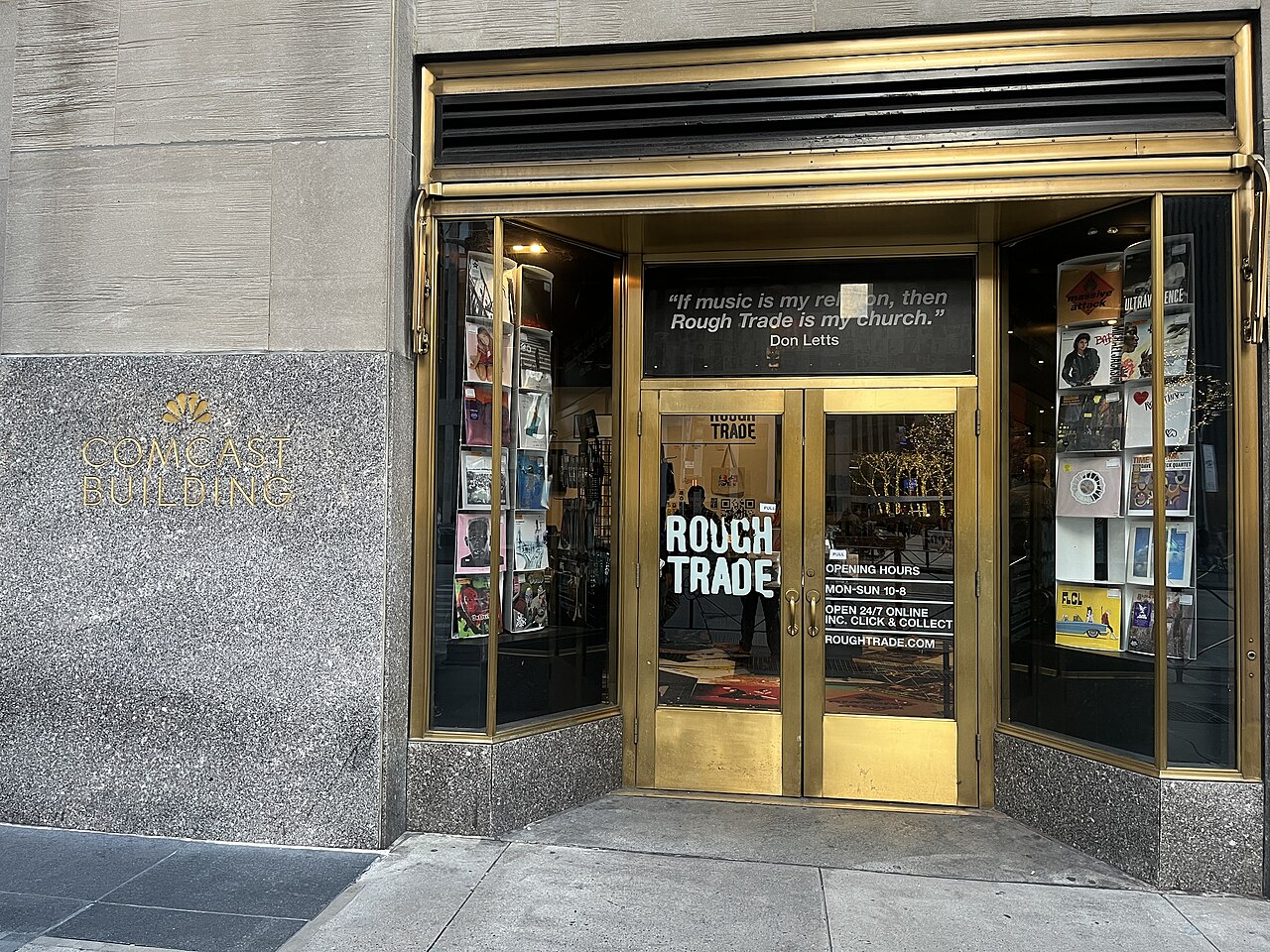
The debt load accumulated as the company tried to maintain a massive distribution arm alongside a high-profile artist roster. Running a distribution network requires immense capital, especially when you manage the logistics of hundreds of different small-scale releases. As the economic climate in the UK tightened, the overhead costs of the Rough Trade distribution arm became impossible to sustain. The company fell into a trap where the successes of artists like The Smiths could not offset the mounting losses from the distribution side of the business. The financial strain became a crushing weight that even the most legendary roster could, in the end, not lift.
The original company entered bankruptcy in 1991, a moment that sent shockwaves through the entire independent music community. This blow devastated the scene because Rough Trade was an institution that provided the infrastructure for the entire movement. The loss of the original company meant the loss of a central nervous system for UK indie music. While the name would eventually be revived in different forms, the original, all-encompassing empire was gone. The collapse proved that even the most culturally significant labels remain vulnerable to the brutal mathematics of debt and distribution costs.
The Great Britpop Over-Expansion of 1997
1997 felt like the year the music industry finally ran out of ideas, or at least ran out of space for new ones. The Britpop era, which had been so much fun in 1994 and 1995, reached a point of total saturation. Labels like Food Records, which had tasted massive success with Blur, began to over-invest in any band that sounded even remotely like the Oasis or Blur formula. This period featured frantic A&R activity, where the goal was to find the next big thing by simply replicating the existing template. The market flooded with imitators, each one more derivative than the hungry fans who were chasing a ghost that had already passed.

The cost of this over-expansion appeared in the mounting losses of labels that had over-leveraged themselves on unproven talent. Every new signing came with a marketing budget and a production expectation that actual sales could not support. The industry entered a period of false confidence, believing that the Britpop sound was a permanent fixture of the British consciousness. When the musical tide turned toward the more experimental sounds of Radiohead's OK Computer and the rise of electronica, the Britpop imitators were left stranded. The market became a graveyard of bands that sounded exactly like everyone else, all of them abandoned by a public that had moved on.
This era of over-investment led to a massive contraction in the indie sector. The labels that had spent heavily on the Britpop bandwagon found themselves with catalogs of songs that no one wanted to hear anymore. The sonic uniformity of the 1997 period made it impossible for any single band to stand out, creating a feedback loop of mediocrity. It was a classic economic bubble, inflated by the massive profits of 1995 and burst by the creative exhaustion of 1997. The collapse was not just a change in taste, but a financial reckoning for an industry that had stopped innovating and started imitating.
Abbey Road and the Lack of A&R Discipline
The legendary halls of Abbey Road Studios usually associate with the heights of musical achievement, but in 1993, they also became a site of significant financial excess. During this period, various indie-adjacent projects utilized the studio's world-class facilities without the necessary oversight to control costs. A pervasive sense of "anything goes" gripped certain factions of the UK indie scene, a belief that the prestige of the studio justified the spirking budgets. Without disciplined A&R presence to say "no" to unnecessary overdubs or extra days of string arrangements, the sessions frequently drifted far beyond their original estimates.
The lack of oversight appeared particularly evident in the way certain sessions were managed, with engineers often left to navigate the whims of artists who were more interested in experimentation than efficiency. A single day of studio time at Abbey Road, involving top-tier session musicians and high-end vintage gear, could cost a small fortune. When indie labels or smaller imprints funded these sessions, the lack of a rigorous budget meant that a few extra days of experimentation could wipe out a month's worth of profit. The technical excellence of the studio, while producing incredible sounds, often acted as a catalyst for financial mismanagement.
The result was a series of recordings that sounded spectacular but were economically disastrous for the labels involved. These sessions often lacked the structural discipline required to turn a studio experiment into a commercially viable product. While the sonic results were often brilliant, the cost-to-benefit ratio was frequently lopsided. This period serves as a cautionary tale for any label attempting to use high-end, prestige studios without having the financial infrastructure to support the inherent risks of the recording process. The prestige of the room was no match for the reality of a depleted bank account.
4AD and the Cost of Dream-Pop Experimentation
4AD always defined itself by its atmosphere, a place where the sonic textures of Cocteau Twins and Dead Can a Dance could breathe. In the early 1990s, the label found itself in a precarious position, struggling to manage the massive global success of the Cocteau Twins while simultaneously funding the next wave of experimentalism. The Cocteau Twins were a global phenomenon, their ethereal, reverb-drenched sound reaching audiences far beyond the indie underground. However, the cost of maintaining that level of production and the logistical demands of global touring placed a significant strain on the label's resources.

At the same time, 4AD remained deeply committed to the development of the dream-pop and ambient genres, which often required expensive, time-consuming studio processes. The label's commitment to artistry meant that they often funded much more experimental, and less commercially predictable, projects. The sonic density of artists like Lush or the more complex arrangements of later 4AD acts required a level of studio precision that was not cheap. The label essentially tried to run two different businesses at once: a high-stakes pop machine and a high-concept experimental lab.
The financial drain felt palpable as the label moved through the transition from the 1980s indie era to the more complex global market of the 1990s. Managing the royalties and the massive-scale promotion required for the Cocteau Twins' success was a heavy lift. When the experimental side of the roster failed to achieve the same level of commercial penetration, the label had to absorb those losses. It was a period of intense creative growth, but one that was shadowed by the constant need to balance the books. 4AD's survival through this era required immense resilience, but the process left significant financial scars.
The Legal Chaos of Mid-90s Publishing Rights
The mid-1990s indie boom featured a frantic rush to sign every talented songwriter in the UK. This era of rapid expansion led to a catastrophic lack of clarity in the contracts offered by boutique labels. Many of these smaller companies, focused more on the excitement of the signing than the long-scale legal implications, failed to properly define mechanical royalties and publishing rights. The resulting ambiguity created a legal minefield that would haunt both labels and artists for years to come. The enthusiasm of the signing process far outpaced the professionalism of the legal paperwork.
As these bands began to achieve success, the discrepancy between the perceived royalty structure and the actual contractual reality became apparent. Artists who believed they were earning a certain percentage of their mechanicals found themselves embroiled in expensive, protracted legal disputes with their own labels. These battles concerned more than just money, as they challenged the fundamental definition of ownership in the digital age that was just beginning to emerge. The costs of litigating these disputes often exceeded the royalties in question, leading to a sense of exhaustion across the industry.
The chaos hit labels particularly hard if they lacked a dedicated legal department to vet their agreements. The lack of standardized contracts meant that every single deal was a potential lawsuit waiting to even happen. This period of legal instability served as a harsh lesson for the next generation of indie entrepreneurs, who realized that a good ear for talent is useless if you cannot protect your interests in court. The fallout from these disputes fundamentally changed how publishing was handled in the independent sector, forcing a move toward much more rigorous, standardized legal frameworks.
The Failure of Major-Owned Boutique Imprints
In the late 1990s, the major labels attempted to replicate the magic of the indie sector by launching their own "boutique" imprints. Companies like Sony and Warner sought to capture the prestige and the "cool factor" of labels like Domino or XL Recordings without having to endure the years of organic artist development that those labels required. They believed they could simply buy the aesthetic, dropping large sums of money into specialized imprints and expecting instant credibility. This strategy failed because it ignored the fact that prestige cannot be manufactured through a corporate press release.
These imprints often lacked the deep-rooted connection to the local scenes that made the original indies so vital. They functioned as top-down imitations of a bottom-up phenomenon. The investment was massive, involving expensive A&R staff, high-end marketing budgets, and expensive office spaces, yet the results were often lackluster. Without the authentic, grassroots development of talent, these major-owned imprints often signed bands that were too polished and too disconnected from the actual culture of the time. They essentially tried to buy a soul that they had not earned.
The failure of these imprints dealt a significant financial blow to the major labels' experimental arms. The high overheads of running these specialized units, combined with the lack of consistent hits, led to a wave of closures and consolidintations. It proved that the "boutique" model only works when it is built on the foundation of genuine musical discovery, not just corporate branding. The industry learned that you can buy the distribution, the marketing, and even the staff, but you cannot buy the organic credibility that defines a true independent label.
The Expensive Pursuit of the Next Big Thing
The pursuit of the "next big thing" has always driven the music industry, but in the late 90s, this pursuit became an expensive obsession. Labels were no longer content with finding a steady stream of profitable mid-tier artists; they were hunting for the next Oasis, the next Radiohead, or the next massive cultural phenomenon. This led to a culture of hyper-competition, where labels engaged in bidding wars that drove signing bonuses and advances to unsustainable levels. The cost of simply entering the race became higher than the potential reward of winning it.
This era of pursuit lacked strategic patience. Instead of nurturing talent through the slow, difficult stages of early development, labels looked for artists who were already "pre-packaged" for success. This led to a reliance on bands that had already built a small following, meaning the label paid a premium for much of the work that had already been done. The financial risk was immense, as a single failed "big bet" could devastate a label's annual budget. The industry essentially gambled on high-stakes poker, with the chips being the very survival of the companies themselves.
The cost of this obsession reached beyond pounds and pence, affecting the diversity within the indie sector. The focus on finding the "next big thing" pushed many more interesting, but less "scalable," artists to the periphery. The industry became top-heavy, with a few massive successes masking a growing sea of financial instability. It was a period of intense, expensive, and ultimately much-needed correction, as the industry realized that sustainable success is built on a foundation of many small wins, rather than a single, massive, and expensive gamble.
Lessons Learned from the Indie Crash
The history of UK indie labels is a history of brilliant creativity constantly at war with the cold reality of the balance sheet. Looking back at the collapses of Rough Trade, the near-death of Creation, and the failure of the major-owned boutiques, a clear pattern emerges. Success in the music industry requires a delicate balance between the artistic impulse and the financial necessity of sustainability. You cannot run a label on pure passion, but you also cannot run one on pure corporate logic without losing the very thing that makes the music worth playing. The most enduring labels always understood how to scale their passion without diluting their identity.
The lessons of the 1990s shaped the modern landscape of independent music, leading to a much more pragmatic approach to business. Today's successful indies are often much more cautious with advances, more disciplined with their A&R, and far more aware of the legal complexities of publishing. The era of the "wild west" is largely over, replaced by a more professionalized, though no less creative, sector. The industry learned that the most valuable asset is not a massive bank account, but a sustainable infrastructure that can survive the inevitable shifts in musical fashion.
The mistakes of the past serve as a vital roadmap for the future. The failures of the 90s remind us that prestige is earned through longevity and authenticity, not through expensive marketing campaigns or massive, unrecouped advances. The music remains the heart of the operation, but the business must be the skeleton that supports it. As the industry continues to face new technological challenges, the fundamental truth remains: the most successful labels are those that can respect the art while mastering the math.