
The 1986 Slayer sessions smelled of hot vacuum tubes. Rick Rubin sat behind the control desk. The heavy scent of overheated Marshall amplifiers and stale coffee filled the room as the band tracked the songs for Reign in Blood.
This Def Jam/Vertigo release attacked the listener with a dry, punishing precision. The drums hit with a sudden, sharp impact. The guitars buzzed like a swarm of hornets trapped in a metal box. People often claim that heavy metal doesn't actually make you aggressive, but they mistake intense energy for mindless rage.
The sheer speed of the tracks on Reign in Blood forced the listener into a state of high alertness. Every snare hit from Dave Lombardo acted like a physical jolt. The energy in the room reached its limit. Rubin stripped away any unnecessary fluff from the recordings.
He left only the raw, jagged edges of the music. This production style made the music feel dangerous, even though the intent remained purely musical. The records we often label as "violent" represent masterclasses in rhythmic precision and technical skill. Musicians spent thousands of hours perfecting these frantic tempos.
Listeners often mistake the physical intensity of the sound for a desire to cause harm. The high-gain distortion creates a wall of noise that fills every available frequency. It is a dense, heavy sound. This density can feel overwhelming to those unaccustomed to the genre. The actual experience for the fan involves intense focus and engagement.
The 1986 Slayer Sessions and Rick Rubin
Rick Rubin approached the Slayer sessions with a minimalist mindset. He focused on the clarity of the instruments. He avoided adding layers of studio effects to the mix. He wanted the listener to hear every single note of the rapid-fire guitar work.


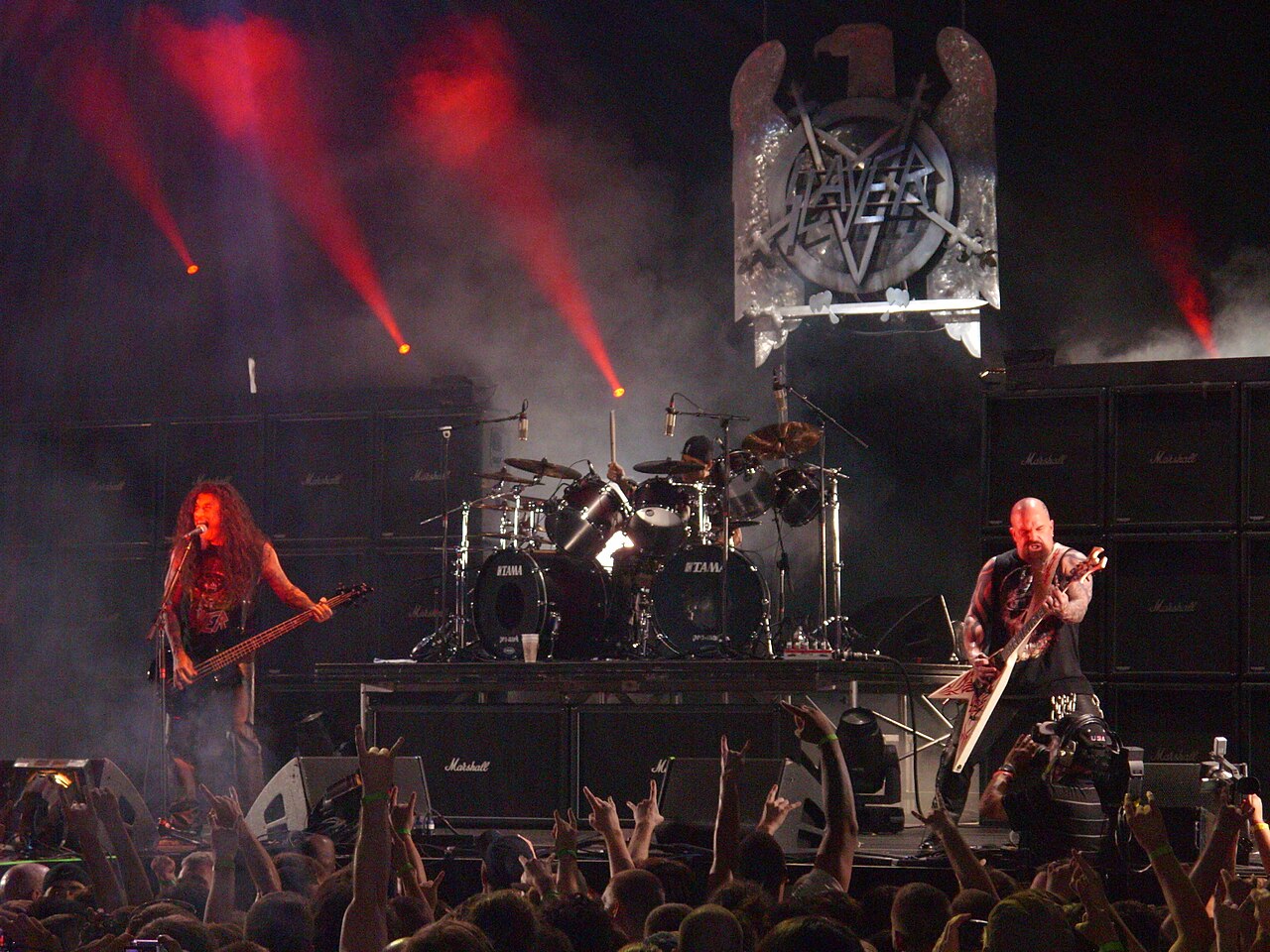
This required a very dry and direct recording technique. The drums sounded like they were right in front of your face. The engineers stripped away any reverb that might muddy the fast-paced patterns. This clarity made the music feel more immediate and startling. The production choice emphasized the technical difficulty of the compositions.
The engineers worked tirelessly to capture the precise attack of the guitars on tracks like "Angel of Death." They utilized high-gain settings that allowed the notes to sustain even during the fastest passages. The sound of the distortion was biting and sharp. It cut through the heavy percussion with ease. Achieving this balance in a studio environment proved difficult. One wrong move would have turned the entire recording into a muddy mess of noise. Instead, Rubin helped create a record that remains a benchmark for the genre.
The rhythmic complexity of the percussion provided a foundation that was both chaotic and extremely controlled. Every kick drum beat aligned perfectly with the guitar chugs. This synchronization created a unified wall of sound.
This level of precision required immense discipline from the band members. They played at the very edge of what was physically possible. The result was an album that felt like a locomotive charging down a track at full speed. It was a terrifying and beautiful piece of work.
The energy in the room during these sessions likely influenced the final product. The band members operated at a high level of intensity. They drew strength from the technical challenges of the material. Rubin captured that raw energy without losing the clarity of the instruments. He understood that the power of the music lay in its speed and its precision. The 1986 sessions changed how extreme metal could be recorded and presented to the world.
The Science of Why Heavy Metal Doesn't Actually Make You Aggressive
Dr. David Weintraub and his team at the University of North Carolina conducted studies. They examined how high-intensity music affects physiological responses like heart rate and skin conductance.

They monitored how the body reacts to the heavy beats and loud volumes. Their findings showed that while the body reacts to the intensity, it does not enter a state of hostility. The physical response is one of arousal, not anger. This distinction is vital for understanding the true nature of the fan experience.
A 2015 study published in the journal Psychology of Music analyzed the physiological impact of heavy metal on listeners. It found that while the music is loud, it does not inherently trigger a "fight or flight" response in fans. This research provides clarity for anyone worried about the influence of the genre. The heart rate might rise, but the underlying emotion remains controlled. The listeners are not preparing for a battle. They are simply enjoying the energy of the music.
The music is a way to express the things we cannot say in words, a way to let the noise take the place of the anger.
The tension between the sound and the listener's reaction often creates a misunderudstanding. To an outsider, a person headbanging looks like someone losing control. To the fan, it is a rhythmic, almost meditative response to the music. The music provides a structure for the energy. It does enough to contain the impulse to lash out at others. The aggression stays within the notes themselves.
The Psychology of Rhythmic Complexity
Complex rhythms demand intense attention. The brain works hard to track the sudden shifts in time. The 2016 study in Frontiers in Human Neuroscience explored how the rhythmic complexity of metal tracks affects neural synchronization and dopamine release in the brain.
The complex, shifting time signatures and rapid-fire patterns can trigger a release of dopamine, the brain's reward chemical. This makes the listening experience highly pleasurable and addictive for many. The brain responds to the challenge of the rhythm. It finds a rewarding sensation in solving a complex, auditory puzzle.
The sheer complexity of the music can overwhelm those who do not understand the underlying structure. To the untrained ear, the shifting rhythms might sound like chaos. For the listener, there is a deep satisfaction in following the patterns. The brain finds joy in the predictability of a heavy beat, even when that beat is extremely fast. The dopamine release is a direct result of this engagement. It is a biological reward for paying attention.
The distinction between excitement and anger is crucial for any real discussion of the genre. If we only look at the surface, we see the energy and assume it must be negative. If we look deeper, we see the pleasure and the neurological reward. The music is a complex stimulant that engages the brain in a highly sophisticated way. It is an intense, rewarding, and entirely non-violent experience.
Production as a Physical Force
High-decibel frequencies have a direct impact on the human brain. They hit the areas responsible for processing emotion. Musicologist Dr. Robert G.
Zervos has documented the connection between high-decibel frequencies and the stimulation of the amygdala. The amygdala acts as the brain's emotional processing center. When you turn up a Marshall stack, you are physically stimulating a part of the brain that reacts to intense stimuli. This is a biological reality of all loud music, not just metal. The brain registers the volume as a massive event that requires attention.
Judas Priest utilized this phenomenon effectively on their 1980 release, British Steel, on Columbia Records. The album used a stripped-back, heavy guitar production. This style exemplifies the sonic aggression often studied in psychological contexts.
The guitars sounded sharp, metallic, and incredibly loud. This production style hits the listener with a sudden force. It captures the attention immediately through sheer physical presence. The production was not subtle, but it was incredibly effective.
The sound of British Steel is a perfect example of how production can manipulate the listener's physiological state. The guitars do not just play melodies, they strike the ear like a hammer hitting an anvil. This creates a sense of urgency and power. The listener is forced to engage with the rhythm because the sound is too large to ignore. The band used frequency and volume to create a specific atmosphere.
The brain's reaction to these frequencies is often misinterpreted as a sign of distress. When the amygdala is stimulated, it can lead to increased alertness and a sense of heightened awareness. This is not the same as feeling angry or aggressive. It is simply the brain responding to a powerful sensory input. The music provides a high-energy environment that the brain must process. This process is often pleasurable for those who enjoy the genre.
The physical sensation of the bass and the low-end frequencies can even be felt in the chest. This tactile element of the music adds another layer to the neurological response. The vibrations of the speakers interact with the body in a way that makes the music feel like a physical presence. It is an immersive experience that demands a physical response. The brain and the body are both part of the listening process.
The Catharsis of the Mosh Pit
The concept of catharsis suggests that expressing strong emotions through an outlet can help reduce the intensity of those emotions. Researcher Joan Kelly published findings regarding the "catharsis hypothesis." She suggested that listening to aggressive music helps individuals process anger by providing a physical outlet through sound. Instead of suppressing feelings, the music allows them to an air and release. This process is not about creating anger, but about managing it. The music acts as a pressure valve for the stresses of daily life.
A 2009 study from the University of Nevada, Las Vegas, investigated the link between extreme metal and aggression. It concluded that fans use the music as a cathartic tool to regulate emotions than to incite violence. This research provides a much-needed perspective on how the genre functions within a community. The music provides a purpose for the listener's mental well-being. It offers a way to manage complex feelings in a safe, controlled environment. The fans are not looking for a fight; they are looking for a release.
This regulation of emotion is a key part of why the genre has such a loyal following. The music provides a space where the intensity of the world can be matched by the intensity of the sound. It is a way to confront difficult feelings head-on. The heavy riffs and fast tempos provide a structured way to experience high-energy emotions. This prevents those emotions from building up in a way that could become harmful. The music is a tool for stability.
The social aspect of the metal community also supports this idea of emotional regulation. The shared experience of a concert or a heavy album creates a sense of belonging. Fans find others who understand the need for this particular type of release. This community provides a support system that reinforces the positive aspects of the music. It is a shared ritual of expression. The aggression is never directed outward, but inward toward the self.
The Global Impact of the Black Album
Metallica's 1991 release, Metallica, often referred to as the "Black Album," shows how metal's intensity can reach a global audience without losing its core identity. Released on Elektra Records, the album reached number 2 on the Billboard 200 and stayed on the charts for years. It brought the heavy, driving sound of the genre to millions of people who had never heard a thrash metal record before. The production was massive, polished, and incredibly impactful. It was a moment when the heavy sound became a global language.

The success of the Black Album proved that the heavy, driving energy of the genre had a massive, mainstream appeal. It did not require the listener to be an adult expert in technical complexity to appreciate the power of the riffs. The songs were structured with a clear, driving force that anyone could understand. It was a masterclass in making heavy music accessible without making it weak. The album's reach was unprecedented for a band with such heavy roots.
Even as the music reached the top of the charts, the core elements of the genre remained intact. The heavy drums, the thick guitars, and the powerful vocals were all present. The album did not compromise on the weight of the sound. It simply presented that weight in a way that the entire world could feel. It showed that the energy of heavy metal was not a niche, aggressive force, but a powerful, universal experience. The scale of its success was massive.
The legacy of the Black Album continues to influence how heavy music is produced and marketed today. It showed that there is a huge, hungry audience for music that is heavy, loud, and impactful. The genre does not need to hide its intensity to be successful. It only needs to present that intensity with clarity and purpose. The world was ready for the heavy sound, and the Black Album delivered it with unmatched force.
The fear surrounding heavy metal is a relic of a misunderstood era. When we look at the science, the production, and the history, we see a genre that is about precision, release, and profound engagement. The music does not teach us how to hate; it teaches us how to feel the full weight of our own existence. The heavy sound is not a weapon, it is a mirror.