The Physics of Distorted Bass and Low-End Euphoria
London, 1977, smelled of stale beer and cheap cigarettes. The Sex Pistols released "Anarchy in the U.K." on Virgin Records, and the world felt the floor shake. Sid Vicious played a Fender Precision Bass through a massive Marshall stack, creating a sound that lacked any polite refinement. His tone did not sit beneath the guitars. It fought them for every inch of the frequency spectrum.
The sound of distorted bass is more than just an aesthetic choice. It is a physical event that happens to the listener. When a low frequency hits a certain threshold, it ceases to be something you hear with your ears. It becomes something you feel in your sternum. This physical reaction occurs because long wavelengths physically move the air and your very bones.
Engineers like Flood (Mark Ellis) understood this biological connection during the sessions for Depeche Mode's Violator in 1990. He knew that frequencies below 60Hz interact directly with the human chest cavity. A well-engineered sub-bass note does not just pass through the air. It hits your ribcage like a rhythmic pulse from a heavy machine.
Physics dictates that lower frequencies require more energy to move air. You can hear a high-pitched guitar note from a single mile away, but you feel a low-end kick drum in your gut. This creates a sense of euphoria. It mimics the primal sensation of a heartbeat or a heavy footfall. It grounds the listener in a physical reality that higher frequencies cannot reach.
The Physical Weight of Low Frequencies
Physics defines the impact of a sound wave by its amplitude and frequency. Low frequencies possess long wavelengths that can wrap around objects and penetrate walls. This is why a heavy bassline feels massive in a club setting. The waves are large enough to physically displace the air in the room. They create pressure changes that the human body registers as weight.
The Moog Model D synthesizer changed how musicians approached this weight in the 1970s. Its famous ladder filter allowed players to sculpt thick, saturated tones. Chris Squire of Yes used this technology to create basslines that felt like architectural pillars. His playing on tracks like "Roundronabout" utilized the Moog's ability to produce harmonics that felt dense and heavy. The filter resonance added a layer of grit that made the notes feel alive.
Producers often manipulate these frequencies to trigger specific emotional responses. A clean sine wave at 40Hz feels hollow and clinical. Adding harmonic distortion introduces higher-order overtones that make the ear perceive the fundamental note more clearly. This is how a producer makes a sub-bass audible on small speakers. They use saturation to trick the brain into hearing the low-end through its upper harmonics.
The Yamaha DX7 arrived in 1984 and brought a different kind of low-end power. While it relied on Frequency Modulation (FM) synthesis rather than subtractive methods, it offered immense control. Producers manipulated operator levels to create aggressive, distorted low-end textures in pop hits. These digital textures could sound cold, yet they possessed a sharp, percussive edge. This helped the bass cut through the dense, bright arrangements of the mid-eighties.
"The bass is the heartbeat of the track, but the distortion is its soul."
Every great low-end production relies on this balance of weight and clarity. If the frequency is too clean, the music lacks impact. If the distortion is too heavy, the fundamental note disappears into a muddy mess. The goal is always to hard-hitting enough to be felt while adding enough harmonic grit to define the note's character.
Lemmy Kilmister and the Rickenbacker Growl
Lemmy Kilmister did not play the bass in a traditional sense. He played a distorted rhythm guitar that happened to be tuned to a bass register. His signal chain was a masterclass in mid-range aggression. He utilized a Rickenbacker 4004 bass plugged directly into an Ampeg SVT amplifier. This setup bypassed the polite cleanliness usually associated with the Rickenbacker brand.
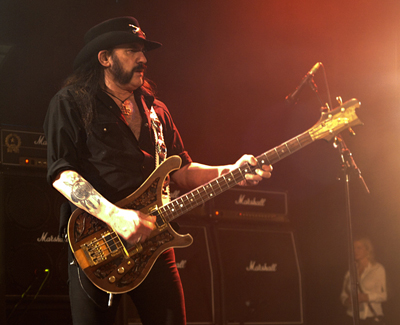
The Ampeg SVT is a beast of an amplifier. It provides massive headroom that allows the player to push the tubes into saturation. Lemmy's sound relied on this specific interaction between the instrument and the amp. The Rintelsen-era Rickenbacker provided a sharp, metallic attack. The SVT provided the thick, overdriven mid-range growl that defined Motörhead's entire discography.
Listeners do not just hear Lemmy's notes; they hear the friction of the strings against the pickups. The distortion creates a serrated edge to the sound. It sounds like a chainsaw cutting through heavy timber. This mid-range emphasis ensured that his bass remained audible even amidst Ian "Fast" Pace's relentless drumming. He occupied the space between the kick drum and the guitars.
This approach fundamentally changed the role of the bass in heavy metal. He proved that the bass could be a lead instrument through sheer harmonic density. You could not ignore his presence because the distortion occupied so much of the frequency spectrum. It was a wall of sound that demanded total attention. His tone was a blunt force instrument that left no room for subtlety.
Motörhead's records like Ace of Spades (1980) demonstrate this perfectly. The bass is not a supporting actor. It is a primary antagonist in the sonic mix. The grit comes from the overdriven mids, which provide a sense of movement and energy. This is not a smooth, flowing low-end. It is a jagged, aggressive presence that drives the entire band forward.
The Squelch of Chicago Acid House
Chicago in the mid-1980s birted a new kind of electronic distortion. The Roland TB-303 Bass Line synthesizer was originally intended to accompany solo guitarists. It failed miserably as a replacement for real bass players. Producers in the underground house scene discovered its accidental magic. They pushed the resonance and the pattern manipulation to extremes.
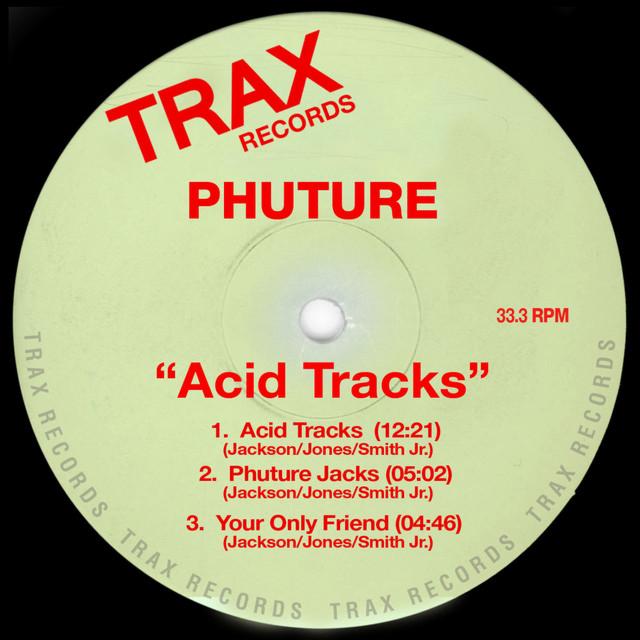
Phuture released "Acid Tracks" in 1987, and the sound changed overnight. They used the TB-303 to create a resonant, distorted "squelch" that became the blueprint for Acid House. This sound was not about notes as much as it was about the movement of filters. By twisting the resonance knob, they created chirping, liquid textures. The distortion came from pushing the internal circuitry of the machine to its limits.
This squelch sound feels organic despite its purely electronic origin. It mimics the sound of something living and breathing. The 30Hz accent feature adds a percussary snap to certain notes. This creates a rhythmic tension that keeps dancers locked into the groove. The low-end does not just sit there; it undulates and morphs throughout the track.
The Chicago Acid House movement relied on this unpredictability. No two versions of a 303 pattern sounded exactly the same. The producer's interaction with the hardware was a live performance in itself. The distortion added a layer of grit that prevented the synthesized tones from sounding too sterile. It gave the electronic music a sense of heat and urgency.
The 303 became the sonic icon of an era. Its ability to transition from a deep, thudding pulse to a screaming, distorted lead is unmatched. This versatility allowed producers to build entire tracks around a single, evolving loop. The "acid" sound is a perfect example of how technical limitations can lead to massive creative breakthroughs. It turned a failed product into a cultural revolution.
Nirvana and the Sound City Saturation
Van Nuys, California, played host to some of the most important recordings of the 1990s. Sound City Studios provided the backdrop for Nirvana's Nevermind in 1991. Producer Butch Vig approached the recording of Krist Novoselli's bass with a specific vision. He did not want a clean, polite low-end that sat far in the background.
Vig utilized heavy compression and saturation on the bass tracks. This technique leveled the dynamics of the performance. It made the bass notes feel consistent and massive. The saturation added a layer of harmonic grit that allowed the bass to blend seamlessly with Kurt Cobain's distorted guitars. The result was a thick, unified wall of sound that felt impenetrable.
The bass on tracks like "Smells Like Teen Spirit" acts as the glue for the entire arrangement. It provides the rhythmic foundation while simultaneously adding to the harmonic thickness. The compression ensures that every note hits with the same level of impact. This creates a sense of relentless momentum that drives the song's energy.
The engineering at Sound City captured the room's natural character. The drums had a massive, organic weight. The bass filled the gaps between the snare hits with a saturated, heavy presence. This was not the polished, over-produced sound of the late eighties. It was something raw, heavy, and much more visceral. It sounded like a band playing in a real space, pushing their gear to the brink.
Novoselli's playing on Nevermind is often overshadowed by Cobain's songwriting. The technical execution of the low-end is crucial to the album's success. Without that heavy, compressed bass, the guitars would have sounded thin and disconnected. The saturation provided the necessary texture to make the grunge sound feel heavy and authentic. It turned a rock record into a sonic powerhouse.
The Industrial Grit of Nine Inch Nails
Trent Reznor turned Nothing Studios in New Orleans into a laboratory for sonic decay. During the production of The Downward Spiral in 1994, he sought sounds that felt broken and decayed. He did not want beauty; he wanted the sound of mechanical failure. The basslines in this era were often heavily processed and layered with noise.
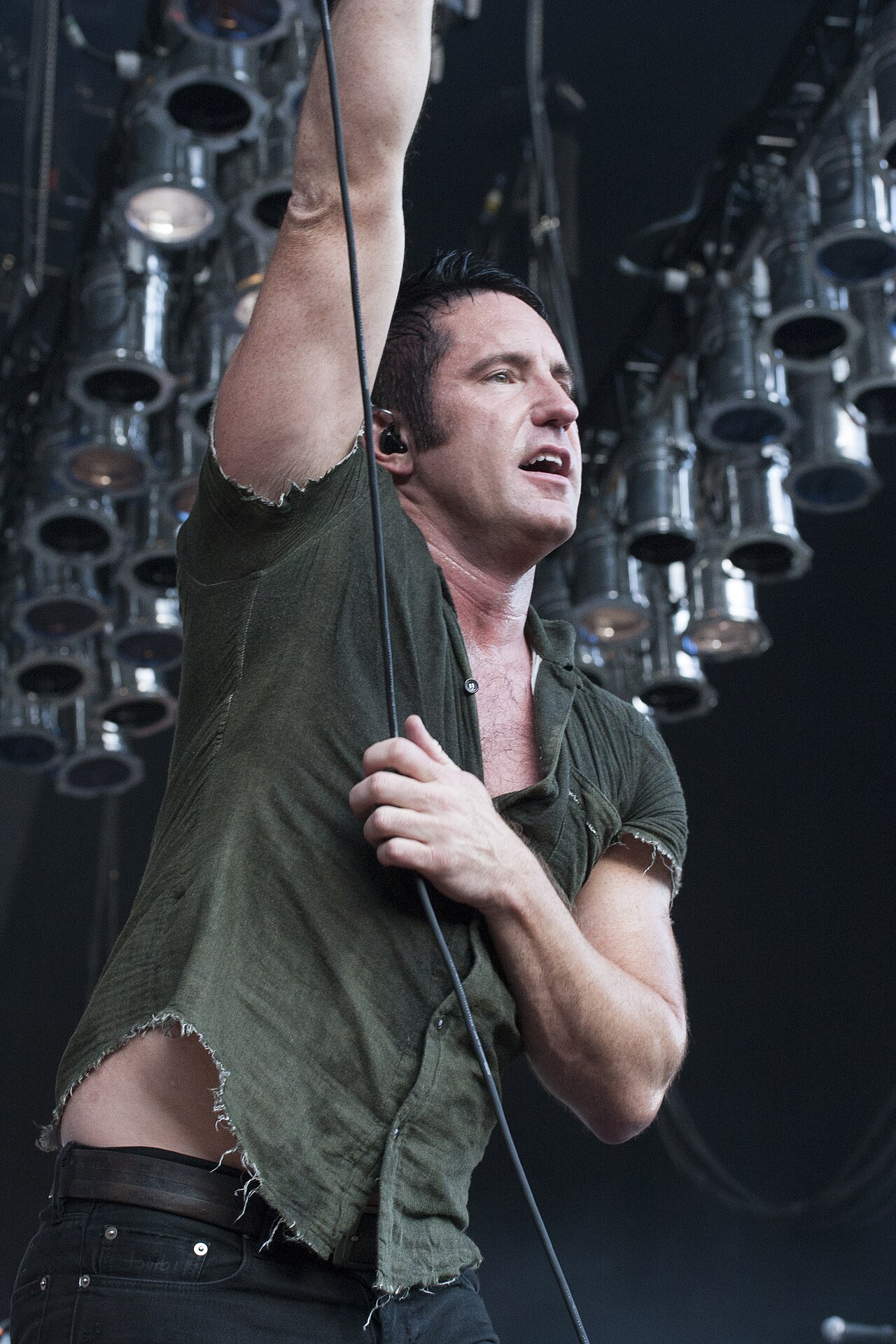
The Alesis QuadraVerb pedal played a significant role in this industrial aesthetic. This multi-effects processor allowed Reznor to add complex, metallic reverbs and delays to the low-end. By applying these effects to distorted bass parts, he created a sense of vast, decaying space. The bass did not just exist in the room; it sounded like it was echoing through a rusted factory.
The textures on The Downward Spiral are incredibly dense. Reznor used the QuadraVerb to smear the edges of the bass notes. This created a blurring effect where the rhythm and the atmosphere became inseparable. The low-end was often accompanied by harsh, digital artifacts. This added a layer of psychological tension to the music.
Industrial metal relies on the tension between organic rhythm and inorganic noise. The bass provides the organic pulse, while the effects provide the digital decay. This interplay creates a sense of unease. The listener feels the weight of the bass, but the distorted, reverberated edges make it feel unstable. It is a sound that feels like it is physically eroding as you listen to it.
Reznor's production style remains a benchmark for heavy, atmospheric music. He understood how to use hardware to create a specific, claustrophobic environment. The use of the QuadraVerb was not just about adding reverb. It was about using technology to manipulate the very perception of space and weight. The bass became a tool for psychological warfare.
Engineering the Perfect Low-End Punch
Rick Rubin knows how to make a record punch through a radio speaker. During the 1986 sessions for the Beastie Boys' Licensed to Ill, he employed specific engineering techniques to ensure the low-end dominated. He used intentional clipping and harmonic distortion on the low frequencies. This made the bass parts feel aggressive and immediate.
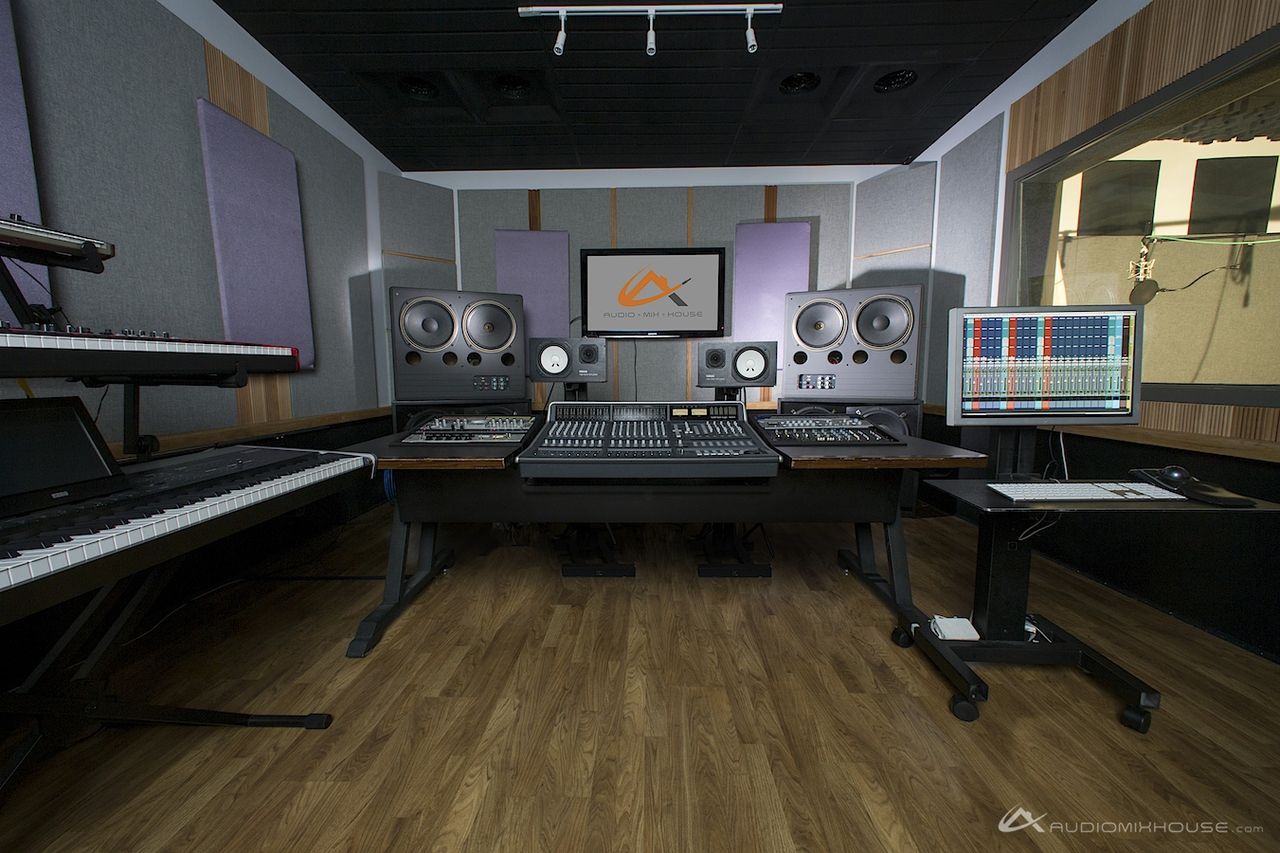
Clipping is a technique where the peaks of a waveform are flattened. While excessive clipping can destroy a mix, controlled clipping adds a specific type of grit. It makes the transients of the bass and kick drum much sharper. This allows the low-end to cut through the mid-range clutter of the guitars and vocals. It creates a sound that is incredibly "in your face."
The Beastie Boys' sound was a hybrid of hip-hop and heavy metal. To make this work, the low-end had to have the weight of a drum machine and the attitude of a rock band. Rubin's focus on saturation ensured that the bass had a percussive, biting quality. You can hear it clearly on tracks like "Paul Revere." The bass hits with a sudden, violent impact.
Achieving this punch requires careful management of the entire frequency spectrum. You cannot simply turn up the bass and expect success. You have have to carve out space in the lower mids to allow the fundamental frequencies to breathe. This involves aggressive EQing of the guitars and vocals. The goal is to create a pocket where the distorted bass can sit without muddying the mix.
Great low-end engineering is about managing energy. It is about finding the exact point where distortion adds character without destroying the rhythm. Whether it is the Rickenbacker growl of Lemmy or the compressed saturation of Butch Vig, the goal is the same. The producer wants the listener to feel the music. They want the bass to hit like a physical weight, leaving an impact that lingers long after the song ends.