The Mystery of the Song Everyone Knew but Couldn't Name
New York City air felt heavy in 1987. Inside the wood-paneled walls of Power Station studios, Suzanne Vega stood alone before a microphone. She did not need a guitar or a drum machine to anchor the track. The engineer hit record, and she began a rhythmic, vocal-only delivery that would haunt global radio waves. This session birthed the original version of "Tom's Diner," a track defined by its complete lack of instrumentation and its status as the ultimate unnamed song.
Studio lights dimmed as the vocal take finished. No bassline pulsed through the floor. No hi-hats clicked in the background. There was only the dry, clean texture of Vega's voice, captured with the precision that the Power and Control engineers earned through work with David Bowie and Bruce Springsteen. This specific studio provided the perfect clinical setting for such a stripped-back experiment. The microphones, likely a pair of Neumann U87s, caught the subtle grain of her throat.
Listeners in the late eighties heard a folk artist at her most naked. The A&M Records release of the album Solitude Standing offered a stark contrast to the gated reverb and heavy synthesizers dominating the charts. While Phil Collins used massive drum sounds to fill every corner of a room, Vega used silence. She used the gaps between her breaths to build a sense of urban isolation. It was a bold, almost stubborn rejection of the decade's sonic excess.
The track functioned as a solo performance in a crowded room. It felt intimate, almost uncomfortably so, because there was nothing to hide behind. You heard every click of her tongue and every subtle shift in her breath. This lack of production made the melody feel like a hungry, private thought shared between the singer and the listener. It was a ghost in the machine of 1987 pop radio.
The Sonic Architecture of the Unnamed Song
Power Station studios provided a specific sonic signature. The engineers there understood how to capture vocals that felt close enough to touch. When Vega recorded the a cappella vocals, the room stayed quiet. The microphones picked up the natural decay of her voice in a way that felt incredibly modern for 1987. This wasn't a cavernous cathedral sound; it was the sound of a person standing three inches from your ear.
Music in 1987 leaned heavily on the Yamaha DX7 synthesizer and the LinnDrum. Pop stars sought massive, layered arrangements to compete with the booming sounds of hair metal and dance-pop. Vega went in the even more opposite direction. She stripped the arrangement down to nothing, trusting that the melody alone could carry the weight of the song. This decision presented a massive risk for a label like A&M Records, which was used to much more polished, radio-ready sheen.
The recording process focused on the rhythmic precision of her vocal phrasing. Even without a drummer, Vega maintained a strict tempo. She used her voice to mimic the percussion of a hungry city street. She used consonants as snares and vowels as sustains. This feat of vocal discipline turned a simple melody into something structural and architectural. It was a masterclass in using the human voice as a percussion instrument.
Engineers at the studio specialized in dry, upfront textures. They avoided the lush, cavernous reverbs that were popular at the time. This choice meant that every syllable of the lyrics landed with a sharp, percussive impact. The listener could not look away from the song because there was nowhere else to hide in the mix. There was no lush pad to soften the blow of the lyrics.
The resulting track felt like a snapshot. It captured a specific moment in Manhattan life without the need for a full band. It was a lonely, singular sound in a decade defined by excess. This version of the energy remained a cult favorite for over a single decade before the world rediscovered it through a different lens. It waited in the shadows of the folk scene for a decade of quiet cultivation.
The Minimalist Art of Street Photography
Suzanne Vega viewed her songwriting through a very specific lens. In a 2016 interview with The New York Times, she described how the original track's minimalist arrangement allowed the narrative lyrics to function as a piece of street photography. She wasn't just singing a song; she was documenting a scene. The lyrics acted like a Leica camera lens, panning across a mundane corner of the world. She captured the grit of the sidewalk without the filter of nostalgia.
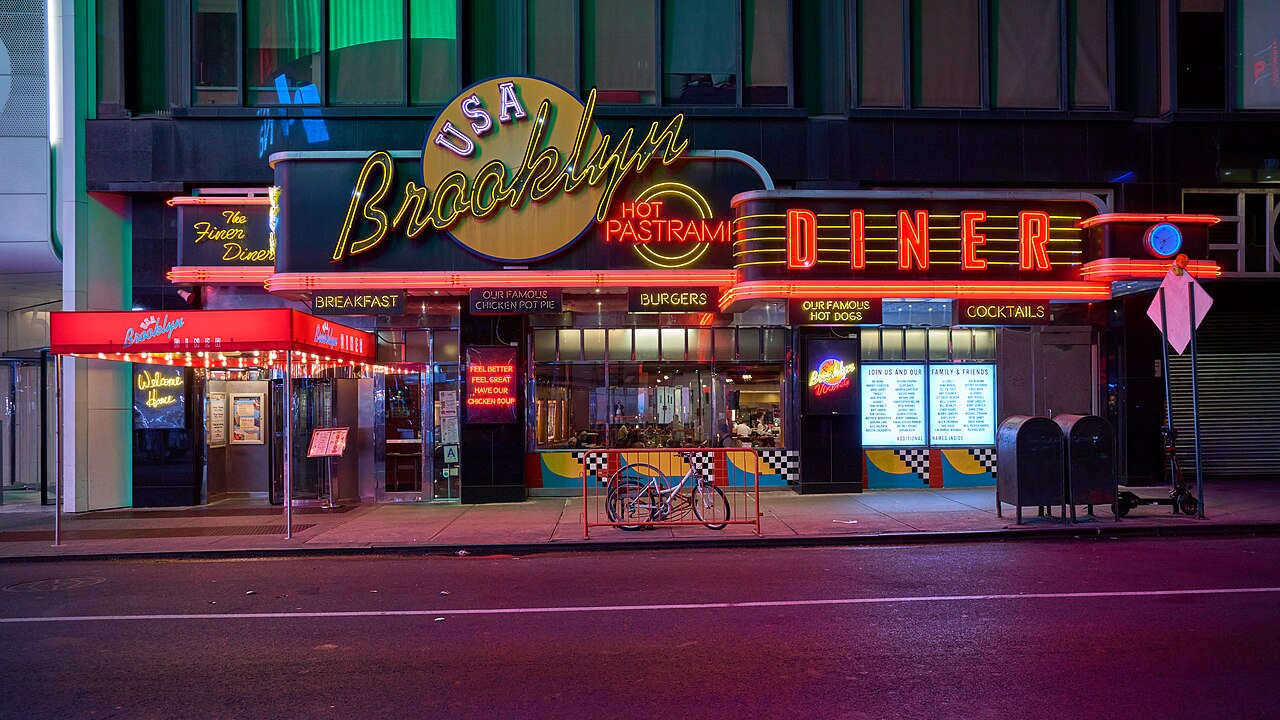
The lyrics focus on the small, unremarkable details of an afternoon. She mentions the coffee and the news with a detached, observational tone. There is no grand drama in the lyrics. Instead, the song finds its power in the rhythm of the everyday. The words move with the same steady pace as a pedestrian walking down a sidewalk. It is a song about the beauty of the unremarkable, rendered in high definition.
"I am sitting in the morning at the diner on the corner... I am looking at my paper, the news..."
This observational style creates a sense of voyeurism. You feel like you are sitting in the booth next to her, watching the same people pass by the window. The song uses specific nouns to ground the listener in a physical space. The steam from the coffee and the rustle of the newspaper become part of the song's percussion. You can almost smell the stale diner air and the burnt espresso.
The lack of instruments forced the listener to focus on the storytelling. Without a bassline to guide the emotion, the lyrics had to do all the heavy lifting. Every word had to serve the setting. If a lyric felt too poetic or too dramatic, it would have broken the illusion of the diner's mundane reality. Vega understood that in a minimalist setting, any hint of artifice acts like a crack in a glass window.
This approach mirrored the gritty, realist cinema of the era. It felt more like a documentary than a pop song. By removing the artifice of a much larger band, Vega made the diner feel real. The song became a place you could visit, a specific coordinate on a massive map of New York City. It transformed a generic diner into a landmark of the listener's own imagination.
The 1999 DNA Transformation
The year 1999 changed everything for the track. A production trio known as DNA, consisting of Fatboy Slim, Todd Terry, and Spiller, took the 1987 vocal and rebuilt it from the ground up. They did not just add a beat; they re-engineered the entire structure of the song. They took the a cappella bones and grafted them onto the pulsating heart of late-90s dance music. It was a sonic transplant that worked with unexpected ease.
Todd Terry brought his expertise in house music production to the table. He understood how to take a vocal loop and make it danceable. The remix introduced a heavy, syncopated breakbeat that pushed the track out of the coffee shop and onto the dance floor. He stripped away the folk singer's isolation and replaced it with the communal energy of the club. It was a complete tonal shift that few could have predicted in the late eighties.
Fatboy Slim provided the big-beat energy that dominated the UK charts at the time. His influence helped the track bridge the gap between underground club culture and mainstream pop. The remix utilized a prominent bassline that hit like a physical weight against the chest. This new low-end transformed the song from a quiet observation into a loud, driving anthem. It turned a solitary thought into a collective shout.
The production team stripped the melody of its folk intimacy and replaced it with club aggression. They used the repetitive nature of the original vocal as a loop, turning Vega's voice into a rhythmic instrument. This allowed the track to function perfectly within the high-energy sets of DJs playing at massive raves and clubs. The vocal became a texture, a layer of sound to be manipulated by filters and delays.
This transformation went beyond adding drums. It changed the context of the lyrics. The "coffee" and even the "news" noloner felt like quiet morning observations. In the context of a 128 BPM house beat, they became rhythmic mantras. The song became a tool for movement rather than a tool for reflection. The diner was no longer a place to sit; it was a place to dance.
A Global Club Anthem Emerges
July 1999 marked a massive moment for the music industry. The DNA remix of "Tom's Diner" propelled the track to number one on the UK Singles Chart. It was a rare feat for a decade-old vocal to reclaim the top spot. The song became an inescapable presence on radio stations and in shopping malls across Europe. You could not walk through a London Underground station without hearing that descending melody.
The success of the remix coincided with the peak of the dance-pop era. Artists like The Chemical Brothers and Fatboy Slim were dominating the airwaves with similar high-energy, beat-driven sounds. The remix fit perfectly into this sonic environment. It felt like the natural evolution of the big beat movement sweeping through London and Brighton. It was the perfect bridge between the singer-songwriter tradition and the electronic revolution.
The song's popularity crossed the Atlantic with surprising force. It eventually reached number 12 on the Billboard Hot 100 in the United States. This was a massive achievement for a track that was essentially a decade-old vocal loop. It proved that a well-constructed melody could survive any amount of genre-shifting. It showed that a great hook is essentially immortal, regardless of the tempo.
Radio programmers loved the track because it was instantly recognizable. Even if a listener could not name the song, they knew the melody. It functioned as a piece of sonic branding. The sheer ubiquity of the remix in advertising and television made it one of the most famous earworms of the decade. It was a piece of audio DNA that had successfully mutated to survive a new era.
The remix bridged the gap between generations. Older listeners remembered the 1987 original as a piece of thoughtful folk art. Younger listeners embraced the 1999 version as a club classic. This dual identity allowed the song to occupy two different spaces in the musical consciousness simultaneously. It existed as both a quiet memory and a loud present.
The Psychology of the Earworm
Musicologists have studied the melody of the track for years. The song's melody relies on a specific, repetitive descending pattern that became a staple of earworm psychology studies in the late 20th century. The way the notes fall creates a sense of resolution that is incredibly difficult for the brain to ignore. It is a musical loop that the mind wants to complete, a puzzle that presents itself in four simple notes.
The descending pattern creates a predictable path for the listener. Our brains crave patterns and repetition. When a melody follows a predictable, downward trajectory, it settles into the subconscious. The simplicity of the interval makes it easy to hum, which is the first step in a song becoming an earworm. It requires almost no cognitive effort to internalize the melody.
The rhythmic nature of the vocal delivery also plays a role. Because the original version has no percussion, the vocal itself becomes the beat. This forces the listener to internalize the rhythm to understand the song. Once you have internalized that rhythm, you cannot stop playing it in your head. The melody and the rhythm are inseparable components of the same biological trigger.
Psychologists note that the most effective earworms are those that are easy to process but slightly difficult to escape. The "Tom's Diner" melody is simple enough for a child to grasp but structurally complex enough to remain interesting. It sits in that sweet spot of cognitive ease and melodic interest. It provides just enough complexity to prevent the brain from completely tuning it out.
This phenomenon explains why the song remained famous even when people could not identify it. The melody lived in a collective headspace. It was a piece of shared cultural data that functioned independently of the artist's name or the song's title. The melody belonged to the public, long after the original recording left the studio. It became a ghost that haunted the pop charts.
The true power of the track lies in its ability to inhabit different skins. It can be a quiet, lonely moment in a New York diner or a loud, sweaty moment in a London club. It survives because its core - that descending, rhythmic, hypnotic melody - remains unchanged regardless of the production around it. It is a permanent fixture in the architecture of modern pop.