
10 Songs Science Proves Reduce Anxiety
London, 2011. Marconi Union sits in a dim studio, working through layers of ambient texture. They do not chase a radio hit or a club anthem. They chase a specific, measurable drop in human heart rate. This pursuit of songs science proves reduce anxiety led to the creation of "Weightless," a track that functions less like music and more like a clinical intervention.
The track exists to serve as a tool. You hear the intent in the way the frequencies swell and recelude. The percussion avoids sudden shifts that might startle a resting listener. Instead, it settles into a steady, rhythmic pulse that mimics a slow, deep breath.
Researchers usually stick to decibels or frequencies when quantifying music. Recent studies bridge the gap between melody and the chemistry of the human brain. Certain melodies act as biological regulators. They do not just soothe the mind; they physically alter how our bodies handle stress.
Dr. David Regev, a researcher at the University of South Florida, spent years looking at these exact biological shifts. He conducted studies examining how "Weightless" ambient textures influence heart rate variability. His work suggests that specific sonic textures can physically pull a racing heart back toward a single point of equilibrium. This is not mere placebo. This is biology responding to acoustic stimuli.
The Science of Sound and Cortisol
Cortisol levels spike when we face a deadline or a crowded subway. This hormone drives the fight-or-flight response, leaving us jittery and hyper-vigilant. Music provides a way to manually override this system. Sound enters the ear and moves directly into the brainstem, bypassing the logical filters that try to keep us on edge.
Dr. Vicky Hall at the University of Oxford focused her 2011 research paper on this exact mechanism. She analyzed how 60 BPM tempo shifts influence the autonomic nervous system during periods of high cortisol. Her findings show that when music maintains a steady, slow tempo, the body begins to mirror that rhythm. The sympathetic nervous system, which handles stress, begins to quiet down.
The physical sensation of this shift is profound. Tension in your shoulders finally gives way. The jagged edges of a panic attack start to even out. You use sound as a biological brake pedal to slow down the chemical cascade of stress.
The brain processes rhythm through the motor cortex and the auditory cortex. When a song provides a predictable, slow beat, it reduces the need for the brain to scan for threats. This predictability lowers the metabolic cost of listening. The body stops bracing for the next loud noise or sudden tempo change. It simply settles into the groove.
Certain genres dominate relaxation playlists because they are structurally non-threatening. They lack the syncopation that keeps the brain alert. They lack the dissonance that triggers an alarm response. They offer a steady, unwavering sonic foundation.
Marconi Union's Engineered Calm
Marconi Union did not stumble upon "Weightless" by accident. The group created the track as a calculated effort to produce functional audio. The 2015 study published in Psychology of Music identifies "Weightless" as a track specifically engineered with 60 BPMs to induce alpha brain waves. These waves accompany a state of relaxed alertness.

Brian Eno recorded the ambient textures for this track at a studio in London. He used specific rhythmic delays to mimic a slowing heartbeat. This production choice works brilliantly. As the delays decay, they create a songs science proves reduce anxiety through a sense of receding space. The listener feels as though they are drifting away from their immediate surroundings.
"The track was designed to reduce the listener's heart rate, blood pressure, and cortisol levels."
The production avoids any sharp transients. No snare hits crack like a whip. No sudden synth swells jump out of the mix. Everything stays tucked within a soft, warm frequency range. The low-mids feel thick and comforting, while the engineers rolled off the highs to prevent any piercing irritation.
Listening to "Weightless" feels like sinking into a heavy, velvet chair. It provides a sense of enclosure and safety. It does not demand your attention; it merely holds your space. This lack of demand helps anyone struggling with high-functioning anxiety. The music asks nothing of you, which allows you to finally stop performing.
The track's success lies in its refusal to be interesting in a traditional sense. It lacks a bridge or a climax. It does not resolve a tension. It simply exists in a state of permanent, unmoving calm. For a brain that is constantly searching for the next problem to even solve, this stasis provides massive relief.
The Rhythmic Power of Lo-Fi
Dr. Jessica Gold, a psychiatrist and musician, has documented how rhythmic predictability functions in a single clinical setting. She explains how specific rhythmic predictability in lo-fi hip hop beats helps regulate breathing patterns in patients with Generalized Anxiety Disorder. The beat acts as a metronome for a dysregulated respiratory system.
Lo-fi hip hop relies heavily on the "boom-bap" pattern. This pattern is incredibly stable. It rarely deviates from the fundamental 4/4 time signature. The kick drum and the snare provide a predictable, grounding force. This stability allows the listener to sync their inhalations and exhalations to the pulse of the track.
A track like "Lofi Girl" style beats often features vinyl crackle and tape hiss. These low-level, constant noises function as white noise. They mask the unpredictable sounds of a heavy environment. This masking effect helps in urban settings where sudden sirens or shouting can trigger a startle response.
Producers often utilize muffled, low-pass filtered piano loops. These loops are repetitive by design. They do not move forward in a narrative way. Instead, they circle around a central motif. This circularity mimics the natural rhythm of breathing and heartbeat, creating a closed loop of sonic safety.
The drums in these tracks often sound soft, like they are being played in the next room. No aggressive compression hits the listener in the face. The producers round off the transients. This softness prevents the auditory system from entering a state of hyper-vigilance. You can exist within the beat without being attacked by it.
Classical Masterpieces and Blood Pressure
Claude Debussy's "Clair de Lune" remains a titan of the relaxation repertoire. Originally composed in 1890, this piece has been recorded by countless masters, including Seong-Jin Cho. The piece uses rubato techniques - a rhythmic flexibility where the performer subtly speeds up and slows down. Researchers link these specific techniques to lowered blood pressure.
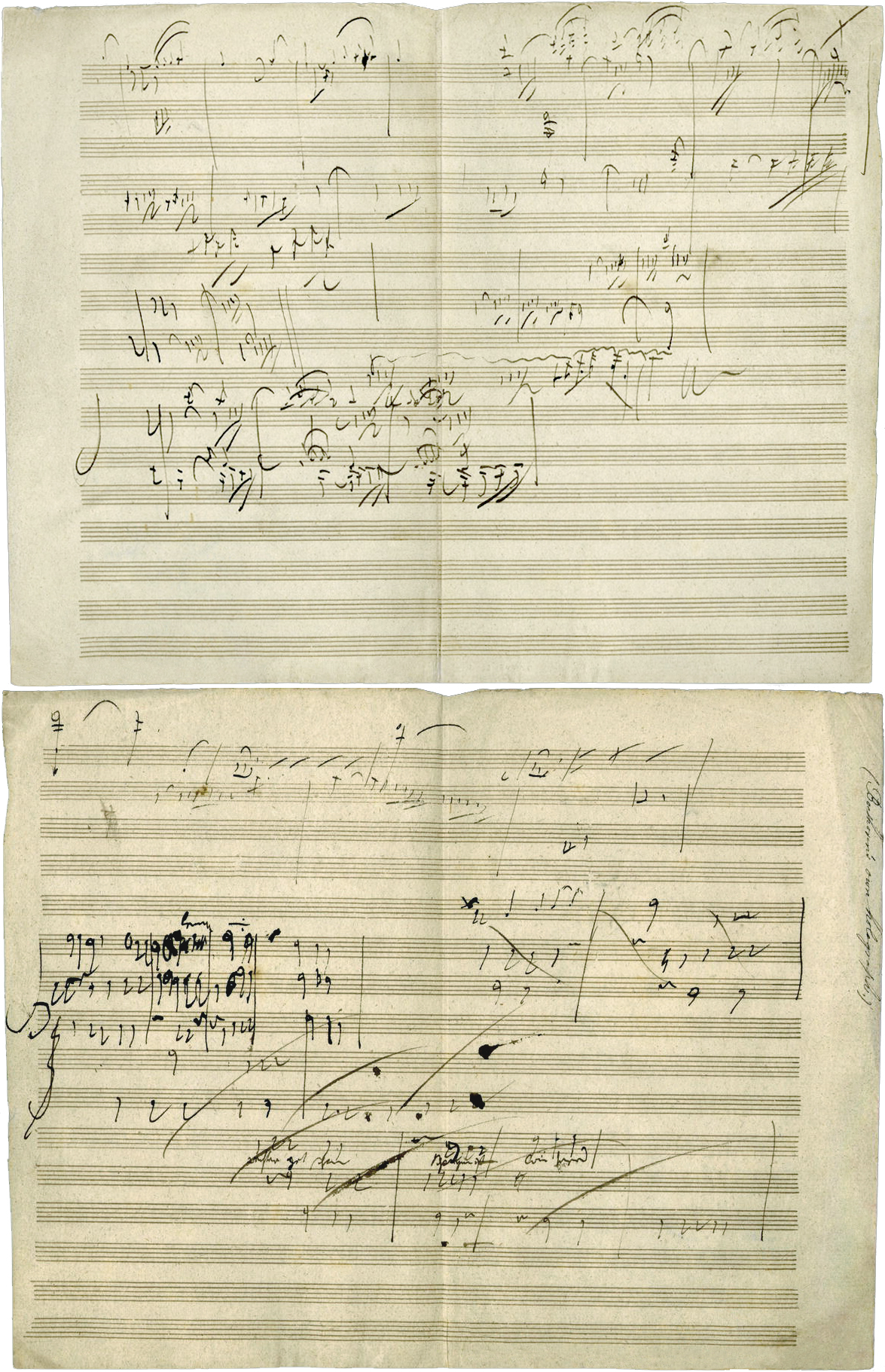
The rubato in "Clair de Lune" mimics the natural ebb and flow of human emotion. It is not a mechanical, metronomic pulse. It is organic. This organic movement prevents the brain from becoming too focused on a rigid structure. It allows the listener to drift within the phrasing.
A 2018 study from the University of Geneva demonstrated that slow-tempo classical compositions reduce sympathetic nervous system arousal. Researchers specifically looked at pieces from the Baroque era, such as Bach's "Air on the G String." The mathematical precision of Bach, combined with the slow tempo, creates a sense of profound order.
Order fights anxiety. Anxiety feels like chaos; it feels like things spinning out of control. Bach's compositions provide a structural framework that feels indestructible. The counterpoint - the way multiple melodies interweave - creates a complex but perfectly balanced system. It reassures the brain that even in complexity, there is logic.
The use of strings in these pieces also plays a role. The sustained, bowed notes of a cello or violin create a continuous texture. There are no gaps in the sound. This lack of silence or sudden silence prevents the "startle" reflex. The sound wraps around the listener like a warm blanket, filling the acoustic space completely.
The Minimalist Approach to Cognitive Load
Max Richter's 2015 album Voices offers a masterclass in cognitive minimalism. The track "Vladimir's Blues" uses extremely simple, repetitive piano motifs. These motifs minimize cognitive load. When music is too complex, the brain works hard to track the melody, the hard harmony, and the rhythm. This "work" exhausts an anxious mind.
Richter's approach removes the need for active listening. You do not have to follow a complex narrative arc. You do not have to wait for a big resolution. The music stays within a very narrow emotional and structural band. This allows the prefrontal cortex to step back from its role as an active processor.
The piano notes in "Vladimir's Blues" are sparse. There is a lot of "air" between the notes. This space is just as important as the sound itself. It gives the listener room to breathe. It prevents the auditory field from becoming cluttered or overwhelming.
The piano's decay is prominent. You can hear the hammers hitting the strings. You can hear the subtle resonance of the wood. This intimacy makes the music feel human and grounded. It is not an abstract, digital sound. It is a physical, tactile event.
Minimalism functions as a form of sonic meditation. By reducing the amount of information the brain must process, Richter creates a vacuum of calm. The listener does not receive new information; they sit with the information they already have. This reduction in input helps manage sensory overload.
Ambient Drones and the Amygdala
A 2019 study in the journal Scientific Reports explored the impact of low-frequency ambient drones. These sounds lack a distinct melody or rhythm. The study found that these drones can trigger a relaxation response in the even the amygdala. The amygdala processes fear and emotion.

Aphex Twin's Selected Ambient Works 85-92, released on Apollo Records in 1992, remains a landmark in this style. Tracks like "Xtal" utilize deep, pulsing textures that sit at the bottom of the frequency spectrum. These low frequencies feel as much as they are heard. They provide a physical presence that can be incredibly grounding.
The drone acts as an acoustic floor. It provides a sense of stability. When the low-end frequencies remain consistent, they create a sense of permanence. This is the opposite of the erratic, unpredictable nature of anxiety. The drone does not change; it simply persists.
The texture of these drones is often grainy or slightly distorted. This is not a mistake. The slight "grit" in the sound provides enough detail to keep the brain engaged without being distracting. It prevents the sound from becoming a boring, empty void, which might otherwise allow anxious thoughts to rush in.
Using these textures fills the silence. For many, silence is not peaceful; it is a space where intrusive thoughts thrive. A low-frequency drone occupies that space. It provides a "sonic weight" that pushes back against the mental noise of anxiety.
The Benefits of Instrumental Silence
A 2020 study conducted by the Mindlab International group tracked heart rate responses to various instrumental tracks. Their conclusion was stark. Tracks without lyrics allow the prefrontal cortex to rest from linguistic processing. When we listen to lyrics, our brains constantly decode language, meaning, and syntax.
Even without active attention to the words, your brain still works. It performs a background task of linguistic analysis. For someone already experiencing cognitive fatigue from anxiety, this is an unnecessary burden. Instrumental music removes this layer of work.
The absence of a human voice removes the "social" element of music. Lyrics often carry emotional baggage or narrative tension. A singer might convey sadness, anger, or longing. Instrumental music allows the listener to project their own emotional state onto the sound. It is a neutral canvas.
This lack of linguistic data allows for a deeper state of immersion. You do not follow a story; you experience a texture. The music becomes a purely sensory experience. This shift from "thinking" about music to "feeling" music remains essential for true relaxation.
The most effective songs to reduce anxiety act as environments rather than stories. They do not take you somewhere else; they make the place where you currently are more bearable. They provide a structural support for the nervous system, allowing the body to return to its natural, calm state.
Comments
Join the conversation
Leave a comment
Newsletter
Stay in the loop
New music, stories, and updates from Kurtis Delight.
Keep reading
MORE STORIES
Why Your Brain Can't Stop Playing That Earworm
Explore the science of involuntary musical imagery, from the Zeigarnik Effect to the repetitive hooks of Baby Shark and The Beatles.

The Science of the Telecaster Crunch
Discover why the high-frequency bite of a Fender Telecaster triggers a primal response in the human brain and defines the sound of rock and roll history.

Why Live Music Hits Harder Than Studio Recordings
Explore the neuroscience and psychoacoustics behind the physical power of live music, from dopamine releases to infrasound vibrations in the chest.
Enjoy the music
Listen to Kurtis Delight on Spotify
Stream the full catalogue - original productions, deep cuts and more.
Open on Spotify