Why Live Music Feels Better: The Science of the Sonic Surge
August 15, 1969, scorched Max Yasgur's farm in Bethel, New York. Half a million people stood in the thick mud, drenched in sweat and the heavy, distorted scent of patchouli and rain. This Woodstock moment established the communal auditory experience as a sociological phenomenon, a fact documented in Murray Lerner's 1970 documentary. People did not just listen to Jimi Hendrix or Santana; they existed within a shared frequency. This shared state explains why live music feels better than any high-fidelity playback in a private room.
Studio recordings offer a controlled, sterile perfection. You can sit in a quiet living room with a pair of Sennheiser HD600 headphones and hear every micro-detail of a master tape. That isolation removes the biological feedback loops that occur when sound hits a crowd. We are not just passive listeners; we are physical participants in an acoustic event. The difference lies in the chemistry of the brain and the physics of the air.
The brain responds to live sound with a specific chemical cocktail. Researchers at the University of Groningen, led by Dr. Hans van de Velde, conducted a study in 2012 that changed how we view the concert experience. They used EEG monitoring to track brain activity during both live and recorded sessions. Their findings proved that live music triggers higher levels of dopamine and oxytocin compared to studio versions. This isn't just a feeling of excitement; it is a measurable neurological shift toward bonding and reward.
The Dopamine Surge in the Brain
Dopamine drives our desire and our sense of reward. When a drummer like John Bonham hits a snare with that heavy, ringing crack on a track like "Lonely Boy," the brain registers a hit. In a studio setting, this happens in a vacuum. In a live setting, the sudden spike in dopamine synchronizes with the physical presence of others. You experience a chemical reward that the recorded version simply cannot replicate.

Oxytocin facilitates social bonding and trust. This hormone floods the system when we feel connected to the people around us. A 2012 study from the University of Groningen showed that the live environment amplifies this effect through shared sensory input. You see the sweat on the guitarist's brow and feel the vibration of the kick drum. This sensory overload forces the brain to process the music as a single social event rather than an isolated aesthetic one.
The chemical surge creates a state of heightened awareness. You become more alert, more reactive, and more prone to emotional volatility. A bad set at a local club feels personally offensive, while a bad studio album feels like a disappointment. The stakes rise when your neurochemistry actively participates in the performance. The brain treats the live event as a survival-level social interaction.
Music acts as a catalyst for these biological responses. A well-placed minor chord on a Fender Rhodes piano can trigger a melancholic dip in mood. In a live setting, that dip hits the entire front row simultaneously. This shared emotional state reinforces the chemical loop, making the experience much more intense than a solitary listen. The dopamine doesn't just reward the ear; it rewards the entire social unit.
"Ambient music is about the environment. It is about the space surrounding the sound, not just the notes themselves." - Brian Eno
Brian Eno understood this distinction deeply when he developed the ambient concept in the 1970s. He focused on the environment and the space surrounding a sound. He knew that the texture of a room changes the very nature of the composition. While a studio artist might try to eliminate room noise, the live performer uses the room as an extra instrument. This brings us to the physical weight of the sound itself.
The Physicality of Low Frequencies
London's Royal Albert Hall possesses a legendary acoustic character. When a sub-bass frequency hits a venue like this, it does not just enter your ears. It enters your skeletal structure. Specifically, frequencies below 20Hz, known as infrasound, create a sensation you feel in your chest. You cannot hear these frequencies in the traditional sense, but your body registers their pressure.
Low-frequency vibrations act like a physical weight. A massive L-Acoustics line array system used in modern touring produces a Sound Pressure Level (SPL) that a home stereo cannot touch. This high-SPL output creates a physical presence. The air becomes thick, almost viscous, as the low end moves through the room. This is the difference between hearing a bassline and being hit by a massive bassline.
Studio masters on platforms like Tidal use high-fidelity compression to ensure clarity. This works perfectly for a pair of high-end monitors in a controlled room. The uncompressed, raw power of a Funktion-One system at a club provides a different kind of information. The sheer energy of the air displacement provides a tactile layer to the music. It turns a melody into a physical force.
The sensation of infrasound can induce a sense of awe or even mild anxiety. This physical tension keeps the listener engaged. You are not just processing audio data; you are navigating a pressure wave. This physical interaction with the sound is impossible to achieve with even the most expensive consumer audio equipment. The body becomes a resonator for the low end.
Social Contagion and the Crowd
Glastonbury Festival offers a perfect study in human synchronization. During a headlining set, thousands of strangers move in a unified rhythm. This phenomenon, known as social contagion or entrainment, creates a physiological feedback loop. The performer plays a driving beat, the crowd responds with movement, and that movement feeds the energy back to the stage. It is a closed loop of kinetic energy.
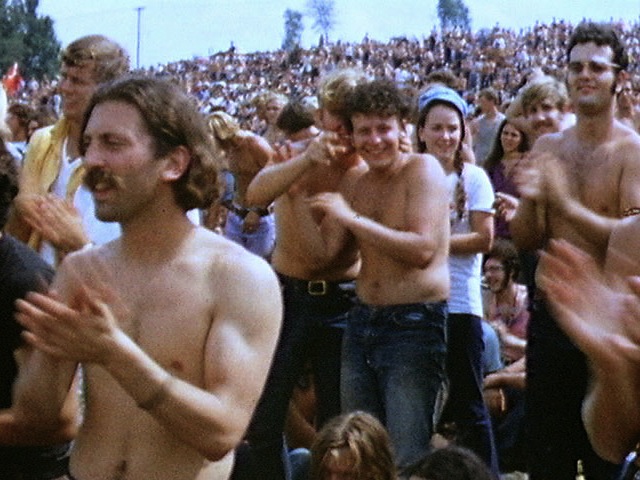
The crowd acts as a single, breathing organism. When the person next to you jumps, your own sympathetic nervous system prepares to jump as well. This is not just about shared enthusiasm; it is about biological synchronization. The movement of the mass influences the individual, and the individual contributes to the mass. This feedback loop drives a great live performance.
Music creates a sense of shared identity through this movement. You are no longer an isolated consumer of a product. You are a component of a larger, moving entity. This feeling of belonging is a powerful driver of the live experience. It transforms a simple concert into a ritualistic event that defies the isolation of modern life.
The energy of a conductor or a band can actually alter the way a massive group plays. A high-energy crowd pushes a drummer to play harder and a guitarist to lean into the distortion. The physical presence of the audience acts as a variable in the performance itself. This unpredictability makes the live experience vital. It is a live, breathing, changing event that will never happen exactly the same way twice.
The Chaos of Room Acoustics
Abbey Road Studio One offers a masterclass in clinical perfection. Engineers spend thousands of hours tuning the room to ensure every transient is captured with surgical precision. This environment aims to eliminate the unexpected. The goal is a pristine, controlled signal that can be manipulated in the mix. This provides the foundation of great studio production, but it lacks the organic soul of a live space.
A non-purpose-built venue introduces organic, non-linear distortions. These are not errors; they are features of the space. The way sound bounces off a brick wall or a velvet curtain adds a layer of complexity to the audio. This complexity provides a sense of depth and reality that a sterile studio cannot replicate. The room becomes part of the arrangement.
Consider the 1975 recording of Pink Floyd's "Echoes" from the Hammersmith Odeon. If you compare this to the 1971 version on the album Meddle, the difference is stark. The studio version is polished and controlled. The live version carries the weight of the Hammersmith's specific resonance. The decay of the notes is altered by the room's natural reverb, creating a much larger, more cavernous sound.
The Precedence Effect, or the Haas Effect, plays a role here. This psychoacoustic principle explains how our brains process direction and spatial depth. When sound arrives from multiple sources at slightly different times due to room reflections, our brain calculates the size of the space. In a live venue, these reflections create a sense of three-dimensional immersion. The music does not just come from the stage; it surrounds you.
These reflections add a layer of air to the sound. This air is not present in a dry studio recording. It provides the texture that makes a performance feel massive. The brain uses these subtle timing differences to map the environment. This spatial awareness is a key component of why a live show feels more immersive than a recording.
The Science of Rhythmic Entrainment
Rhythmic entrainment is a physiological process where our internal rhythms sync with external ones. When a drummer like Steve Gadd plays a complex, driving groove, your heart rate begins to shift. Your breathing patterns may even synchronize with the BPM of the track. This is a biological takeover directed by the percussion.

The human body is a rhythmic machine. We respond to the pulse of the music on a cellular level. When a drummer like John Bonham hits a heavy, mid-tempo beat, the physical impact is felt in our very pulse. This synchronization creates a deep, visceral connection to the music. It is a way of literally feeling the beat within our own bodies.
This entrainment is much stronger in a live setting. The high volume and the physical vibration of the floor reinforce the rhythmic cues. The music is not just an auditory signal; it is a physical pulse that the entire room follows. This creates a unified rhythmic state among the audience members. We are all beating to the same drum.
This process reduces the cognitive load required to process the music. Instead of analyzing the melody, we simply move with the rhythm. This allows for a state of flow, a period of intense, undistributed presence. This state of flow is the holy grail of the musical experience. It is where the distinction between the listener and the music disappears.
The precision of a studio recording can sometimes hinder this process. A perfectly quantized drum track can feel sterile and lifeless. A live drummer, however, provides the micro-fluctuations in timing that humanize the rhythm. These tiny deviations from the grid make the music feel organic and alive. They provide the swing that invites the body to move.
Live music remains the ultimate human experience because it refuses to be contained. It is a messy, loud, and chemically intense event that requires our total physical and emotional presence. You can listen to a master tape a thousand times, but you will never truly experience the way a sub-bass frequency can shake your very soul in a dark, crowded room. The studio gives us the notes, but the stage gives us the life.