The Science of Earworms: Why Melodies Get Stuck
London's Toe Rag Studios smelled of vintage tubes and dust in 2003. Jack White sat surrounded by analog gear, coaxing a thick, gritty tone from a semi-acoustic guitar. He played a single, driving note that repeated with relentless, hypnotic precision. This specific riff from The White Stripes' "Seven Nation Army" did not just command the room. It lodged itself into the collective skull of the global listening public, refusing to exit. This phenomenon represents the neuroscience of earworms in an aggressive, physical form.
The brain does not simply enjoy a good melody. It captures it. Researchers call these involuntary musical images Involuntary Musical Imagery (INMI). They act like mental parasites. They hijack your internal monologue and replace your thoughts with a looped synth line or a repetitive vocal hook. You might try to write a report or order a coffee, but the 1985 synth hook from A-ha's "Take On Me" plays in the back of your mind, louder than your own intention.
A-ha released "Take On Me" on the Warner Bros. label in 1985. That bright, ascending synthesizer hook climbs with mathematical certainty. It feels like a staircase built of light. The melody uses a repetitive, upward motion that tricks the brain into anticipating the next note. This anticipation creates a psychological loop that breaks easily once the first few bars trigger.
The Structural Trap of the Neuroscience of Earworms
Dr. Victoria Williamson at the University of Reading spent years tracking these mental intrusions. In a 2014 study involving 1,500 participants, she mapped how often these melodies appear and what makes them stick. The data showed that certain musical structures possess a higher frequency of occurrence in the human mind. The music contains a structural trap.

The 1985 hit "Take On Me" provides the perfect specimen for this study. Its synthesizer melody uses a specific ascending pattern that mirrors the way our neurons fire in sequence. When the keyboard hits those high, bright notes, the brain registers a pattern it can easily replicate. This simplicity allows the melody to bypass the harder, more analytical parts of our cognition. It moves straight into the subconscious.
Many people assume earworms signal a bored mind. The research suggests otherwise. These tracks often possess a specific rhythmic density that demands attention. They do not just sit in the background. They demand a seat at the front of your consciousness, much like a heavy bassline in a crowded club at Berghern. The brain gravitates toward these patterns because they provide a predictable, low-effort stimulus that requires minimal processing power to maintain.
The sheer repetition in "Take On Me" creates a loop of expectation. You hear the first three notes, and your brain immediately fills in the fourth. This predictive behavior makes the track effective at sticking. It turns the listener into an empty vessel, waiting to be filled by the next predictable note. This turns the listener into an active participant in the song's construction, even when the actual audio has long since stopped playing.
Music historians often look at the mid-eighties as a period of extreme sonic brightness. The rise of MIDI technology and digital synthesizers like the Yamaha DX7 changed the texture of pop music. These new, crisp, digital sounds lacked the harmonic decay of analog gear. This lack of decay actually aids the earworm. The notes end abruptly, creating a clean slate for the next repetition, which prevents the brain from getting lost in the "mud" of a more complex, decaying sound.
The Loop in the Auditory Cortex
Dr. Daniel Bartlett-Davis at the University of Reading identified the physical site of this mental playback. He found that earworms often occur in simple, repetitive patterns that trigger a specific "looping" structure within the auditory cortex. This part of the brain processes sound and maintains the rhythm of the melody. When a song is sufficiently repetitive, the cortex begins to cycle the information indefinitely.
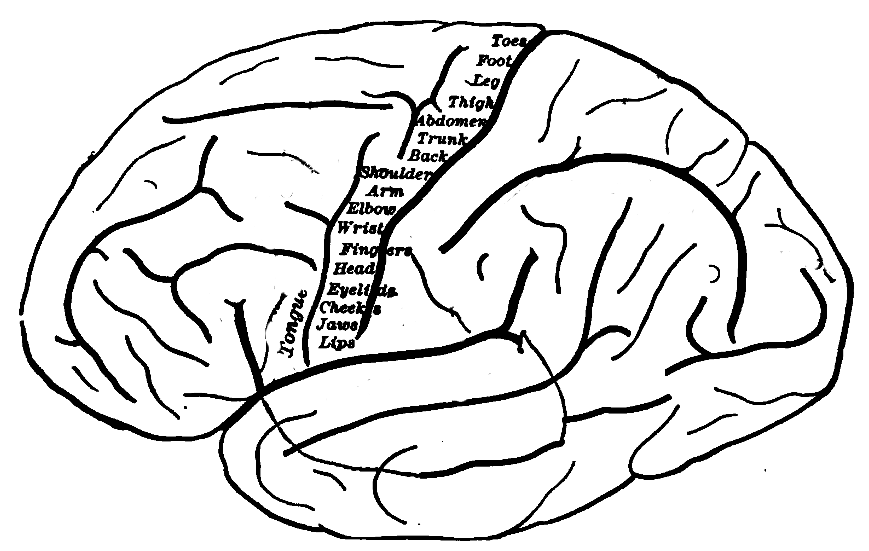
The White Stripes' "Seven Nation Army" provides a masterclass in this cortical looping. Jack White used a semi-acoustic guitar through a cranked amplifier to create a bass-like riff that hits with the weight of a blunt object. Because the riff relies on a single, repeating note pattern, the auditory cortex does not need to process complex harmonic shifts. It simply accepts the pattern and begins the cycle of repetition.
This looping behavior turns the brain into a broken record. The auditory cortex lacks a "stop" and discard command for these specific, low-complexity patterns. It continues to play the riff because the pattern is too simple to be discarded as noise. The brain keeps the loop running as if it is trying to complete a circuit. It finds the pattern so efficient that it decides to keep it in active rotation indefinitely.
"The brain's reward system, specifically the nucleus accumbens, reacts to the dopamine release triggered by familiar musical motifs."
Dr. Robert Zatorre at McGill University studied this exact reaction. He found that when we recognize a familiar motif, the nucleus accumbens releases a burst of dopamine. This chemical reward makes the melody feel good, which incentivizes the brain to keep playing it. We essentially reward our own mental hallucinations with a hit of pleasure. The brain enters a feedback loop where the melody provides the stimulus and the dopamine provides the reinforcement.
This neurological reward mechanism explains why we often crave these "stuck" songs. Even when the repetition becomes annoying, there is a subconscious satisfaction in the predictability. The brain loves the safety of a known quantity. It prefers a repetitive, slightly irritating riff to the uncertainty of a complex, dissonant jazz progression. The dopamine hit comes from the successful prediction of the next note in that heavy, thumping White Stripes line.
Consider the era when "Seven Nation Army" climbed the charts in 2003. The music industry was reeling from the rise of Napster and the decline of physical CD sales. The music moved toward more stripped-back, garage-rock revivalism. This era favored raw, rhythmic simplicity over the polished, over-produced pop of the fucking nineties. The simplicity of the era's biggest riffs actually made them more prone to becoming the neurological parasites we discuss today.
Why Your Brain Hates Unfinished Songs
The Zeigarnik Effect explains the frustration of a half-remembered melody. This psychological concept suggests that the human brain struggles to forget an unfinished task. If you hear a song on the radio but the signal cuts out during the chorus, your brain perceives that song as an incomplete loop. It keeps the melody active in your working memory to try and find a resolution.
This drive for closure creates a mental tension. Your brain wants to hear the final note of the rhythm to satisfy the cognitive loop. Without that resolution, the melody remains in a state of high alert. It stays at the forefront of your mind, demanding the missing piece of the puzzle. This tension acts as a hook, pulling your attention back to the incomplete musical thought.
Lady Gaga utilized this tension brilliantly in her 2009 hit "Bad Romance" on Interscope Records. The track uses a rhythmic, staccato vocal hook that interrupts itself with sharp, percussive breaths. These breaks in the vocal line mimic the repetitive neural firing patterns found in high-frequency earworms. The song constantly resets its own momentum, forcing the brain to re-engage with every new phrase.
The structure of "Bad
The structure of "Bad Romance" prevents the listener from settling into a passive state. Every time the vocal melody reaches a peak, a sudden rhythmic shift occurs. This prevents the brain from reaching a state of "completion." We remain trapped in the tension of the song, waiting for a resolution that the song itself is designed to withhold. Gaga and her producers, including RedOne, engineered the track to be a series of unresolved, high-energy bursts.
The 2009 pop landscape was dominated by this type of aggressive, maximalist production. It was an era of heavy compression and loud, "in-your-face" mixing. This technical approach to music production meant that songs often hit the listener with maximum impact from the very first second. There was no room for subtlety, which made the "unfinished" feeling of a sudden radio cut even more jarring and prone to triggering the Zeigarnik Effect.
The Dopamine Hit of Familiarity
Familiarity acts as a lubricant for the earworm process. We do not get stuck on experimental, avant-garde noise. We get stuck on songs we already know. The brain finds comfort in the predictable, and this comfort allows the melody to settle into the neural pathways more deeply. The more times you hear a song, the easier it becomes for your brain to hijack itself with it.
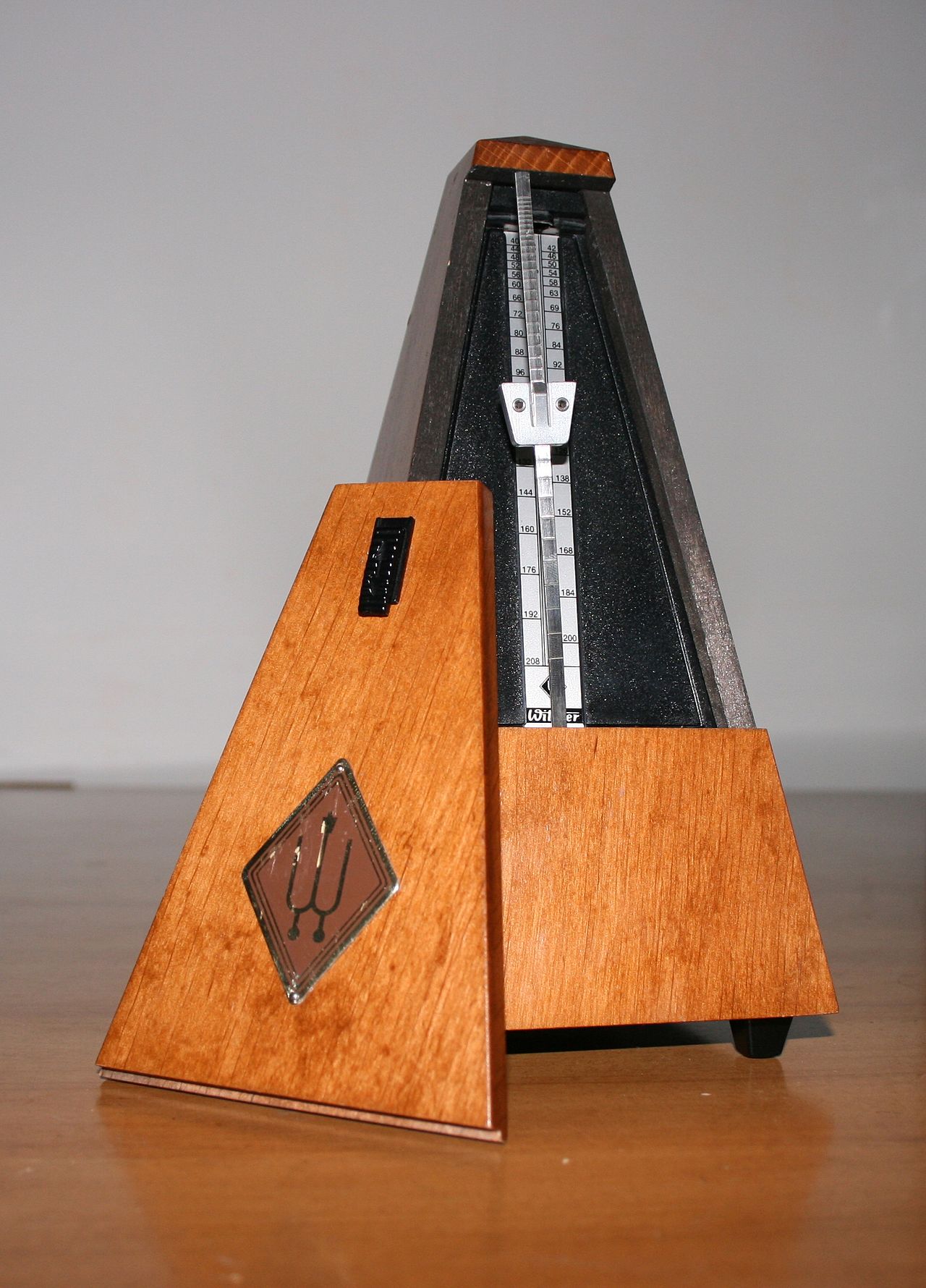
The Bee Gees mastered this predictable rhythm with "Stayin' Alive" from the 1977 *Saturday Night Fever* soundtrack. The track maintains a steady 103 BPM disco beat. This tempo provides a predictable rhythmic anchor for the brain. It is a heartbeat that the mind can easily synchronize with, creating a stable foundation for the melody to loop upon. It is a rhythm that feels as natural as breathing.
When a beat is this consistent, the brain does not have to work to track the time signature. It can focus entirely on the melodic content. This ease of processing makes the song an ideal candidate for the dopamine-driven reward system studied by Dr. Zatorre. The brain recognizes the pattern, rewards the recognition, and then loops the pattern to seek the reward again. The disco beat acts as the engine for this neurological cycle.
The rhythm of disco is built on stability. The kick drum hits on every beat, providing a metronomic pulse for your internal monologue. This rhythmic certainty makes the song's presence in the mind much more durable. It is not just a melody; it is a steady, unshakeable pulse that resists displacement by other thoughts. The simplicity of the 4/4 beat provides the perfect playground for an earworm to thrive.
During the late seventies, disco's dominance in the clubs relied heavily on this rhythmic predictability. DJs played tracks that allowed dancers to enter a trance-like state. This same trance-like state is what happens when an earworm takes over your brain. The music becomes an autonomous force, driving the rhythm of your thoughts without your permission. The disco era perfected the art of the musical hypnotic loop.
Reconstructing Sound Without Audio
Dr. Annalisa Bevilacqua explores the mechanics of how we reconstruct these sounds in total silence. Her research shows that musical imagery relies heavily on the prefrontal cortex and the temporal lobes. These areas work together to rebuild the auditory experience without any external stimulus. Your brain performs a high-fidelity reconstruction of a recorded file. It acts as an internal playback of a digital memory.
This reconstruction is not a perfect copy. It is a mental approximation that uses stored data to fill in the gaps. The prefrontal cortex provides the structural framework of the song, while the temporal lobes provide the tonal texture. This allows you to "hear" the grit of a distorted guitar or the breathiness of a vocalist even in a single, silent room. You essentially hallucinate a concert in your own head.
The accuracy of this reconstruction depends on how deeply the song is encoded. Songs with high levels of repetition, like the ones discussed, are easier to reconstruct. The brain does not need to store complex instructions. It only needs to remember a simple, repeating sequence of notes and rhythms. The less information the brain has to "render," the more stable the internal playback becomes.
This ability to replay sound is a fundamental part of human cognition. It allows us and to maintain musical memory across years and decades. While it can be maddening when a pop hook takes over your afternoon, it shows the incredible computational power of the human brain. We carry our own personal soundtracks with us, encoded in our very biology. We are never truly in silence if a melody is playing in our minds.
The biological cost of this ability is the loss of focus. When the temporal lobes are busy reconstructing a heavy bassline, they cannot easily process the nuances of a spoken conversation. This is why earworms are so disruptive during important meetings or deep study. Your internal orchestra plays a much louder, much more insistent concert than the person speaking to you. The brain prioritizes the high-intensity musical replay over the low-intensity auditory input of speech.
The Rhythm of the Phonological Loop
Researcher Jakub Doballys published findings in 2022 regarding the phonological loop. This component of working memory helps the brain replay auditory information without external stimuli. It acts as a sort of internal chalkboard, where the brain writes down sounds and reads them back to itself. When an earworm takes hold, the phonode loop essentially enters a continuous rewrite-and-read cycle.
The loop functions by using the sounds of words and melodies as placeholders for information. If a melody is particularly rhythmic, it occupies more space on this mental chalkboard. The brain finds it difficult to overwrite the musical loop with verbal information, such as a grocery list or a work task. The musical rhythm is too physically resonant to be ignored. It demands more "ink" on the chalkboard than any mundane thought.
The interaction between the phonological loop and the auditory cortex creates a closed system. The cortex generates the pattern, and the loop maintains it. This is why earworms feel so much like an external force. They are not just thoughts; they are active processes occurring within the machinery of your memory. They are not something you are thinking about; they are something your brain is actively doing to itself.
Breaking an earworm requires an external interruption that is more complex than the loop itself. You need a task that demands significant cognitive load to "overwrite" the phonologial loop. Solving a difficult math problem or reading a dense piece of literature can force the brain to shift resources away from the musical playback. You have to fight the music with logic. You must present the brain with a problem so demanding that it has no spare energy left for the melody.
The next time you find yourself humming a wayward synth line, remember that your brain is simply doing its job. It seeks patterns, rewards familiarity, and attempts to complete unfinished business. The earworm is not a glitch in the system; it is a feature of a brain designed to find meaning in rhythm and melody. Your mind is just trying to find the resolution it was promised.