The Truth Behind Searching for Sugar Man
Detroit asphalt smells like wet grit and diesel in the middle of a Michigan summer. Sixto Rodriguez spent the 1970s walking these streets, not as a forgotten folk icon, but as a man hauling heavy debris and swinging sledgehammers. He worked in construction and demolition, moving through the ruins of a decaying industrial empire. No one in the neighborhood asked for an hungry autograph or sang his lyrics. The man who wrote "Sugar Man" lived a life defined by the physical weight of manual labor rather than the ethereal weight of fame.
The 2012 documentary Searching for Sugar Man, directed by Malik Bendual and Malika Saudarra, presents a version of this reality that feels more like a Hollywood script than a biography. It suggests a cosmic coincidence that links a vanished American singer to a massive, cult-like following in South Africa. While the film captures the emotional intensity of the search, it creates several Searching for Sugar Man inaccuracies that muddy the actual history of the man. We need to separate the cinematic magic from the gritty, unvarnished reality of Rodriguez's life.
The film relies on the emotional momentum of discovery to drive its narrative forward. It frames the rediscovery as a sudden, miraculous revelation of a legend. In reality, the connection between Detroit and Cape Town was a slow, distorted echo traveling through illegal channels. The film's power comes from its heart, but its accuracy suffers from a desire to turn a messy biography into a clean, triumphant myth.
The Detroit Construction Site, 1970s
Dust from demolished brickwork coated the lungs of every worker in the Detroit suburbs during the mid-seventies. Sixto Rodriguez moved through this landscape with a quiet, unassuming presence. He was not a man hiding from the spotlight; he was simply a man living a life that had nothing to do with the Billboard charts. The American music industry had moved on to the heavy, swampy grooves of Creedence Clearwater Revival and the stadium-sized swagger of The Rolling Stones. Rodriguez's folk-rock style, stripped of artifice and heavy on social commentary, found no home on American FM radio.
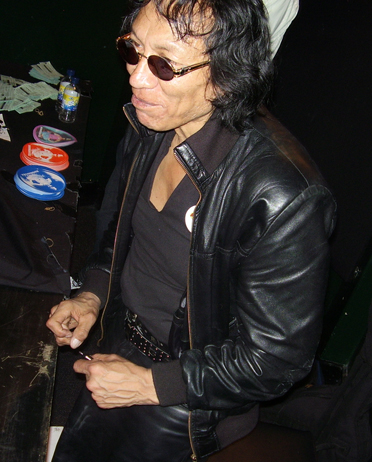
Factories closed, and the economic pulse of the city began to falter in 1970s Detroit. Rodriguez engaged in the most fundamental forms of labor to survive this decline. He performed demolition work that required grueling physical stamina. This period of his life lacked any sense of a "lost superstar" waiting to be found. He was simply a resident of a city in transition, working to survive in a place that offered little in the American music industry. The decline of the automotive plants created a vacuum that Rodriguez filled with manual labor.
The American mainstream press largely ignored his music during this era. While the industry celebrated the massive production of 1971's Coming from Reality, Rodriguez focused on the immediate demands of his job. There was no grand tragedy in his obscurity, only the mundane reality of a working-class existence. The documentary makes his life in Detroit look like a period of waiting, but he was actually just living. He was not waiting for a spotlight; he was just waiting for the end of the shift.
The contrast between his lyrical depth and his physical surroundings provides the real tension of his story. You can hear it in the way he sings about urban decay. He lived the very lyrics he penned, breathing in the same grit he described in his songs. This was not an act or a persona. It was the lived experience of a man witnessing the slow erosion of his city.
The Bootleg Myth in South Africa
Cape Town townships echoed with the sound of hiss and crackle from cheap cassette tapes during the 1980s. These tapes did not arrive through official distribution or legal radio play. The South African apartheid regime kept a tight grip on the airwaves, favoring a very specific, controlled type of pop. However, the underground economy of bootleg music thrived in the shadows of the townships. People traded copies of Cold Fact like precious contraband, passing them hand to hand in the dark.

The popularity of Rodriguez in South Africa grew from these illegal, grainy recordings. These were not high-fidelity experiences. They were lo-fi artifacts, worn thin by repeated plays on battered boomboxes. The music provided a voice for a generation living under intense political pressure. The lyrics spoke of truth and survival in a way that felt urgent and visceral. This was not a polished pop phenomenon; it was a grassroots, auditory rebellion.
The documentary portrays this spread as a legendary phenomenon that nearly reached the level of mass hysteria. While the impact was certainly deep, the film tends to exaggerate the direct, widespread nature of this awareness. The music lived in specific pockets of resistance. It was a localized, intense phenomenon rather than a national movement. The tapes were the primary vehicle, turning a discarded American album into a local anthem.
The sheer grit of those recordings remains central to the story. The sound of a bootleg tape is a specific thing. It has a compressed, muddy quality that makes the acoustic guitar feel like it is struggling to break through a layer of static. This texture actually added to the mystique of the music in South Africa. The lack of clarity allowed the myth to grow in the gaps between the notes.
"Sugar man, oh sugar man / I wonder if you're ever gonna be a man"
These lyrics, stripped of their original context, became something else entirely in the streets of Cape Town. They became symbols of a sudden connection to the wider world. The song itself, with its bluesy acoustic guitar and subtle, dragging percussion, carried a weight that went beyond its American origins. It functioned as a piece of sonic resistance, even if the singers did not fully understand the American politics behind the words.
The Sussex Records Sessions
Studio lights flickered in the dim rooms of Detroit's recording spaces during the early 1970s. Producer Steve Schwartz and Sussex founder Clarence Avant oversaw the sessions that would produce Cold Fact. They worked with a raw, unpolished energy that defined the album's character. Unlike the more polished, studio-slick sounds of 1971's Coming from Reality, the 1970 sessions felt immediate and unvarnished. Schwartz captured a sound that felt like a man sitting in a room with you, rather than a product being manufactured for mass consumption.

The tracks "Sugar Man" and "I Wonder" emerged from this period of intense, focused creativity. The arrangement on "Sugar Man" features a distinct, bluesy acoustic guitar that feels heavy and grounded. The percussion does not drive the song so much as it pulses alongside it, like a heartbeat under stress. This was not the polished pop-rock that dominated the charts in 1971. It was something much more skeletal and honest.
Clarence Avant, a titan of the music industry, understood the potential of the raw talent present in these sessions. The Sussex Records era allowed for a certain level of risk-taking. They allowed Rodriguez to maintain his lyrical grit without forcing him into a radio-friendly mold. This decision, while likely contributing to his lack of American commercial success, preserved the integrity of the work. The album Cold Fact remains a document of that specific, unmediated moment.
The production on these tracks avoids the heavy layering common in the era. There are no massive string sections or overwhelming orchestral swells. Instead, you hear the wood of the guitar and the breath of the singer. It is a production style that prizes clarity of intent over sonic density. This stripped-back approach allowed the social commentary to hit with more force, even if it failed to hit the top of the charts.
Listening to these sessions now, the difference between the two albums is stark. Cold Fact is an album of the streets, while Coming from Reality attempts a more expansive, perhaps more conventional, sonic palette. The early sessions hold a certain magic because they feel unburdened by the pressure of success. They are the sound of an artist recording his truth before the world had a chance to distort it.
Disputing the Cape Town Legend
Cape Town's sun beat down on the streets where Stephen 'Sugar' Segerman and Vincent September began their search. These two men acted as the catalysts for the film's narrative, hunting for a ghost through the labyrinth of South African music history. Their search was driven by a genuine passion for the music they grew up with. They provided the emotional anchor for the documentary, making the audience believe in the possibility of a miraculous reunion.
The documentary suggests a level of direct awareness or near-miss connections that Rodriguez himself has often disputed. In interviews with The Guardian and The New York Times, Rodriguez has pushed back against the idea that he was a conscious participant in this unfolding drama. He was not a man waiting for his name to be a call in a foreign land. He was simply living his life in Detroit, unaware of the legend being built in his name thousands of miles away.
Rodriguez clarified the reality of his connection to the South African phenomenon in a 2013 interview with The Independent. He admitted to being aware that his music had found a home there, but he dismissed the specific, heightened details portrayed in the film. The "legend" was a creation of the enthusiasts who found the tapes, not a reflection of his own awareness. The film takes the spark of his fame and fans it into a cinematic blaze that obscures the actual, more modest reality.
This tension between the film's narrative and the artist's reality creates the core of the Searching for Sugar Man inaccuracies. The film needs a hero who is being sought, a man whose disappearance is a mystery. Rodriguez, however, never disappeared. He just moved into a different phase of life. The "search" was more about the searchers finding their own connection to the music than it was about finding a lost star.
The characters of Segerman and September are vital to the story's emotional impact. Their dedication to the search is deeply moving. However, by centering the narrative on their discovery, the film risks turning Rodriguez into a passive object of curiosity. He becomes a figure to be found, rather than a human being with his own agency and a much more mundane reality.
The Reality of the Cold Fact Era
Radio waves in 1970 carried the sounds of a world in upheaval. The American charts were dominated by the heavy, rhythmic certainty of artists like Creedence Clearwater Revival. These bands provided a soundtrack for a culture grappling with the end of the Sixties. Rodriguez's music, while socially aware, lacked the massive, anthemic quality required for 1970s radio dominance. It was too quiet, too intimate, and too focused on the granular details of urban life to compete with the era's giants.
The Cold Fact era lacked commercial momentum. The album failed to chart on the Billboard Hot 100, leaving Rodriguez in a state of professional limbo. This was not a sudden catastrophe, but a gradual fading from the mainstream eye. The music existed, the talent was present, but the machinery of the American music industry simply did not have a place for it. He was a singer without a platform, performing for a much smaller, much more localized audience.
The 85th Academy Awards in 2013 celebrated the film's success, awarding it the Oscar for Best Documentary Feature. The win brought a global spotlight to Rodriguez, but it also solidified the cinematic version of his story. The world embraced the myth of the rediscovered legend, often overlooking the man who had been right there in the construction sites of Detroit all along. The award recognized the film's power to tell a story, but it also validated a narrative that leaned heavily on embellishment.
We must respect the emotional truth of the music while remaining skeptical of the cinematic myth. The songs on Cold Fact remain vital because they are honest. They do not rely on the drama of a search or the triumph of a reunion. They rely on the weight of the words and the grit of the arrangement. The true story of Sixto Rodriguez is not found in a Hollywood documentary, but in the unvarnished, unrecorded moments of his life in the American Midwest.
The music survives long after the cameras stop rolling. The tracks on Cold Fact continue to resonate because they tap into something much more permanent than a news cycle or an awards season. They capture a specific moment of American history through the lens of a man who lived it. Whether or not the legend is true, the songs are real.