The Makaveli Prophecy: Tupac Shakur Makaveli death
Flamingo Road and Koval Lane in Las Vegas shimmered under the harsh Nevada streetlights on September 7, 1996. A black BMW pulled up near the intersection, and the sudden, sharp staccato of gunfire shattered the desert night. Tupac Shakur sat in the passenger seat of a Cadillac, taking four bullets to the body. This violent ambush did more than end a life; it froze a specific, terrifying energy in mid-air. The industry lost its most polarizing figure, but the music left behind a blueprint for a different kind of survival.
University Medical Center became the site of a tragedy on September 13, 1996, that remains the heaviest moment in hip-hop history. Six days after the shooting, the light went out in the eyes of the man who had spent his entire career fighting for visibility. People talk about the tragedy, but they often forget the preparation. Tupac was not just a victim of a random street crime. He was a man who had already begun drafting his own exit strategy through a complete psychological overhaul.
The studio saw a strategist where the world saw a superstar. He moved away from the street reporter persona and toward something much colder. He shed the skin of the revolutionary to wear the mask of a tactician. This shift defined the final months of his life and gave us the most aggressive, paranoid, and brilliant work in the Death Row Records catalog.
The Chaos of the Tupac Shakur Makaveli death
Las Vegas felt like a pressure cooker in the late summer of 1996. The city served as a playground for the high-stakes tension between the West Coast and East Coast rap scenes. Suge Knight ran Death Row Records with an even hand, and the label functioned more like a sovereign state than a record company. Every movement Tupac made carried the weight of a potential declaration of war. He walked through a minefield of his own making, even as he leaned into the chaos.
The shooting on September 7 changed the trajectory of hip-hop forever. When the bullets hit the Cadillac, they hit the center of the cultural conversation. The news traveled through the streets of Los Angeles and New York like a physical shockwave. You could feel the sudden silence in the clubs and the frantic energy in the newsrooms. The era of the superstar rapper suddenly lost its armor.
Medical staff at University Medical Center worked through the night to save him. They fought against the damage caused by the four shots that tore through his torso. Despite the frantic efforts of surgeons and the high-profile presence of his entourage, the injuries were too deep. He died on September 13, leaving behind a vacuum that no other artist could fill. The suddenness of his passing turned his lyrics into a set of grim, premonitory warnings.
Fans mourned a prophet who seemed to have predicted his own demise. The streets of Compton and the towers of Manhattan both felt the loss. It was a moment where the art and the reality of the artist became indistinguishable. The violence of the event mirrored the violence of the music he was currently producing.
The Birth of a Strategist
Niccolò Machiavelli wrote a book about power, and Tupac adopted his name. The alias Makaveli was not a random choice for a man obsessed with control. He studied the Italian Renaissance strategist to understand how to $manipulate$ public perception through a calculated persona. He understood that fame is a weapon if you know how to aim it. This was not the hungry kid from Baltimore; this was a man calculating his next move in a global chess game.

A 1994 interview with Vibe magazine revealed the depth of this obsession. He spoke openly about the concept of reinvention and the strategic use of a persona. He did not want to be a person; he wanted to be an idea that could survive any circumstance. He viewed the use of a fake identity as a tool for survival in a world that wanted to consume him. This intellectual depth often got lost behind the headlines of his legal battles.
The transition from Tupac to Makaveli involved a shedding of empathy. The older Shakur had a warmth, a way of connecting with the struggle of the common person. The Makaveli persona was colder, more detached, and focused on the mechanics of dominance. He prepared for a war that required a leader, not just a poet. He looked at the world through the lens of The Prince, seeing every relationship as a new potential alliance or a betrayal.
This shift felt dangerous to his contemporaries. While artists like Biggie Smalls were refining the smooth, cinematic storytelling of the East Coast, Tupac was leaning into the shadows. He embraced the paranoia that comes with being the most hunted man in music. He turned the concept of the outlaw into a high-level political maneuver. It was a brilliant, albeit terrifying, way to ensure his influence would outlast his physical presence.
"As we proceed, Go tell 'em: We gotta make changes / Reach out to the people, it's time to make changes."
The lyrics in his work began to reflect this grim realization. He stopped asking for peace and started demanding a restructuring of the entire system. The language became more urgent, more focused on the inevitability of conflict. He was no longer just a participant in the hip-hop culture; he was trying to rewrite the rules of engagement entirely.
Seven Days of Chaos at Death Row Studios
Death Row Studios in Los Angeles served as the frantic headquarters for this transformation. In the final weeks of 1996, the studio became a site of intense, almost manic productivity. The majority of the tracks for The Don Killuminati: The 7 Day Theory were recorded in a single, breathless week. This was not a polished, multi-month recording session. It was a blitzkrieg of creativity fueled by adrenaline and the feeling of an approaching storm.
The energy inside those walls felt unsettled. Engineers worked under the shadow of the ongoing beefs that defined the era. There was no time for perfectionism, only for the raw capture of the moment. The tracks emerged with a sense of urgency that you cannot manufacture in a controlled environment. Every take felt like it might be the last one ever recorded.
The production reflected this frantic pace. You can hear the lack of sleep in the vocal deliveries. The rhymes come out faster, more aggressive, and less concerned with traditional structure. The artists were chasing a feeling rather than a perfect mix. This seven-day period produced a body of work that felt more like a series of field recordings from a war zone than a studio album.
Suge Knight presided over Death Row Records with a heavy hand. The label's operations during the height of the East Coast-West Coast rivalry felt like a siege. The studio was not just a place to make hits; it and the surrounding neighborhood functioned as a bunker. The music being made in that room was the soundtrack to a period of extreme defensive posture. The tracks were weapons being loaded in the dark.
The sheer volume of output during this week is staggering. To produce an album of that intensity in such a short window requires a singular, obsessive focus. The tracks moved from one session to the next with a relentless momentum. There was no room for doubt, only the drive to finish the work before the world changed again. The result was an album that felt like a sudden, violent burst of light.
The Sonic Weight of the Makavelle Persona
Johnny "J" played a vital role in shaping the sound of this era. He worked extensively on the album's direction, bridging the gap between the old and the new. He took the heavy, melodic G-Funk basslines that defined the West Coast and infused them with a darker, more paranoid atmosphere. The bass does not just sit in the mix; it looms. It feels heavy, like a thick fog rolling over the hills of Los Angeles.
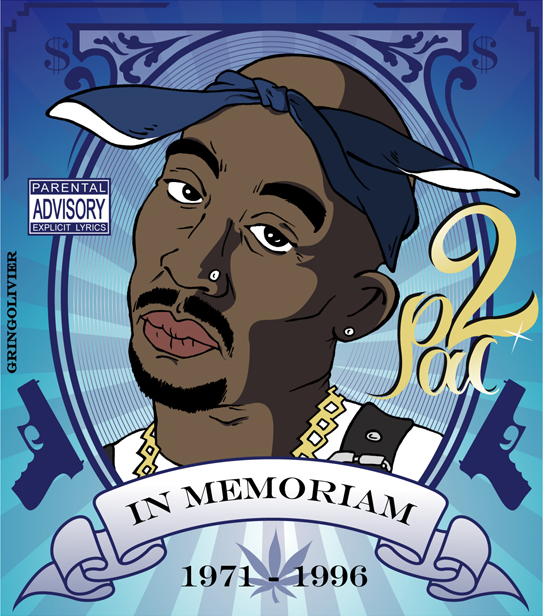
The track "Hail Mary" remains the sonic peak of this transformation. It features a hauntingly repetitive vocal sample from the 1970s track "Changes" by Bruce Hornsby and the Range. This isn't the upbeat, piano-driven version most people know. In the context of the Makaveli persona, the sample sounds like a funeral dirge. The way the piano notes decay creates a sense of immense, empty space.
The drums on the album hit with a different kind of aggression. You can hear the influence of the 1996 single "Bomb First" from the How Do the U Want It soundtrack. That track showcased a percussion-heavy production style that felt much more muscular than the smoother sounds of 1994. The snares crack like whips, and the kicks punch through the mix with a blunt force. It is a sound that demands attention and refuses to be ignored.
The atmosphere is thick with tension. A layer of sonic grit covers every track, a feeling of dust and heat. The synthesizers do an uneasy dance in the background, adding to the sense of unease. It is a masterclass in using production to reinforce a lyrical theme. When Tupac raps about betrayal, the music itself sounds like it is betraying the listener's sense of safety.
This sonic direction departed from the polished radio hits of the mid-90s. It was harder, uglier, and much more honest. The production did not try to hide the cracks in the persona. Instead, it leaned into them, using the low-end frequencies to create a sense of dread. The music was the physical manifestation of the Makaveli mindset: strategic, heavy, and unavoidable.
A Legacy Written in Blood and Basslines
November 13, 1996, marked the release of The Don Killuminati: The 7 Day Theory. By then, the world already knew the tragedy had occurred. The album arrived not as a celebration, but as a post-mortem. It functioned as a final, defiant statement from a man who was already gone. The release was a massive event that dominated the charts and the conversations of every hip-hop fan on the planet.
The album remains the most visceral document of the Death Row era. It captures the exact moment when the West Coast's dominance turned into a struggle for survival. You can hear the shift in the music from the swagger of All EyeZ on a Me to the defensive posture of The 7 Day Theory. It is the sound of a kingdom falling in real-time. The basslines are still heavy, but the melodies have lost their sunshine.
People discuss the legacy of Tupac Shakur in terms of his impact on the culture. While true, that description is too soft. His impact was a structural change in how rappers approached their own mythologies. He showed that an artist could use their entire life, including their death, as part of a larger narrative. He turned the tragedy of his life into a permanent piece of the hip-hop canon.
The music itself remains incredibly playable. The heavy production and aggressive flows have not aged poorly. In fact, the raw, unpolished nature of the 1996 sessions makes the album feel more modern than many of its cleaner contemporaries. It lacks the over-processed sheen of modern trap, relying instead on the sheer weight of the low-end and the intensity of the delivery. It is a record that demands to be played loud enough to vibrate the windows.
Every artist who uses a persona to navigate the industry carries his influence. The idea of the "concept" artist in hip-hop owes a massive debt to the Makaveli period. He proved that the persona is not just a costume, but a strategic layer of defense. The blood spilled in Las Vegas became the ink used to write the most enduring chapters of his story.
The Ghost in the Machine
The concept of the "Makaveli" persona lives on in the way we perceive legends. It is no longer just about the music; it is about the myth. Every time a new fan discovers "Hail Mary," they engage with a ghost. The music exists in a space between the man and the legend, a place where the facts of his death and the truth of his lyrics merge into something singular.
The industry has changed, but the energy of that era remains a reference point. The high-stakes, high-drama era of Death Row Records feels like a different epoch entirely. Today's artists operate in a much more fragmented, digital space. They do not have the centralized, monolithic power that Suge Knight wielded. Yet, they all still chase that same sense of presence that Tupac mastered.
The technology used to record those final tracks is now legacy gear. The heavy MPCs and the analog consoles of Death Row Studios are relics of a specific moment in time. But the feeling of the music remains unshakeable. The grit of the 1996 sessions cannot be replicated by modern plugins. It was a product of a specific place, a specific week, and a specific level of desperation.
Looking back, the transition to Makaveli looks less like a choice and more like a necessity. He was a man preparing for the end, documenting his strategies for those left behind. He taught us how to be strategic in the face of chaos. The music was his way of ensuring that even if the person died, the idea would remain invincible.
Tupac Shakur died, but the strategist survived. The music we hear today is the echo of that final, frantic week in Los Angeles. It is a sound that refuses to fade, a permanent vibration in the foundation of the genre. He left us with a blueprint for how to endure, even when the world is closing in.