The Brazilian Funk Scene That Predates Miami Bass
Rio de Janeiro heat shimmered over the asphalt in 1989. Low-frequency vibrations leaked from the open windows of passing cars near the Rocinha favela. DJ Marlboro sat behind a mixing console, tweaking knobs to balance heavy percussion with vocal loops. This specific moment in Rio changed everything for the Brazilian Funk scene. It transformed a localized imitation of American sounds into a distinct, local powerhouse.
The air in the clubs smelled of sweat and cheap beer. People danced to rhythms that felt familiar yet entirely new. These beats arrived via radio waves and imported cassette tapes from the United and South Florida coasts. Producers in Rio took these foreign patterns and injected them with Portuguese slang and local swagger. This wasn't just a copy of an American trend. It was a hostile takeover of a rhythm.
DJ Marlboro understood the power of the beat. He knew that the heavy kick drum could act as a heartbeat for an entire city. By 1989, the foundations of Funk Carioca were already hardening. The music carried the weight of the streets. It demanded movement and forced the listener to acknowledge the pulse of the favela.
Rio de Janeiro, 1989
Rio de Janeiro served as a pressure cooker for new sounds during the late eighties. The city breathed a heavy, humid energy that demanded rhythmic release. While the global charts played pop and rock, the streets of Rio listened to something much more aggressive. The Brazilian Funk scene began to coalesce around the dancefloors of suburban Rio. These parties relied on massive sound systems that could rattle teeth.

Cassette culture drove the movement forward. People traded tapes like currency in the streets of North Zone Rio. These tapes carried snippets of Miami Bass tracks and early hip-hop. Producers listened to the heavy syncopation of tracks from Florida and tried to replicate them with whatever gear they could find. The lack of high-end studio access forced a raw, gritty production style. This grit became the genre's greatest strength.
DJ Marlboro emerged as the central architect of this era. He didn't just play records; he restructured them. He took the skeletal framework of American bass music and draped it in Brazilian melody. The result was a sound that felt local enough to claim ownership but global enough to dance to. It was a period of intense experimentation and localized pride.
The social dynamics of Rio fueled the music. The favelas provided the raw energy and the lyrical content. The middle-class neighborhoods provided the consumer base and the radio play. This friction created a tension that kept the music moving. It wasn't just about the beat; it was about the identity of a city in transition.
The Roland TR-808 and the Birth of Funk Brasil
Electronic percussion provided the backbone for this revolution. The Roland TR-808 drum machine sat at the center of the storm. This machine produced a kick drum that felt like a physical blow to the chest. Producers in Rio loved the way the long decay of the 808 kick could fill a room. It provided a foundation that live drummers simply could not match.
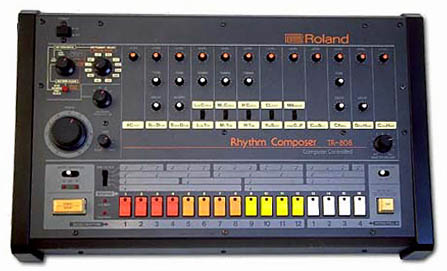
DJ Marlboro released the seminal album Funk Brasil in 1989 on the Som Livre label. This record changed the trajectory of Brazilian pop music. It effectively codified the Funk Carioca sound by blending Miami Bass rhythms with Portuguese vocals. The album didn't just feature tracks; it established a blueprint. It proved that the heavy, syncopated patterns of the 808 could speak Portuguese.
One track, "Melô do Bicho," stands as a monument to this era. Released in the late 1980s, it utilized the Roland TR-808 to replicate the heavy, syncopated kick patterns found in early Miami Bass. The rhythm was unrelenting. It possessed a mechanical precision that drove the dancers into a massive frenzy. You could hear the machine's influence in every strike of the 808 drum.
"O bicho vai pegar!"
The lyrics often mirrored the intensity of the percussion. Phrases like these became anthems for the youth of Rio. The music didn't need complex metaphors. It needed impact. The 808 provided the impact, and the vocals provided the attitude. This combination created a loop of energy that was difficult to break.
Recording Funk Brasil required a specific kind of focus. The Som Livre label provided the platform, but the producers provided the soul. They worked within the constraints of the technology. The 808-80-80 patterns of the drum machine were not limitations. They were the building blocks of a new rhythmic language. Every beat felt intentional and heavy.
Borrowing from the South to Build the North
Miami Bass arrived in Brazil via an accidental cultural exchange. US soldiers and sailors brought tapes of Florida bass music to Brazilian ports. The sounds of 2 Live Crew and Maggotron drifted into the Rio clubs. Brazilian producers heard the heavy low-end and recognized its potential. They saw a way to modernize their local dance music.
The connection between Miami and Rio was purely rhythmic. There was no shared lyrical content or social context. However, the shared love for the 808 kick created a bridge.
Rio producers took the Miami blueprint and added their own layers. They added more syncopation. They added more vocal interplay. They made the music more frantic and more festive.
This process of adaptation was not mere imitation. It was a sophisticated reconstruction. Producers stripped the American tracks down to their drum patterns. They then re-clothed these patterns with Brazilian percussion elements and Portuguese vocals. They took the "South" and used it to build a "North" Rio sound. This was a masterclass in musical appropriation used for cultural empowerment.
The 808 kick drum acted as the universal translator. It allowed a producer in a Rio studio to communicate with a dancer in a Miami club. Even if the words were different, the physical response was identical. The bass hit the same way. The syncopation triggered the same reflexive movement. This shared physical language bypassed the need for linguistic understanding.
Early Funk Carioca retained a certain "Miami" sheen in its drum programming. The hi-hat patterns remained crisp and sharp. The snare hits stayed tight and snappy. But the swing was entirely Brazilian. It had a certain "ginga" that the more rigid American tracks lacked. This hybridity is what made the Brazilian Funk scene so potent during its formative years.
Beyond the Beats: The Som Livre Era
Som Livre acted as the gatekeeper for the Brazilian mainstream. This label held immense power over what reached the ears of the masses. When they signed DJ Marlboro and released Funk Brasil, they signaled a shift in the industry. They moved the sound from the periphery to the center of the national conversation. This was a massive victory for the producers of the favelas.
The label's involvement gave the genre a level of legitimacy. It allowed the music to move from underground tapes to shiny vinyl and radio airwaves. Suddenly, the heavy 808 beats were playing in upscale Rio boutiques and supermarkets. The "low" culture of the streets was invading the "high" culture of the middle class. This caused friction within the Brazilian music establishment.
Radio stations in Rio began to play the 1989 hits alongside international pop. This exposure created a massive, new audience for the genre. The tracks became ubiquitous. You could not escape the sound of the 808 in the Rio metropolitan area. It was the soundtrack to the city's daily life, from the buses to the beachside kiosks.
The production quality on these Som Livre releases was surprisingly high. Unlike the lo-fi tapes circulating in the favelas, these records had a polished sheen. Engineers worked to ensure the bass wouldn't distort on standard radio speakers. They balanced the aggressive percussion with clearer vocal tracks. This polish made the music palatable for a much wider demographic.
Success brought competition. As the Som Livre era matured, more producers rushed to capture the magic. The market became crowded with artists trying to find their own version of the Marlboro formula. Some succeeded in creating lasting hits. Others faded into the background of the rapidly evolving scene. The sheer volume of output during this/ this period was staggering.
The Erasure of Brazil's Electronic Roots
History often forgets the messy, experimental middle. As Funk Carioca became a global phenomenon, the early, raw origins began to fade from the narrative. People started to view it as a purely modern, digital phenomenon. They ignored the heavy influence of early hip-hop and the specific 808-driven era of the late eighties. The roots were buried under layers of later, more aggressive production.
The evolution of the genre moved toward "Tamborzão." This later style emphasized more organic, percussion-heavy beats. While this was a natural progression, it obscured the era of the Miami Bass influence. The 808-centric period became a footnote rather than a foundation. The specific technical achievements of producers like DJ Marlboro lost their prominence in the broader discussion of Brazilian music history.
Cultural erasure happens through simplification. The media prefers a story of "evolution" over a moving story of reconstruction. It is easier to say the music changed than to explain how it was built from foreign parts. This simplification strips the genre of its political and technical complexity. It removes the agency of the producers who actively re-engineered a foreign sound into something local.
Modern listeners often hear the heavy bass and assume it was always there. They do not realize the specific moment when the 808 arrived and changed the DNA of Rio. They do not see the connection to the Florida bass scene. This loss of context makes the genre seem more like an isolated accident of history than a deliberate, cross-continental dialogue.
Preserving this history requires looking back at the original pressings. It requires listening to the 1989 Som Livre releases with a critical ear. We must recognize the 808 as a tool of transformation. Without the heavy, syncopated kick of that specific era, the modern Brazilian Funk scene would not exist. The foundation remains, even if the layers on top have changed.
Why the Connection Matters Today
Understanding the 1989 era provides a lens for viewing all modern electronic music. It shows how technology can bridge vast cultural gaps. The Roland TR-808 is more than a drum machine; it is a tool of globalization. It allowed a producer in Rio to participate in a global rhythmic conversation. This connection remains a powerful example of cultural agency.
The Brazilian Funk scene proves that imitation is the first step toward innovation. The producers did not just copy Miami Bass. They used it as a raw material. They applied their own social reality to the rhythm. This process created something entirely new and uniquely Brazilian. It serves as a lesson for any artist working with external influences.
The heavy, physical nature of the music still carries weight. When you hear a modern Funk Carioca track, the ghost of the 808 is always present. The way the bass hits, the way the syncopation drives the movement, it all traces back to that late eighties explosion. The DNA is unmistakable. The pulse of the favela still beats with the rhythm established by Marlboro.
We must celebrate the technical grit of that era. The ability to create a national movement using imported machines and local ingenuity is remarkable. It was a period of intense, localized creativity. It was a time when a single drum machine could redefine the sound of a major global metropolis. The impact of that era is still felt in every club from Rio to Berlin.
The history of the Brazilian Funk scene is a story of survival and adaptation. It is a story of how a marginalized community took the tools of the West and turned them into a weapon of cultural expression. The 808 kick drum still echoes through the streets of Rio. It reminds us that the most powerful music often comes from the most unexpected places.