Steely Dan's Million-Dollar Quest for the Perfect Beat
Donald Fagen and Walter Becker ignored the rock and roll mythos. They had no interest in the sweat, the drugs, or the chaotic energy that fueled their contemporaries in the late 1970s. Instead, they treated the recording studio like a high-end laboratory. They approached music with the cold, calculating precision of diamond cutters. By 1980, the duo had moved far beyond the jazz-on-rock fusion of their early years. They entered a period of expensive, obsessive refinement that pushed the limits of any studio budget.
The transition from 1977's Aja to 1980's Gaucho represents one of the most extreme shifts in studio perfectionism in music history. While Aja already boasted a level of sonic clarity that intimidated engineers, Gaucho arrived as a hyper-polished monolith. The duo abandoned the idea of a consistent band lineup entirely. They replaced the concept of a group with a rotating cast of the world's most elite session players. This method turned the recording process into a massive financial undertaking, a relentless search for a specific, unrepeatable rhythmic perfection.
The High Cost of Perfection

Recording a Steely Dan album functioned less like a band session and even less like a standard production. Fagen and Becker operated as architects. They drew up blueprints, hired the most expensive contractors, and then rejected entire floors of the building if a single nail sat crooked. This approach drove studio bills to heights that few artists could ever justify. During the Aja and Gaucho eras, the duo utilized dozens, sometimes even hundreds, of session musicians to find the exact right texture for a single phrase or a momentary horn swell.
The sheer scale of the personnel involved created a logistical nightmare and a financial sinkhole. They did not just hire a drummer; they hired five drummers to play the same four bars, then compared the micro-unison of each snare hit. They held auditions for horn sections to ensure the phrasing matched the precise, cynical atmosphere of the lyrics. This obsession with minutiae meant that the recording budget ballooned far beyond the industry standard. Every hour spent at the console cost a fortune. Every extra take of a saxophone solo added another layer to the mounting debt. They sought a sterile, flawless beauty that required constant, expensive intervention.
Critics often accused them of losing the human element. They argued that the perfection destroyed the soul of the music. However, Fagen and Becker viewed the "human element" as a variable to be controlled. They wanted the warmth of jazz without the unpredictable errors of a live performance. They wanted the swing of R&B but with the surgical precision of classical notation. Achieving this paradox required a massive infusion of capital and an almost pathological disregard for the bottom line.
Beyond the Purdie Shuffle

Rhythm served as the North Star for these studio sessions. Everything revolved around the pocket. They lived and died by the swing of the hi-toms and the placement of the backbeat. Much of this rhythmic DNA traced back to the influence of Bernard Purdie. His legendary "Purdie Shuffle" provided a blueprint for the kind of sophisticated, ghost-note-heavy drumming that the duo craved. The shuffle offered a way to maintain a deep, funk-driven groove while navigating complex, jazz-inflected harmonic shifts.
Fagen and Becker were never satisfied with mere imitation. They used the ghost of the Purdie Shuffle as a foundation, then attempted to build something even more controlled upon it. They sought a beat that felt effortless yet possessed an impossible level of rhythmic accuracy. This search drove them to pull in drummers who could execute complex syncopation without ever breaking the groove. They needed players who understood that the space between the notes mattered as much as the notes themselves. They required drummers who could play with a heavy hand on the beat but a light touch on the hi-hat.
This obsession with the "perfect beat" created a tension in the studio. The drummers faced a standard that few could meet. You could not simply "feel" the song; you had to mathematically align your feel with the duo's exacting vision. This demand pushed the boundaries of session drumming. It turned the drum throne into the most scrutinized seat in the industry. If the drummer missed a single sixteenth note in a pattern, the entire session might collapse, leading to another day of expensive studio time and another round of frustrated auditions.
The Village Recorder Sessions
Los Angeles served as the epicenter for this sonic experimentation, specifically the Village Recorder. This studio became the primary laboratory for the Gaucho sessions. The facility provided the technical infrastructure necessary to handle the duo's massive multi-track requirements. The engineers at Village Recorder worked under immense pressure. They had to manage a staggering amount of information, capturing every nuance of the myriad instruments Flan and Becker brought into the room.
The atmosphere at Village Recorder during this era felt more like a high-stakes research facility than a rock studio. The duo utilized the studio's advanced capabilities to layer tracks with surgical precision. They moved far beyond the basic four-track or eight-track era into more complex territory, allowing them to stack percussion, brass, and multiple guitar parts without muddying the frequency spectrum. The sonic clarity of Gaucho owes everything to the high-end signal chains and the meticulous microphone placement practiced at Village.
Fagen and Becker treated the engineers as collaborators in their pursuit of clarity. They demanded a certain transparency in the mix. They wanted to hear the decay of every cymbal and the subtle breath of every woodwind. This required a level of technical competence that few engineers possessed. The Village Recorder sessions became legendary for their intensity. The duo would spend hours, sometimes days, focusing on the EQ of a single Rhodes piano chord. They pushed the technology of the time to its absolute limit, essentially forcing the hardware to perform at a level of fidelity that the manufacturers had not even envisioned.
Chasing the Ghost in the Rhythm
The track "Babylon Sisters" stands as the definitive monument to this era of production excess. It functions as a centerpiece for their perfectionist madness. The song features a dense, sprawling arrangement that demands total rhythmic cohesion. The way the percussion interacts with the heavy, descending bassline requires a level of synchronization that borders on the supernatural. It is a track that feels massive, yet every element sits in its own distinct, crystalline pocket.
< p>The personnel on "Babylon Sisters" and the rest of Gaucho included the absolute cream of the crop. They employed elite session drummers like Jim Keltner and Rick Marotta. Keltner brought a gritty, soulful weight to the sessions, while Marotta provided a sharp, driving precision. These men were masters of their craft, yet even they were subject to the duo's relentless scrutiny. They found themselves part of a revolving door of talent, where the goal was not to play as a band, but to provide the perfect component for a larger, more complex machine.The tension in "Babylon Sisters" comes from this very struggle. You can hear the effort required to maintain that level of poise. The arrangement is dense with brass stabs and swirling textures, yet the rhythm remains unshakable. It is the sound of highly trained professionals executing a nearly impossible set of instructions. The duo pushed Keltner and Marotta to find a groove that felt both relaxed and incredibly tight. They were chasing a ghost, a rhythmic ideal that existed only in the minds of Fagen and Becker, and they used the world's best drummers to try and manifest it in physical sound.
"The music is a song of the soul, a way of expressing the things that you can't say in words."
While that sentiment sounds poetic, for Fagen and Becker, the music was a way of expressing the things that could be precisely measured in decibels and frequencies. The "ghost" they chased was a frequency response, a certain transient snap, a specific decay. They hunted for a sonic perfection that lacked the flaws of traditional rock and roll, creating something that sounded almost artificial in its beauty.
The Legacy of Gaucho's Studio Bills
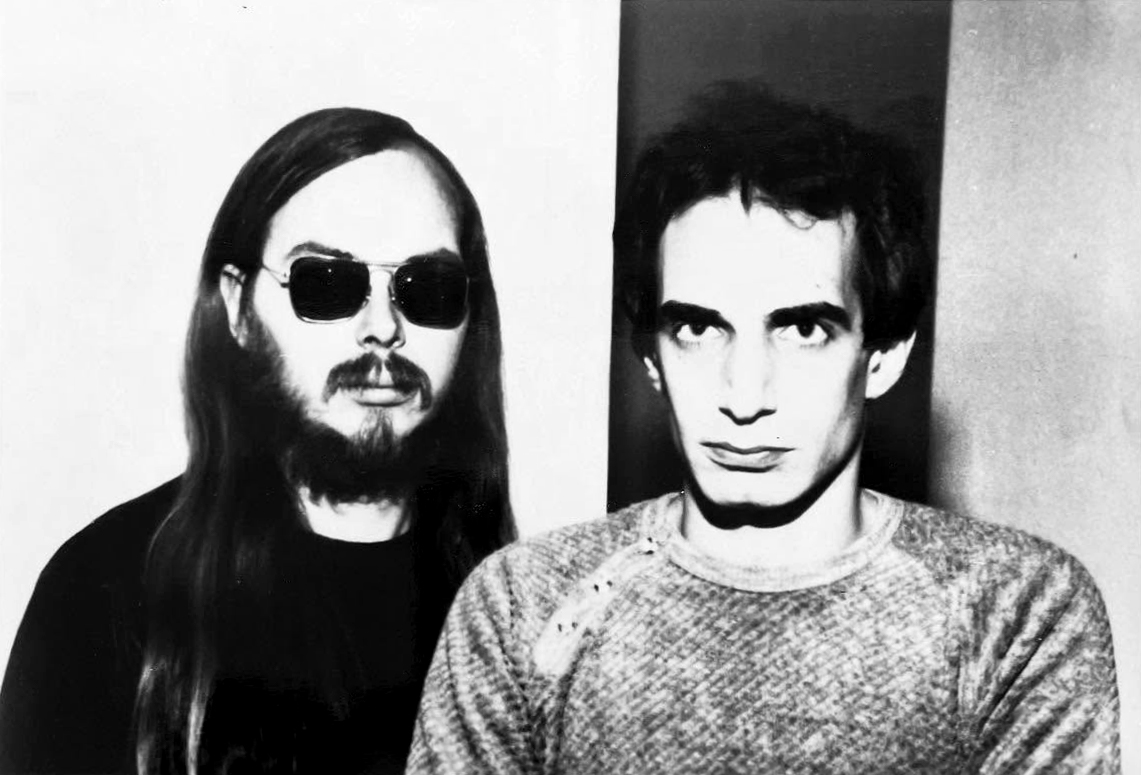
The financial legacy of Gaucho remains a subject of fascination in music industry circles. The massive studio bills and the exorbitant session fees contributed to the legend of Steely Dan as the most expensive act in the business. There is no way to look at the production of Gaucho without seeing the staggering cost of the pursuit. The duo essentially spent a fortune to create an album that sounds like it was manufactured in a vacuum. They burned through budgets to achieve a level of polish that few have ever matched.
Some might argue that this level of spending was a waste. They could have recorded a much more "human" album for a fraction of the price. But that ignores the central point of their entire career. The cost was the point. The expense was the mechanism by which they stripped away the imperfections of the human element. The massive bills were the price of admission to a world of pure, unadulterated sound. They were not just making songs; they were constructing sonic monuments.
The impact of Gaucho on the recording industry remains significant. It set a standard for high-fidelity production that remains a benchmark for audiophiles today. It proved that with enough money, enough talent, and enough stubbornness, you could create a record that defied the limitations of its era. The era of the "million-dollar beat" may have ended with the rise of digital sampling and the death of the big-budget studio era, but the ghost of Gaucho still haunts every clean, perfectly produced track on the radio. Fagen and Becker left behind a blueprint for perfection, even if the cost of building it was more than anyone else could afford to pay.