Ornette Coleman: The Man Who Shattered Jazz
The Five Spot Café, 1959
New York City in 1959 felt like a pressure cooker. The air in the Five Spot Café carried the heavy scent of stale tobacco and the electric tension of a musical revolution. While the jazz establishment clung to the structured safety of hard bop, a small group of musicians arrived to dismantle the very foundations of the genre. Ornette Coleman did not arrive with a polite introduction. He arrived with a sonic disruption that forced every listener in the room to decide whether they were witnessing the death of jazz or its rebirth.
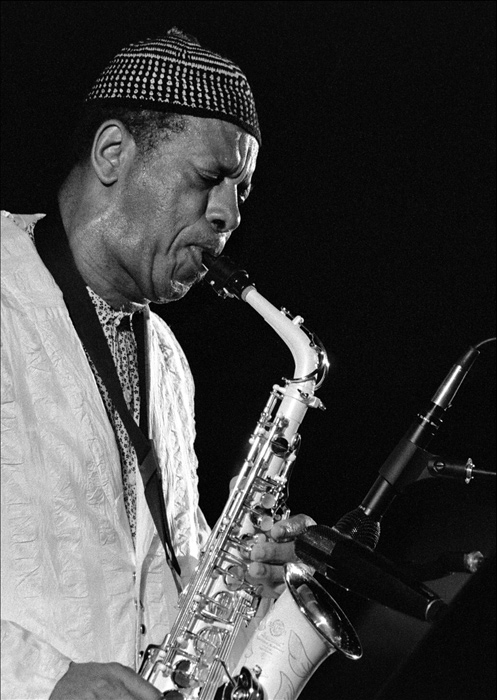
The residency at the Five and a half Spot transformed the small club into the epicenter of a seismic shift. Coleman did not play alone. He brought a unit that functioned less like a traditional rhythm section and more like a single, breathing organism. Don Cherry played the cornet with a raw, piercing clarity. Charlie Haden anchored the group on the bass, providing a woody, deep resonance that grounded the more erratic flights of the horns. Billy Higgins drove the ensemble from the drums, his swing feeling both fluid and incredibly disciplined. This quartet did not merely play notes; they negotiated space, tension, and release in a way that made the existing jazz vocabulary look obsolete.
Audiences reacted with a mixture of awe and outright hostility. To the purists, Coleman sounded like he was playing outside the law. To those tuned into the shifting cultural currents of the era, he sounded like the future. The music lacked the predictable anchors of the time. There was no safety net of a walking bass line that stayed strictly within a predetermined harmonic loop. Instead, the music moved with a sudden, jagged energy. The Five Spot residency proved that Coleman's vision could sustain a live, improvisational environment, setting the stage for his first studio masterpiece.
Breaking the Bebop Template
Bebop relied on a rigid architecture. The genre functioned on a predictable cycle: the musicians played a recognizable melody, known as the head, followed by a series of improvised solos over fixed chord progressions, and finally returned to the head. This structure provided a map for the soloist. You knew exactly which keys to hit and which tension notes to resolve. It was a comfortable, if somewhat predictable, way to navigate a performance. Coleman viewed this template as a cage.
In 1959, Coleman released The Shape of Jazz to Come on Atlantic Records. This album stripped the architecture bare. He removed the fixed chord progressions that had dictated the movements of jazz for decades. He discarded the safety of the vertical harmonic structure. Without the chords to lean on, the soloists had to rely on melodic intuition and emotional urgency. This shift changed the fundamental physics of the music. The soloists no $longer$ chased changes; they chased melodies.
This rejection of the "head-solos-head" template meant that the music became horizontal rather than vertical. The focus shifted from the relationship between notes and chords to the relationship between notes and other notes. This liberated the melodic line. It allowed the musicians to follow the natural contour of a musical thought rather than forcing that thought into a pre-existing harmonic box. The result was a style of playing that felt more organic, more vocal, and infinitely more dangerous. The music could go anywhere, and the fear of losing the "key" vanished because the key itself had become a fluid concept.
The Logic of Harmolodics
Critics often dismissed Coleman's approach as chaos. They heard the lack of structure and assumed a lack of thought. They were wrong. Coleman developed a rigorous, if unconventional, musical philosophy known as Harmolodics. This was not a way to avoid rules, but a way to establish a new set of them. Harmolodics grants equal autonomy to melody, harmony, and rhythm. In a traditional jazz setting, the rhythm section supports the melody, and the harmony provides the boundaries for the melody. In Coleman's system, every element carries the same weight.
Under the principles of Harmolodics, the drummer is not just a timekeeper, and the bassist is not just a harmonic foundation. They are melodic participants. A rhythmic shift can trigger a melodic response. A change in the bass line can dictate a new melodic direction for the saxophone. This creates a dense, multi-layered texture where every player is constantly reacting to and influencing every other player. The music does not move in a straight line; it moves in a web of interconnected impulses.
This equality of elements demands an incredible level of listening. A musician cannot simply play their part; they must inhabit the entire sonic environment. The autonomy of the rhythm and melody means that the pulse of the music is just as expressive as the lead horn. When Coleman applied this logic, he broke the hierarchy of the jazz ensemble. He turned the band into a collective of independent voices, each capable of steering the direction of the entire piece. It was a democratic approach to composition that redefined the concept of a jazz ensemble.
The Double Quartet Experiment
If The Shape of Jazz to Come was a warning shot, the 1960 recording of Free Jazz: A Collective Improvisation at Atlantic Studios was a full-scale invasion. Coleman took the concept of collective improvisation to its logical, overwhelming extreme. He assembled a double quartet, bringing two distinct groups of musicians into a single, massive sonic confrontation. The sheer density of the sound was unprecedented. It was an experiment in controlled explosion.
An entire studio filled with eight horns, a bass, and two drum kits created a wall of sound that defied easy categorization. The recording captured the sound of multiple melodic lines colliding, overlapping, and weaving through one another. There was no single leader in the traditional sense. Instead, there was a massive, swirling mass of sound where individual identities merged into a singular, roaring entity.
The session remains one of the most significant achievements in recorded jazz history. It challenged the very idea of what a "composition" could be. How do you compose for sixteen different moving parts without falling into total entropy? Coleman managed it by relying on the shared language of his players and the shared intent of the session. The double quartet was not just a feat of endurance; it was a demonstration of how much complexity a musical structure could hold before it collapsed. The recording remains a daunting, magnificent achievement that continues to intimidate and inspire musicians decades later.
Microtones and the New Thing
Coleman's physical approach to the alto saxophone was as radical as his theoretical one. He did not view the instrument through the lens of the tempered scale. He was not interested in the clean, even intervals of a single piano. Instead, he utilized the saxophone to execute microtonal shifts and non-tempered melodic lines. He used the instrument to mimic the human voice, complete with its cries, smears, and bends. He pushed the pitch boundaries, playing the notes that lived in the cracks between the keys.
This technique gave his playing an unparalleled emotional intensity. By abandoning the rigid constraints of the Western scale, he could access a wider spectrum of human expression. His playing felt visceral. It felt raw. This technical approach was the engine of the "New Thing" movement in the 1960s. This movement, which included many of the most radical voices in avant-garde jazz, embraced the idea that music should reflect the urgency and the friction of the contemporary world. The "New Thing" was not about polished perfection; it was about truth, however jagged that truth might be.
Coleman's use of microtones allowed him to bridge the gap between high art and the primal roots of blues and folk. He brought a sense of ancient, vocalized expression to a modern, experimental context. The "New Thing" was often met with intense political and social scrutiny, as the music mirrored the turbulence of the Civil Rights era and the Vietnam War. Coleman's saxophone was a weapon of expression, capable of expressing both the agony and the liberation of a generation. He proved that the saxophone could be more than a melodic tool; it could be a vessel for pure, unadulterated emotion.
A Grammy-Winning Legacy
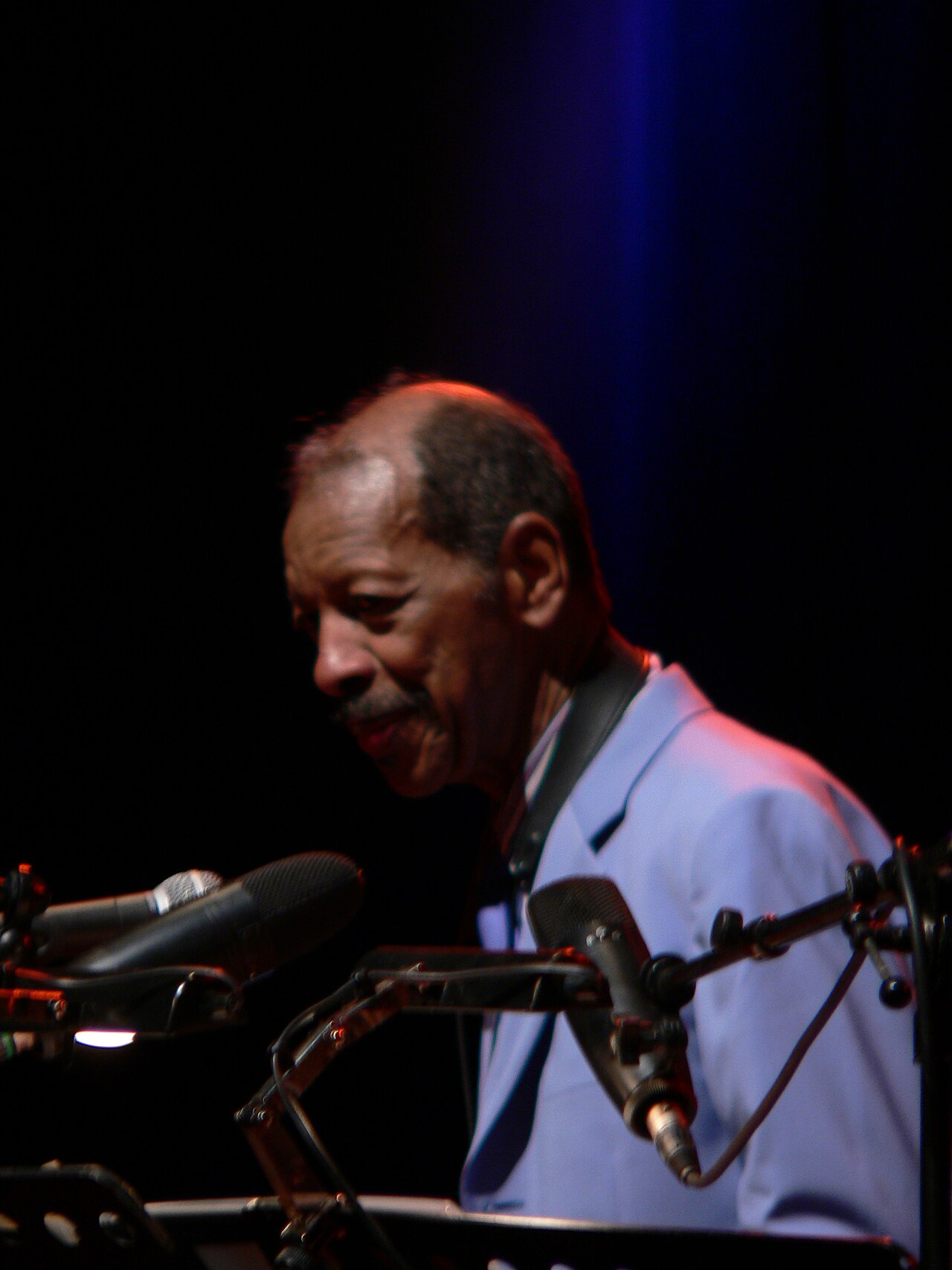
The arc of Ornette Coleman's career did not end in the radicalism of the sixties. He continued to evolve, refining his ideas and finding new ways to communicate his vision. The musical world eventually caught up to him. In 1985, the industry recognized his enduring impact by awarding him a Grammy for Best Jazz Instrumental Performance for the album In All His Glory. This was not a ceremonial gesture for a veteran; it was an acknowledgement of a living, breathing force that had remained vital and relevant for a quarter-century.
The Grammy win served as a formal validation of the path he had carved. It signaled that the radicalism of the Five Spot and the density of the double quartet had become part of the fundamental fabric of jazz history. He had moved from the fringes to the center, not by compromising his vision, but by forcing the center to expand to accommodate him. In All His Glory showed a musician who had mastered the chaos, turning the experimental energy of his youth into a sophisticated, mature language.
Ornette Coleman changed the DNA of jazz. He destroyed the walls of the bebop cage and replaced them with a limitless, open sky. Every avant-garde saxophonist, every free improviser, and every musician who seeks to break the boundaries of genre owes a debt to his audacity. He did not just play jazz; he redefined what it meant to play. His legacy is not found in a single style or a single album, but in the very freedom that allows jazz to continue breathing, changing, and defying expectation. He broke the music so that it could finally be free.