The Fractured Beat: Tracking the Birth of Post-Punk
September 10, 1976, arrived with the sound of a glass bottle shattering against a brick wall. The Sex Pistols released "Anarchy in the U.K." via Virgin Records, and suddenly the polished, blues-based swagger of 1970s arena rock felt like a relic. This single stripped away the bloated layers of Pink Floyd or Led Zeppelin, replacing them with a jagged, high-voltage aggression. It sounded like a riot caught on magnetic tape. This sudden violence provided the necessary friction for the birth of post-punk.
London felt the impact immediately. The song delivered a direct assault on the radio-friendly disco structures that dominated the charts. It signaled a violent departure from the heavy, riff-driven traditions of the previous decade. Listeners heard a new kind of urgency, one that replaced technical virtuosity with raw, unrefined energy.
This shift provided the necessary friction for the birth of post-punk. While the initial punk explosion focused on destruction, the aftermath focused on reconstruction. Musicians began to use the debris of the 1976 explosion to build something far more experimental. They took the broken pieces of the three-chord template and rearranged them into something colder and more cerebral.
The 1976 Shock of Anarchy
London's music scene in 1976 pulsed with a specific, nervous electricity. The Sex Pistols brought a sense of organized chaos to the mainstream. Their arrival on Virgin Records changed the rules of engagement for every aspiring band in the United Kingdom. You could no longer hide behind a wall of Marshall stacks and a pentatonic scale.
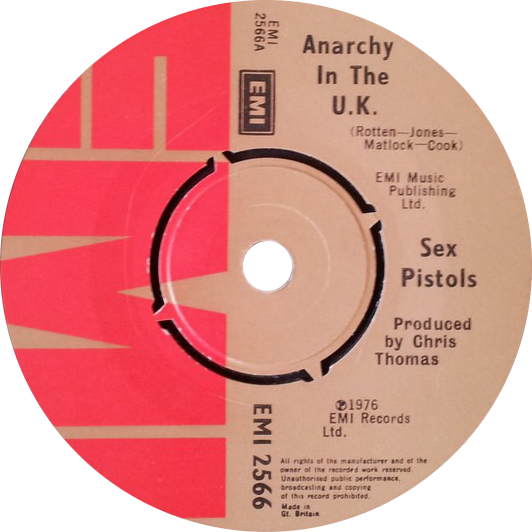
The Pistols brought a specific sonic ugliness that felt honest. Johnny Rotten's vocals sneered with a venom that bypassed melody entirely. Steve Jones played chords that felt like blunt objects hitting a metal gate. This wasn't the blues-rock foundation of the 1970s; it was something much more destabilizing.
The energy in clubs like the Lesser Free Trade Hall in Manchester began to mutate. This venue served as a central hub for the North West England scene during the 1976 tour dates. Bands like Public School Boys and early iterations of The Fall used this space to test new, harsher ideas. They watched the London chaos and realized they could apply that same aggression to even more abstract sounds.
Critics initially struggled to categorize this sudden influx of noise. The sheer volume of the Sex Pistols threatened to drown out everything else. Yet, underneath the distortion, a new logic was forming. The destruction of the old rock star mythos allowed for a much wider range of sonic experimentation.
The transition from 1976 punks to the more complex textures of the late 70s happened with startling speed. One moment, the music was about a simple, loud protest. The next, it was about the tension found in the silence between the notes. The initial shock of "Anarchy in the U.K." was merely the first crack in the dam.
Stripping the Song Down to Bone
Wire arrived in 1977 with a sense of surgical precision. Their debut album, Pink Flag, released on Chiswick Records, functioned less like a collection of songs and more like a series of rapid-fire strikes. Many tracks clocked in at under two minutes. They relied on repetitive, minimalist structures that refused to provide any easy comfort to the listener.

The songwriting on Pink Flag stripped everything down to its bare essentials. There were no long, indulgent solos or sweeping crescendos. Instead, the band presented short, highly concentrated bursts of rhythmic tension. It felt like watching a film strip flicker through a projector at high speed.
This minimalism paved the way for a much broader movement. It proved that a song could exist as a single, repeating idea. By removing the fat, Wire left a skeletal structure that other artists could inhabit. The band focused on the power of subtraction.
The Buzzcocks took this reductionist approach and injected it with a different kind of energy. Their 1978 single "Ever Fallen in Love (With Someone You Shouldn't've)" on New Rose Records changed the temperature of the genre. They blended the velocity of punk with a melodic, pop-sensitive songwriting style. It was a way to be fast and aggressive without sacrificing a sense of melody.
This ability to blend genres was essential for the movement's survival. The Buzzcocks proved that you could maintain the punk spirit while embracing a more accessible, melodic sensibility. They didn't need the bluesy bloat of the 1970s to make a song work. They only needed a driving beat and a hook that stuck in your brain like a splinter.
"Ever fallen in love with someone you shouldn't've? / Ever fallen in love with someone you shouldn't've?"
The song's success showed that the new era could be both abrasive and catchy. It demonstrated that the genre's DNA included the possibility of pop brilliance. This tension between the raw and the melodic would define the next several years of British music.
The Architecture of Cold Space
Manchester's humidity seemed to evaporate in the studio of Cargo Studios in Stockport. When Joy Division recorded their debut album, Unknown Pleasures, they weren't just making a record; they were constructing a space. Under the guidance of producer Martin Hannett, the band moved away from the pub-rock energy of their peers. They sought something much more desolate.
Hannett utilized heavy-handed reverb and digital delay to create a sense of vast, cold space. He treated the studio as an instrument in itself. Every drum hit from Stephen Morris felt isolated, as if it were echoing through an empty factory. The space between the notes became as important as the notes themselves.
The use of the AMS 15-80S digital delay unit helped define this signature atmospheric, cavernous sound. Hannett manipulated the decay of sounds to make the band seem much larger and much lonelier than they actually were. The bass lines from Peter Hook emerged from the darkness like silhouettes in the fog. It was a sonic architecture built on isolation.
This production style was far from accidental. Hannett pushed the band to embrace the tension of the void. He didn't want a warm, comforting mix. He wanted the listener to feel the chill of the room. The result was a record that felt physically cold to the touch.
Joy Division's sound became the blueprint for the more atmospheric side of the era. It moved the focus away from the front-facing aggression of 1976. Instead, it turned the listener's attention inward. The music became a place to inhabit, a dark, echoing room where the walls seemed to pulse with the rhythm.
Funk, Dub, and the Death of the Blues
Andy Gill's guitar on Gang of Four's 1979 album Entertainment! sounded like a series of rhythmic stabs. He famously eschewed traditional blues scales in favor of jagged, percussive patterns. His playing drew from the rhythmic precision of funk and the heavy, space-filled textures of dub. It was a complete rejection of the blues-rock heritage.

The guitar parts on Entertainment! functioned more like percussion than melody. Gill used a staccato, dissonant style that cut through the mix like a serrated knife. There was no warmth in his tone, only a dry, biting clarity. This approach stripped the rock guitar of its usual role as a melodic lead.
Many listeners found this transition jarring. For decades, the blues had provided the DNA for rock music. Gang of Four simply cut that DNA out. They replaced it with a rhythmic complexity that felt much more modern and urban.
The Clash were also busy dismantling the genre's boundaries. While often categorized as punk, they incorporated reggae and ska influences on tracks like "The Guns of Brixton" from their 1979 self-titled album. They bridged the gap between raw aggression and experimental genre-blending. Joe Strummer and Mick Jones weren't afraid to let a heavy bassline drive the song.
This inclusion of Caribbean rhythms added a new dimension to the UK underground. It brought a sense of groove to the jagged edges of the era. The Clash showed that you could be politically charged and sonically diverse at the same time. They refused to stay trapped within the narrow confines of a single genre.
The death of the blues in this context wasn't a loss, but a liberation. It allowed for the integration of funk, dub, and reggae into the heart of the UK underground. The music became more rhythmic, more danceable, and much more complex. The guitar was no longer a tool for soloing; it was a tool for texture.
The DIY Revolution and Rough Trade
London's independent scene thrived on a decentralized network. The 1979 release of Production by various artists on the Rough Trade label highlighted this DIY ethos. It proved that independent distribution could sustain a movement without the help of major labels. This was a revolution of logistics as much as music.
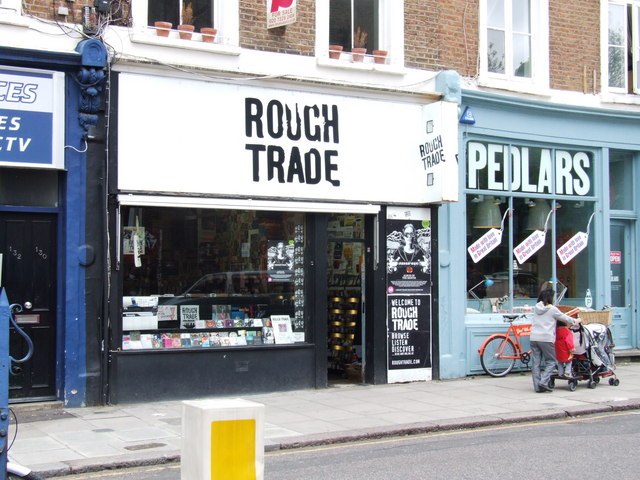
Rough Trade provided a platform for bands that were too strange for the mainstream. The label operated on a principle of accessibility and community. It wasn't just about selling records; it was about building an infrastructure for the marginalized. This network allowed the post-punk movement to breathe and expand far beyond the London core.
These independent networks held immense power. Without them, the experimentalism of the era would have died in the rehearsal rooms. Artists could release music that defied commercial logic because the infrastructure existed to find their audience. It was a system built on passion rather than profit margins.
This DIY approach permeated every level of the culture. Fanzines, small-posters, and independent record shops formed a cohesive ecosystem. A band could record a single in a basement and have it in shops across the country within weeks. The barrier to entry had been demolished by the very people it served.
The success of Rough Trade and similar labels changed the industry's power dynamics. It proved that there was a hungry, underserved audience for non-conformist music. This decentralization of power is perhaps the most lasting legacy of the era. It gave the music a sense of autonomy that the major labels could never provide.
Rejecting the Rock Virtuoso
Mark E. Smith of The Fall viewed traditional rock virtuosity with deep suspicion. He frequently cited the influence of repetitive, hypnotic rhythms as a central part of the band's aesthetic. For Smith, the skill lay not in playing fast or loud, but in maintaining a relentless, grinding persistence. He wanted a sound that was uncomfortably rhythmic.
The Fall's music often felt like a machine that refused to stop. The rhythm section provided a steady, almost punishing foundation. Smith's vocals were often a stream of consciousness, a muttered, urgent commentary on the world around him. There was no room for the ego-driven solos of the 1970s in this approach.
This rejection of the virtuoso was a widespread sentiment. The entire movement seemed to be a reaction against the idea of the "guitar hero." The focus shifted from individual technical mastery to the collective creation of a sonic atmosphere. The music was about the group, the groove, and the grit.
This new aesthetic valued the error and the imperfection. A squealing string or a missed beat added to the authenticity of the performance. The goal was to create something that felt real and immediate. The polished, over-produced sheen of the era's mainstream rock was seen as a form of deception.
The era's musicians found power in simplicity and repetition. They realized that a single, well-placed rhythm could be more impactful than a thousand notes. They embraced the tension, the dissonance, and the decay. They turned the music away from the spectacle and toward the visceral.
The end of the 1970s left behind a fractured, brilliant musical era. The initial explosion of punk had cleared the stage, but the post-punk era built something far more enduring. It was a period of intense, experimental construction that fundamentally altered the DNA of alternative music. The echoes of those jagged guitars and cold, cavernous drums still vibrate through the underground today.