Beyond Sadness: The Truth About Minor Keys
Jean Coulomb sat in a quiet Belgian study in 1958, dissecting the way humans hear intervals. This musicologist ignored emotional tropes or romanticized clichés. He sought raw data on how different cultures perceive the distance between two notes. His study investigated the emotional perception of intervals across various non-Western musical traditions. He stripped away the Western bias that equates certain scales with sorrow.
Most Western listeners hear a minor third and immediately think of funerals or rainy afternoons. We assume the minor key carries an inherent weight of grief. This belief ignores centuries of global musical practice where these same intervals signal something else entirely. Western ears operate within a very narrow box of tonal expectations.
We rely on a specific tension-and-release system that prioritizes the major third as "happy" and the minor third as "sad." This binary limits our understanding of minor keys emotional perception. When we hear a minor chord, we project our own cultural baggage onto the sound. We ignore the possibility that the interval might actually represent strength, tension, or even divinity. To understand the true breadth of musical emotion, we have to look outside the conservatory walls of Europe.
The music industry reinforces this narrow view through repetitive tropes in film scoring and pop songwriting. A composer drops a minor chord in a movie trailer, and the audience prepares for a tragedy. This predictable trick relies on a cultural shorthand that lacks any scientific basis in universal human biology. We mistake a learned behavior for a biological truth. Breaking this habit requires us to listen to the modes that refuse to follow our rules.
The Western Major-Minor Trap
London studios in the late 1960s produced countless hits built on this specific emotional binary. Producers used minor keys to signal heartbreak in every Motown ballad and Beatles experimental track. This reliance created a psychological loop where the minor scale became synonymous with melancholy. We grew up believing that the minor third is the sound of a broken heart. This assumption ignores the fact that tonality is a social construct as much as a mathematical one.
The 1958 Coulomb study proves that the emotional weight of an interval changes based on the listener's cultural training. A listener in a different part of the world might hear a minor third as a stable, bright interval. Our Western training forces us to hear tension where others might hear resolution. We have essentially programmed ourselves to feel sad when we hear certain frequencies. This programming limits the emotional vocabulary available to us in modern composition.
Music theorists often argue about the "natural" state of music. They debate whether the major scale exists in nature or if we imposed it on the world. This debate misses the point of how we actually experience sound in the moment. The real issue lies in our refusal to decouple the interval from the emotion we have assigned to it. We need to stop treating the minor third like a preset button on a synthesizer.
We must start hearing the interval for what it actually is: a physical distance between two frequencies. Western classical music perfected the art of using minor keys to create drama. Composers like Wolfgang Amadeus Mozart used minor passages to signify sudden shifts in mood or tragedy. This technique worked brilliantly within the context of the European tradition.
It also solidified the idea that minor equals misery. We have spent centuries reinforcing this association through every medium of music consumption. It is time to dismantle the idea that a minor key is an existing depressing tool. Music theorists often focus on the mechanics, but the impact remains emotional.
The Tension of Maqam Hijaz
Cairo streets in the mid-20th century echoed with the sounds of the Maqam system. This Arabic melodic framework operates on rules that completely bypass Western major and minor distinctions. One specific mode, Maqam Hijaz, uses an augmented second to create an intense, biting tension. To a Western ear, this interval sounds unstable or even mournful. In reality, the Hijaz mode provides a sense of heat, energy, and profound depth. It does not seek to make the listener weep.
Musicians playing the oud or the ney utilize these intervals to drive a melody forward. The tension comes from the friction between the notes, not from a heavy desire to express sadness. When an Arabic ensemble performs, the goal is often to evoke a state of heightened awareness. The augmented second acts as a spark rather than a weight. It pulls the listener into the center of the melodic movement.
Westerners often misinterpret this specific tension as melancholy. We hear the dark intervals and assume the performer is expressing grief. This error stems from our inability to separate dissonance from depression. In the Maqam system, musicians use dissonance as a structural tool to create momentum. It keeps the melody from becoming stagnant or predictable. The Hijaz mode is an engine of movement, not a dirge.
Listening to Maqam Hijaz requires a shift in perspective. You have to stop looking for a sad melody and start listening for the heat. The notes should feel like they are vibrating with an internal pressure. When you strip away the Western expectation of minor-key sorrow, the beauty of the system reveals itself. It is a complex, breathing architecture of sound that owes nothing to the Western minor scale.
Flamenco and the Phrygian Fire
Andalusia provides the perfect setting to witness the power of the Phrygian mode. This region of Spain nurtures a style of music that thrives on intensity and grit. Flamenco does not use the Phrygian mode to mourn the past. Instead, it uses the mode to channel a raw, percussive energy. The Phrygian mode features a flattened second, which creates a sharp, driving tension. This tension feels like a physical force hitting the listener.
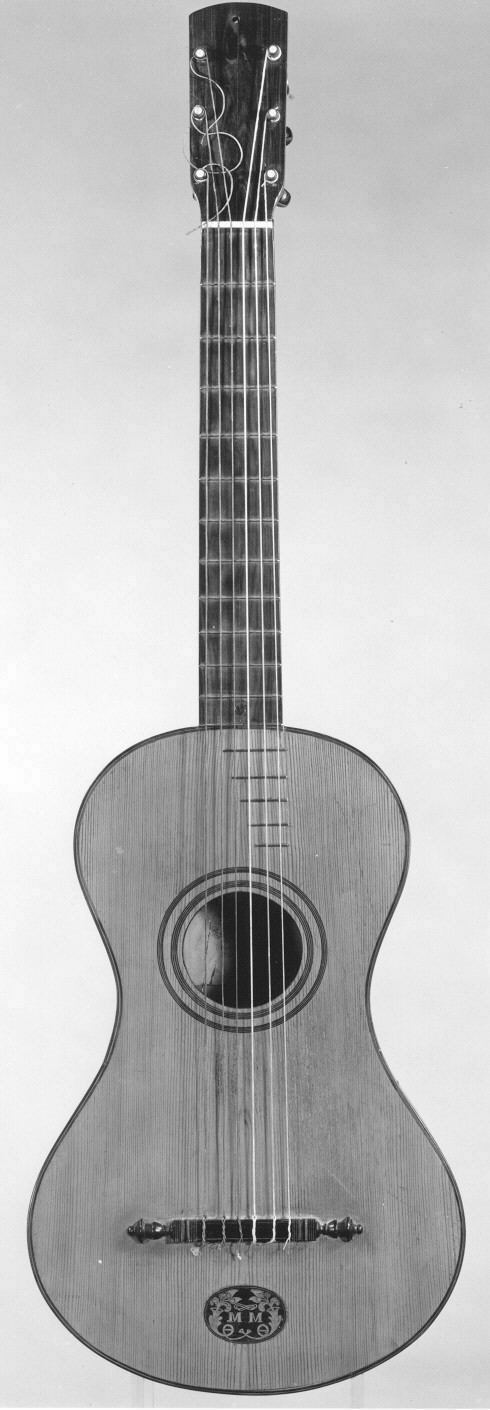
Paco de Lucía revolutionized this sound on his 1983 album Almoradima. His flamenco guitar work utilizes the Phrygian mode to create layers of rhythmic complexity. On tracks like those found on this record, the notes do not weep. They strike with the precision of a hammer on an anvil. The Phrygian mode provides the structural backbone for this aggressive, beautiful interplay of notes. De Lucía proved that the mode could serve technical brilliance and rhythmic fire.
"The notes are even more than just sounds; they are pulses of blood and bone."
Flamenco guitarists often use the Phrygian mode to move between sudden bursts of speed and slow, deliberate phrases. The tension of the flattened second keeps the listener on edge. It prevents the music from settling into a comfortable, major-key complacency. This mode is the sound of survival and defiance. It is much too energetic to be relegated to the category of simple sadness.
The Phrygian fire burns through the heavy ornamentation of the genre. A guitarist might use a rapid-fire rasgueado technique to accentuate the mode's inherent tension. This isn't about expressing a mood of depression. It is about expressing the sheer physical reality of the performance. Flamenco is a visceral, tactile experience that demands your total attention.
Miles Davis and the Power of Dissonance
New York City in 1970 felt like a world on the brink of collapse. This was the era of Bitches Brew, the landmark album by Miles Davis on Columbia Records. Davis moved away from the structured bebop of his youth toward a much more fluid, modal approach. He used dissonant scales to create a sense of swirling, chaotic energy. The album does not sound sad in the traditional sense. It sounds like a revolution in progress.

The musicians on Bitches Brew utilized electric instruments to expand the sonic possibilities of jazz. Davis encouraged long, improvisational stretches that relied on modal shifts rather than chord progressions. These shifts often utilized scales that Westerners might label as minor or dissonant. However, the intent was never to evoke sorrow. The goal was to create a dense, psychedelic atmosphere that felt alive and unpredictable. The dissonance provided the friction necessary for true improvisation.
Listening to the title track, you hear a bassline that anchors a swirling storm of percussion and trumpet. The electric piano provides clusters of notes that clash with the trumpet's piercing tone. This is not a musical eulogy. It is a high-voltage exploration of sound and space. Davis used the tension of these scales to push the boundaries of what jazz could be. He turned dissonance into a tool for liberation.
The energy of Bitches Brew comes from the lack of a clear harmonic resolution. The listener must stay present within the tension. There is no happy or sad resolution waiting at the end of the phrase. There is only the ongoing, electric present. Davis showed us that dissonance can be a source of immense power and excitement.
The Devotion of Indian Raga
The Ganges River flows with a spiritual gravity that mirrors the structure of Indian Classical music. This tradition relies on the concept of Raga, a melodic framework that dictates specific notes and ornaments. Raga Bhairavi provides a prime example of a mode that defies Western emotional categorization. While some might hear its flatter intervals as melancholic, the true intent is often much more profound. It is a mode designed to evoke devotion, longing, and deep spiritual connection.
Indian musicians use microtonal ornaments known as shruti to add texture to the Raga. These tiny, subtle pitch shifts are not mere decorations. They are the very essence of the emotion being conveyed. A singer might bend a note just slightly to create a sense of yearning. This yearning is not a sign of sadness, but a sign of spiritual aspiration. It is the sound of the soul reaching for something greater than itself.
The instruments used, such as the sitar or the sarod, possess a resonant, metallic quality. This timbre interacts with the shruti to create a sound that feels ancient and alive. The music does not follow a linear narrative of tension and release. Instead, it circles around a central tonic, exploring every microtonal possibility. The emotional impact comes from the depth of the exploration, not the mood of the scale.
Listening to a Raga requires patience and a willingness to let go of Western melodic expectations. You cannot hunt for a melody to hum. You must allow the microtontan nuances to wash over you. When you do, you realize that the sadness you thought you heard was actually a deep, meditative intensity. The Raga does not want to make you cry; it wants to make you transcend.
Breaking the Binary with Gamelan and Stockhausen
Java and Bali host ensembles that completely ignore the Western major-minor divide. Gamelan music utilizes the Slendro and Pelog tuning systems, which do not align with Western equal temperament. These scales do not even contain the intervals we call "major" or "minor." The Pelog scale, in particular, features a series of intervals that feel alien to a Western ear. It is a shimmering, percussive landscape of sound that exists entirely outside our emotional binaries.
The bronze metallophones and gongs of the Gamelan create a dense, layered texture. The sound hits the listener like a wave of metallic light. There is no sense of sadness or happiness in the way we understand it. The music centers on cyclical time and communal precision. It is an architectural feat of sound that prioritates rhythm and timbre over melodic emotion.
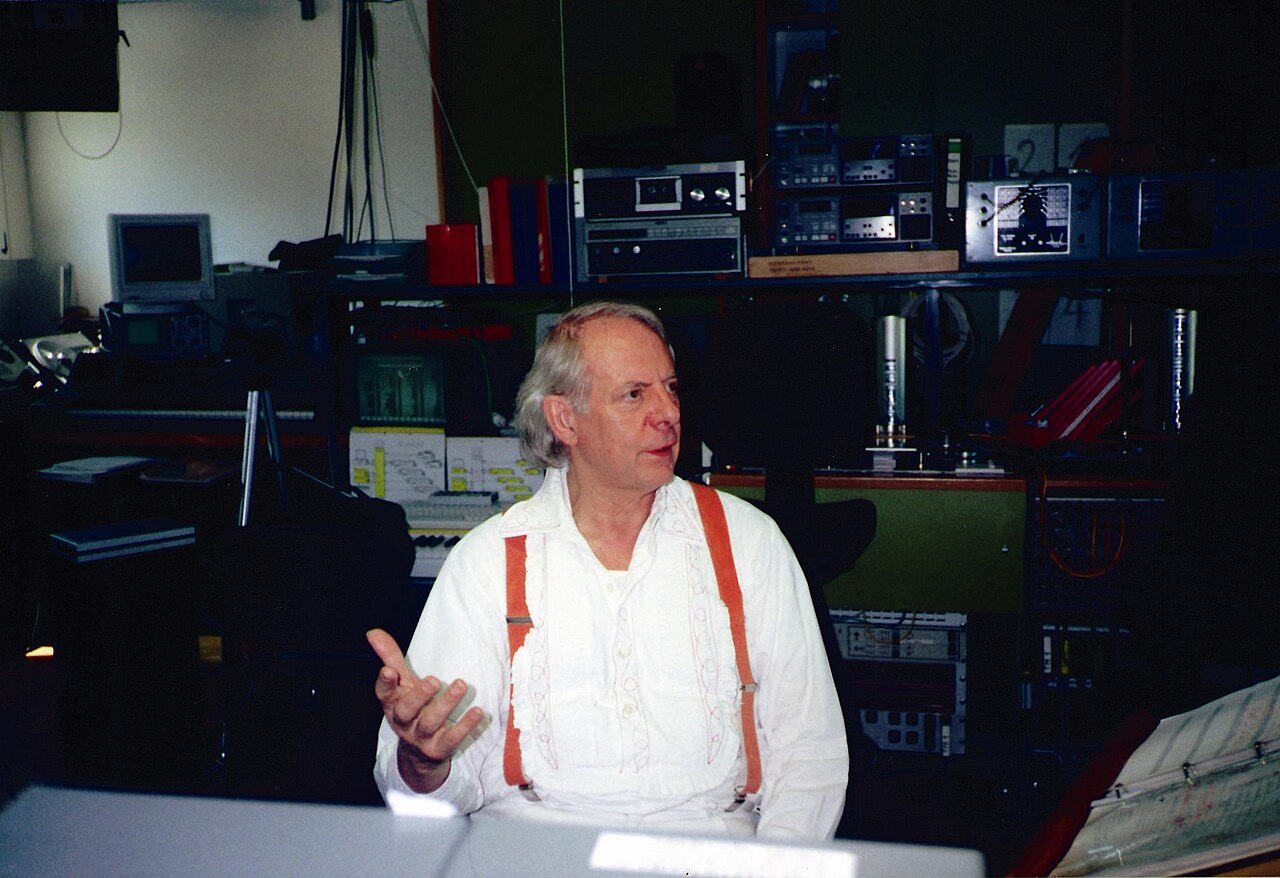
West Germany in the 1960s offered a different kind of sonic rebellion. Karlheinz Stockhausen used electronic sine waves to experiment with the very nature of pitch. He wanted to decouple pitch from human emotional intent. By using pure, synthetic tones, he stripped away the cultural baggage of the scale. His work was an attempt to find a new, objective way of experiencing sound.
Stockhausen's studio experiments involved manipulating frequencies to create entirely new sonic objects. He removed the human element of the vibrating string or the wooden reed. This left only the raw, mathematical reality of the frequency. While some found this music cold, it was actually an attempt to expand the definition of musical expression. He proved that sound could exist independently of our preconceived emotional labels.
Both Gamelan and Stockhausen challenge the listener to abandon their emotional prejudices. They force us to confront sound as a physical, structural entity. When we stop looking for sadness, we find a much more interesting world of frequency and rhythm. These traditions remind us that the ear is much more flexible than the mind allows.
The Farewell Symphony and the Power of Departure
Vienna in 1772 saw the premiere of a work that changed the way we think about musical intent. Joseph Haydn's Symphony No. 45 in F-sharp minor, known as the "Farewell" Symphony, uses minor tonality in a startling way. The piece does not use the minor key to signal a state of depression. Instead, the minor tonality serves as a signal for departure and transition. It is a functional use of tonality rather than an emotional one.

The musicians in the orchestra literally blew out their candles one by one during the performance. As each player finished their part, they left the stage in the dim light. This physical action turned the musical structure into a piece of performance art. The minor key provided the necessary tension for this dramatic exit. It was not about being sad that the musicians were leaving; it was about the gravity of the moment.
Haydn used the F-sharp minor tonality to underscore the seriousness of the farewell. The music carries a weight that feels formal and deliberate. It is the sound of a conclusion being reached. This use of the minor key is much more about the architecture of the narrative than the psychology of the composer. He used the available musical vocabulary to tell a very specific, physical story.
The "Farewell" Symphony proves that even within the Western tradition, the minor key can serve purposes beyond the melancholic. It can be used for drama, for structural tension, and for storytelling. When we look at Haydn, we see a master of using every tool in the box to achieve a specific end. He did not care about the cliché of the "sad" minor key. He cared about the impact of the departure.
The true error in our musical perception is the refusal to see the versatility of our scales. We have turned the minor third into a prison for our emotions. We have ignored the fire of the Phrygian mode and the devotion of the Raga. We have dismissed the tension of the Maqam as mere sadness. The music is much larger than our narrow, Western-centric definitions. It is time to start listening to the notes themselves, rather than the labels we pin onto them.