10 Accidental Instruments That Changed Music
George Beauchamp stared at a piece of metal that looked more like kitchenware than a musical revolution. In 1931, the Los Angeles workshop smelled of solder and ozone. He and Adolph Rickenbacker gripped a prototype that lacked a wooden body entirely. They called it the A-2, but musicians quickly dubbed it the "Frying Pan" because of its circular, bronze shape. This strange object used electromagnetic pickups to pull vibrations directly from steel strings into an amplifier.
Big band players in the early 1930s faced a massive volume crisis. Acoustic guitars sat buried under the roar of brass sections and heavy percussion. A guitarist playing a Martin D-28 simply could indeed not compete with a trombone slide or a trumpet blast. The Frying Pan changed the physics of the stage. It allowed a single stringed instrument to pierce through the wall of sound with a sharp, metallic bite.
The A-2 used a primitive electromagnetic pickup to convert string movement into electrical signals. This design bypassed the hollow resonance of traditional wood bodies. It moved the focus from acoustic air displacement to electrical voltage. Musicians suddenly possessed a tool that could match the decibel levels of a full orchestra. This shift altered the hierarchy of the jazz ensemble.
Early adopters wielded a weapon of volume. The electric guitar did not start as a tool for blues solos or heavy metal riffs. It began as a desperate solution to a loud drummer and a loud trumpet. Without this specific technological leap, the guitar might have remained a rhythm instrument relegated to the back of the stage. The Frying Pan ensured the guitar would eventually take center stage.
The Tape Loops of Paris
Pierre Schaeffer sat in a studio at the GRM in Paris during 1948. He held a strip of magnetic tape in his hands. The room contained no traditional instruments, only recorded fragments of trains, bells, and voices. He cut the tape into small segments. He then taped the ends together to create loops that played endlessly on a playback machine.
This process birtlen the concept of musique concrète. Schaeffer treated recorded sound as a physical object that he could sculpt. He did not compose notes on a staff. He manipulated the texture of reality itself. The sound of a spinning wheel or a slamming door became his melodic material. He proved that any sound could function as a musical note if manipulated correctly.
Modern producers live in the shadow of these Paris tape loops. Every time a producer chops a breakbeat or loops a vocal snippet in Ableton Live, they use Schaeffer's logic. He removed the need for a performer to be present in real time. The tape itself became the performer. This technique stripped away the human error of live playing and replaced it with the precision of the edit.
The GRM studio functioned as a laboratory for sonic experimentation. Engineers used razor blades and adhesive tape to reorder the world. They played with speed and direction, making voices growl or chirping birds scream. This was the first time music moved away from melody and toward pure texture. It laid the groundwork for everything from hip-hop sampling to ambient drone.
"The music is not in the notes, but in the silence between them, and in the way we manipulate the sounds we find." - Pierre Schaeffer
When Vacuum Tubes Hit the Limit
Engineers at Abbey Road Studios pushed their Vox AC30 amplifiers until the signal began to crumble. London in the 1960s sounded like breaking glass and warm electricity. During the recording sessions for The Beatles, technicians noticed something strange happening to the audio signal. When they pushed the vacuum tubes of the amplifiers past their designed limits, the clean tone disappeared. In its acrimonious place, a gritty, aggressive texture emerged.
This distortion was not a planned feature. It was a technical failure of the amplifier's headroom. The engineers tried to maintain a clean, professional signal. Instead, they accidentally discovered the fundamental building block of rock and roll. The overdriven tubes compressed the waveform, adding harmonic content that felt thick and physical. It sounded like a growl rather than a note.
Alex Mallory and other engineers found that this "error" added a necessary weight to the guitars. A clean guitar sounds polite and thin in a dense mix. A distorted guitar occupies space. It vibrates the listener's chest. The Beatles utilized this grit to give tracks like "Revolution" a biting, aggressive edge that a clean signal could never achieve.
The distortion effect changed the very definition of a "good" recording. For decades, the goal of studio engineering was maximum fidelity and zero noise. The discovery of overdrive turned noise into an aesthetic choice. It turned a technical limitation into a creative tool. This accidental saturation became the signature sound of every garage rock band that followed.
The 808's Boom and the Birth of Trap
Ikutaro Kakehashi released the Roland TR-808 Rhythm Composer in 1980. The machine arrived with a specific mission in a mind. It used analog synthesis circuitry to mimic the sounds of real acoustic percussion. Kaketbashi wanted a drum machine that sounded like a studio session drummer. He failed spectacularly at this goal. The 808 sounded nothing like a real drum kit.
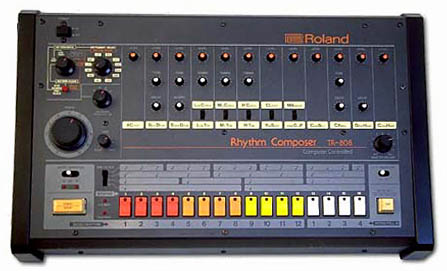
The 808 kick drum sounded like a synthetic thud. It lacked the organic snap of a real snare or the woody resonance of a bass drum. Instead, it produced a long, decaying sine-wave boom. This sound was much deeper and more sustained than any acoustic drum could ever be. It moved air in a way that traditional percussion simply could not. This mistake became the heartbeat of an entire genre.
Hip-hop producers in the 1980s and 1990s embraced this artificiality. They realized the 808 kick could act as a melodic element. You could tune the kick drum to follow a bassline. The heavy, sub-bass frequencies of the 808 provided a foundation for the booming low-end of trap music. Producers like Roland TR-808 users turned a "bad" imitation into a revolutionary sonic signature.
The 808 changed how music feels in a club environment. It is a sound designed to be felt through the floorboards. When a producer hits a heavy 808 pattern, the entire room reacts to the pressure wave. This machine did not just provide rhythm; it provided physical impact. The failure to mimic real drums gave us the most influential percussion instrument in modern history.
The 909 and the Detroit Underground
Detroit in 1983 felt cold, metallic, and industrial. The city's landscape of abandoned factories and rhythmic machinery provided the perfect backdrop for a new sound. Roland released the TR-909 with specific hi-hat and kick drum patterns. Unlike its predecessor, the 909 used a hybrid of analog synthesis and digital samples for its cymbals. It sounded harsher, punchier, and much more aggressive than the 808.
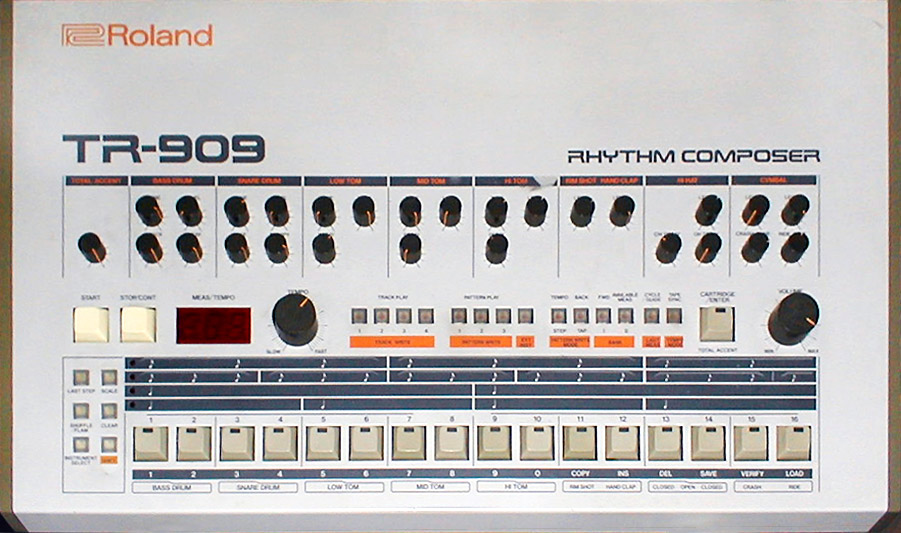
Juan Atkins and the pioneers at the Music Institute club used this machine to forge Detroit Techno. The 909's hi-hats had a metallic, crushed quality that cut through thick, murky basslines. These sounds felt like the pulse of a machine. They were not trying to sound human. They much preferred to sound like the future. The 909 provided the rhythmic skeleton for a genre built on repetition and mechanical precision.
The 909's snare drum hit with a sharp, compressed crack. It drove the dancefloor with an unrelenting energy. This machine did not swing like a jazz drummer; it marched like a robot. This rigidity became the aesthetic foundation of the techno movement. Producers leaned into the machine-like nature of the hardware to create hypnotic, looping structures.
< p>The sound of the 909 remains inseparable from the identity of the Detroit underground. It is a sound of grit, steel, and electricity. When you hear those crushed hi-hats, you hear the industrial decay of a city transformed into art. The 909 did not just accompany the music; it dictated the very tempo and texture of the revolution.The Mellotron's Flute and the Psychedelic Era
Bradley engineers built the Mellotron in the 1960s to trigger recorded sounds via a keyboard. The machine functioned as a proto-sampler. Inside the heavy chassis, hundreds of magnetic tape loops sat on reels. Each key on the keyboard connected to a specific strip of tape. When you pressed a key, the machine played a snippet of a real instrument recorded onto that tape.
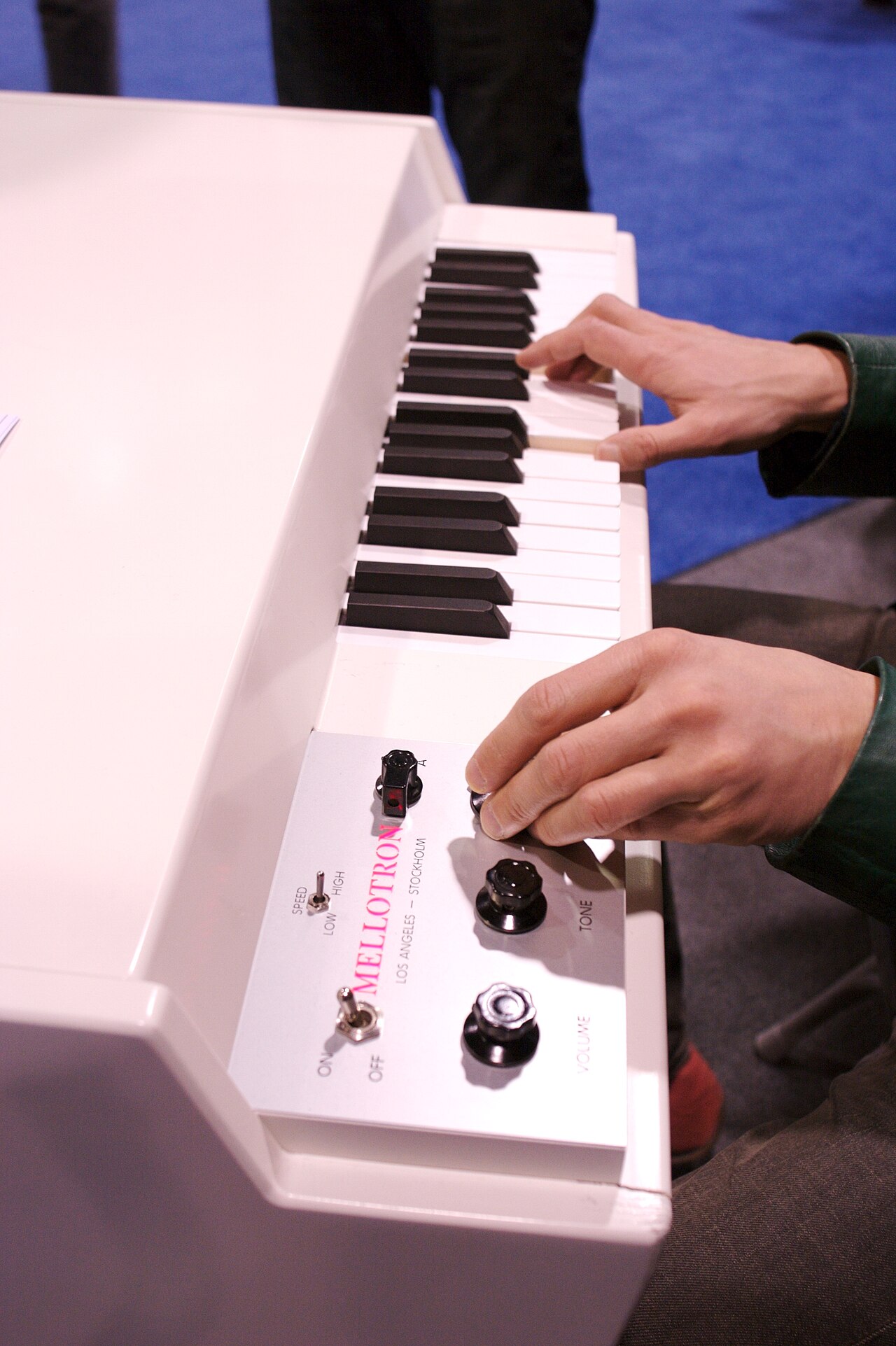
The sound of the Mellotron was often unstable and ghostly. Because the tapes were short, the notes had a single, finite duration. This created a sense of haunting, drifting melody. The machine could not sustain notes indefinitely like an organ. This limitation gave the instrument a unique, organic instability. It sounded like a memory of an instrument rather than the instrument itself.
The Beatles used the Mellotron to define the psychedelic era. On the 1967 album Sgt. Pepper's Lonely Hearts Club Band, the flute intro to "Strawberry Fields Forever" changed everything. That flute sound was not a real musician playing a flute. It was a tape loop of a flute being triggered by a keyboard. This texture added a surreal, dreamlike quality to the track that felt entirely otherworldly.
The Mellotron brought the concept of "found sound" to the pop mainstream. It allowed a rock band to suddenly incorporate strings, choirs, and woodwinds without hiring an orchestra. This changed the scale of studio production. It made the studio itself a tool for orchestral expansion. The eerie, wobbling tapes of the Mellotron became the sonic signature of the late 1960s psychedelic movement.
The Talk Box and the Human Voice
Peter Frampton stood on stage in 1976, a plastic tube extending from his mouth to his amplifier. The audience watched in confusion as his guitar seemingly began to speak. This was the Talk Box in action. The device works by routing the sound of an electric guitar through a plastic tube. The musician then shapes the sound by moving their mouth and tongue behind the tube.
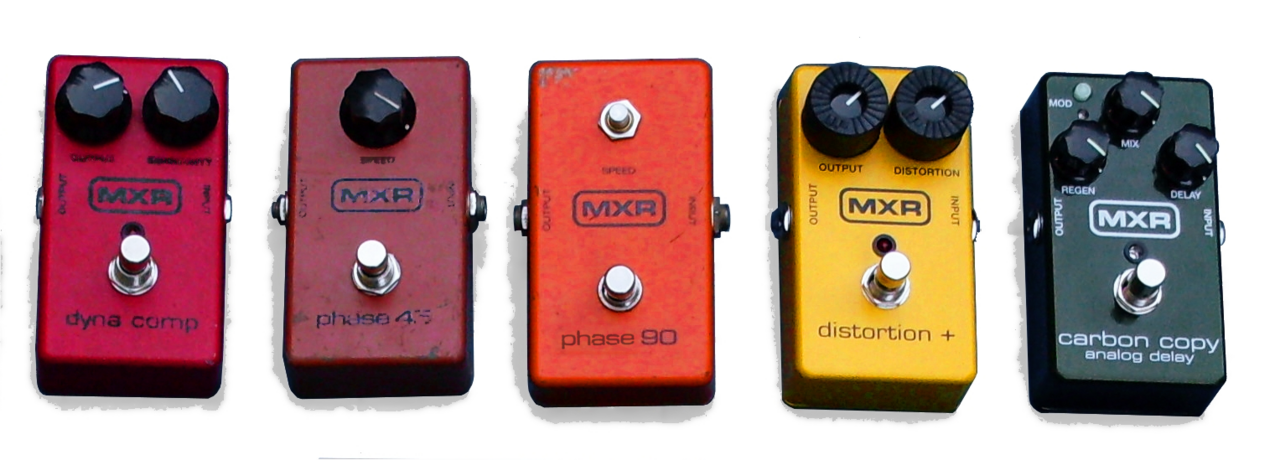
The Talk Box is an experiment in vocal-instrument integration. It does not create a new sound from scratch. Instead, it uses the human vocal tract as a physical filter for an existing electrical signal. The guitar provides the tone, but the mouth provides the articulation. This creates a hybrid sound that sits uncomfortably between a synthesizer and a human singer. It is a strange, wobbling, expressive effect.
Frampton's live album Where the Tears Dry showcased this effect to the world. The way the guitar echoed his vocal phrasing was uncanny. It allowed him to "sing" through his instrument. This effect became a staple for funk and rock artists who wanted to add a layer of surrealist communication to their solos. It turned the guitar into a character with its particular voice.
The Talk Box requires immense physical coordination. The performer must manipulate their throat and lips to articulate vowels and consonants. It is an exhausting, difficult way to play. Yet, the result is a sound that feels deeply connected to the human body. It bridges the gap between the mechanical output of an amplifier and the organic movement of the human voice.
Voltage Control and the Moog Revolution
Robert Moog developed his modular components in the mid-1960s using voltage-controlled oscillators. These oscillators produced continuous waveforms that could be manipulated by electrical signals. Before the Moog, electronic music often consisted of a collection of static, pre-set sounds. Moog's invention allowed for dynamic, changing textures. You could use one voltage to change the pitch and another to change the filter.
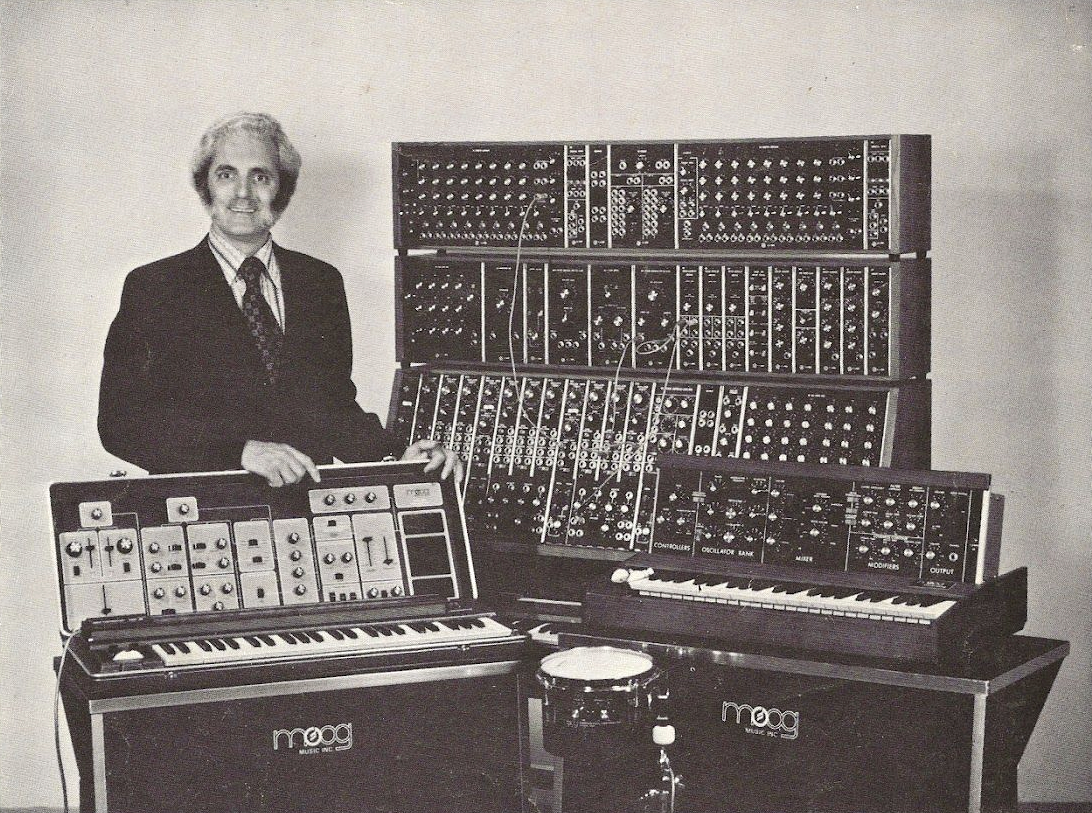
Wendy Carlos brought these electronic textures to the mainstream with the 1968 album Switched-on Bach. She used the Moog to play Bach's compositions with a level of precision and clarity never before heard. The album proved that synthesizers were not just for sound effects or sci-fi movies. They were legitimate musical instruments capable of complex, polyphonic expression. The Moog made the synthesizer a musical powerhouse.
The Moog revolution changed the way producers thought about timbre. In a traditional orchestra, you change the sound by changing the player or the instrument. With the Moog, you change the sound by changing the voltage. You could sweep a filter to make a sound go from a dull thud to a piercing scream. This gave producers a new dimension of control over the frequency spectrum.
The Moog synthesizer fundamentally altered the trajectory of pop, prog, and disco. It provided a way to create sounds that had no physical counterpart in nature. Producers could sculpt sounds that were purely mathematical and electronic. This opened the door to the entire era of electronic dance music. The Moog turned the studio into a playground of infinite, controllable textures.
The Solid Body and the Sustain Revolution
Leo Fender released the Broadcaster, later renamed the Telecaster, in 1950. He abandoned the hollow-wood design of the era in favor of a solid slab of ash or alder. This was a radical departure from the tradition of the acoustic guitar. A solid body does not vibrate in the same way a hollow box does. This lack of resonance seemed like a disadvantage at first.
The solid-body design allowed for unprecedented levels of sustain and feedback. Without a hollow chamber to dissipate the energy, the string vibrations lasted much longer. A guitarist could strike a note and let it ring out with a steady, unwavering tone. This physical property changed the way players approached the instrument. It allowed for the long, singing notes that define blues and rock.
Chuck Berry used this sustain to drive his rhythmic, driving riffs. Keith Richards used the Telecaster's clarity to cut through the heavy mix of the Rolling Stones. The solid-body design also made the guitar much more resistant to the howling feedback that plagued hollow-body players. It allowed for a much higher volume on stage. This durability and stability were essential for the loud, aggressive era of rock and roll.
The Telecaster's simplicity became its greatest strength. It was a rugged, utilitarian tool that could withstand the rigors of touring. The bright, twangy tone of the single-coil pickups provided a clarity that helped the guitar stand out in a dense mix. By removing the air from the instrument, Fender gave the guitarist a more direct, physical connection to the amplifier.
The Legacy of the Happy Accident
Music history is often written as a single, intentional breakthrough. We celebrate the composers who mastered their craft and the engineers who perfected their gear. We rarely talk about the mistakes that changed everything. The distorted amplifier, the unintended 808 kick, and the accidental tape loop all started as technical errors. They were failures of expectation.
These instruments invented by accident prove that creativity thrives in the margins of error. When a system breaks, it reveals something new. The friction between the intended use and the actual result is where the magic lives. A producer pushing a knob too far or an engineer overdriving a tube is not just making a mistake. They are discovering a new way to communicate.
The history of music is a history of hardware being pushed to its breaking point. Every time we find a way to exploit a limitation, the genre evolves. We take the broken, the distorted, and the unintended and we build entire worlds around them. The most important sounds in music are often the ones we never meant to make.
Next time you hear a heavy bassline or a distorted guitar, remember the mistake. Remember the engineer in London or the technician in Paris. They weren't trying to change the world. They were just trying to get the sound right.